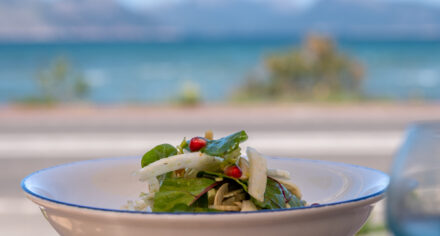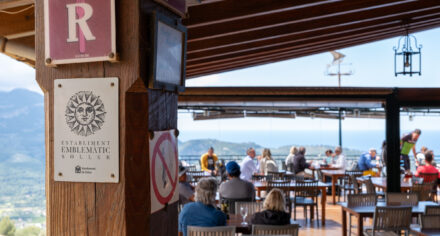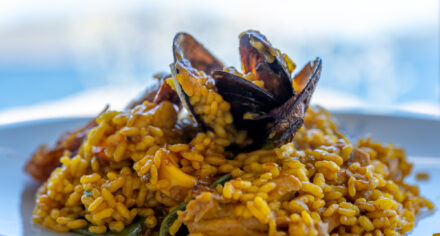
One of the best ways to get to know a region is to taste it. You try the dishes that show up on every family table. You bite into the fruit that grows along the roadside. You order the recipe that has been handed down for generations, unchanged, or maybe changed just a little. Mallorca rewards that kind of curiosity more than most places. Some call it a small continent, and it is not hard to see why. The island shifts from rugged mountains to flat farmland to turquoise coastline within an hour’s drive. Its history has been just as varied. Arab settlers left their mark on the fields and irrigation channels, the Spanish mainland shaped its language and customs, and traders from France and Italy added their own notes over the centuries. All of that ended up on the plate, too. So before you head out to another beach or another hike in the Tramuntana, slow down for a moment. If you’re wondering what to eat in Mallorca, this guide is a great place to start. These are the tastes of Mallorca you should try first.
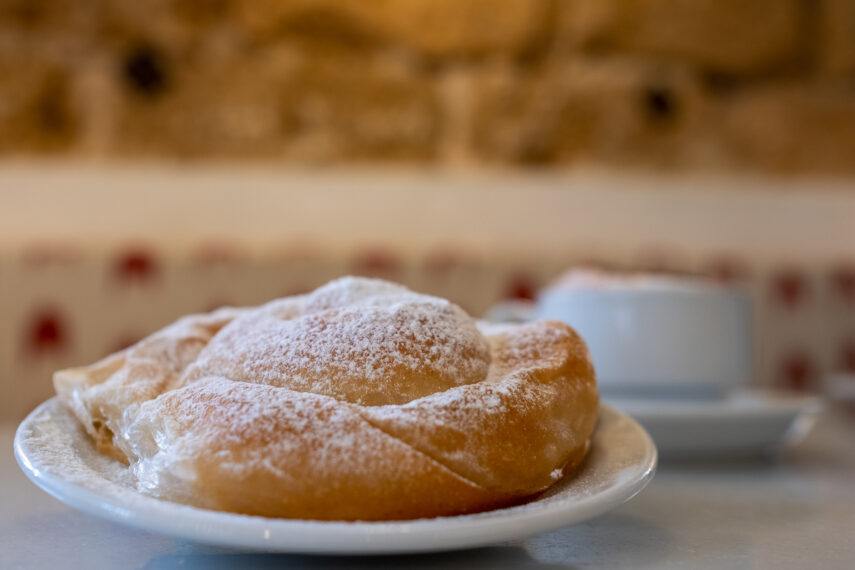
Ensaimada, Mallorca’s Answer to the Cinnamon Roll
Few souvenirs travel as far as this one. At airports around the world, the flat cardboard box under someone’s arm gives away exactly where they have been. The ensaimada is a spiral of yeasted dough, light and airy, brushed with pork lard before baking and finished with a dusting of powdered sugar. Locals usually eat it plain, or con albaricoque (abricot). And always with something to drink alongside, or to dunk it in. A cup of hot chocolate is the classic pairing, though a strong coffee works just as well in the morning.
For the real experience, head to Can Joan de S’Aigo, Palma’s oldest chocolateria, where neighbors, couples, and travelers all end up sharing the same small tables. Or stop by Forn Fondo, whose modernist facade alone is worth the detour. Forn de Santo Cristo is another old town favorite, and locals will happily argue for hours over whose ensaimada comes out on top.
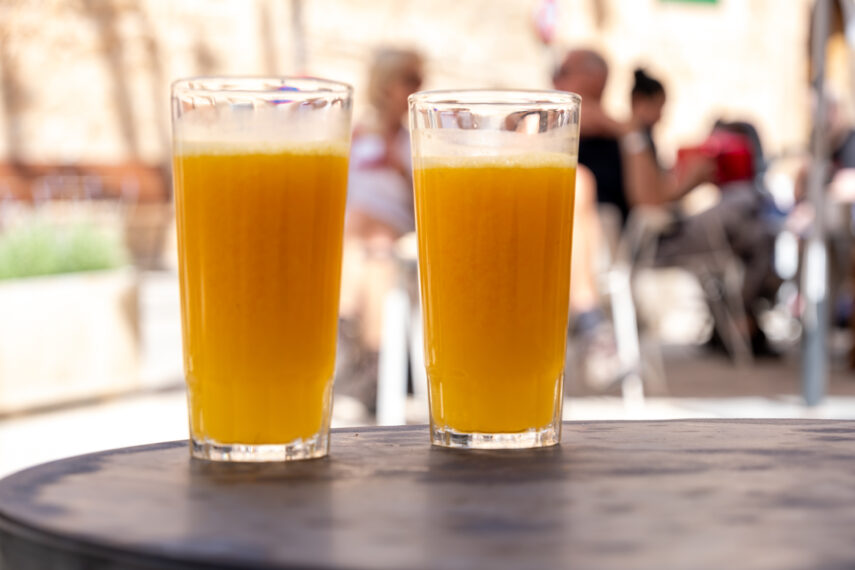
Zumo de Naranja, a Sip of Sóller Valley
Head out of Palma toward the Tramuntana, and the landscape changes fast. Suddenly you are surrounded by citrus groves, their branches heavy with fruit almost all year round. The Sóller valley has built its reputation for oranges for more than a century, and once you taste one, it is easy to understand why. Cyclists stop mid ride for a wedge of fresh orange. Others prefer it pressed and nicely chilled in one of the town’s cafés. Either way, this is what the south tastes like.
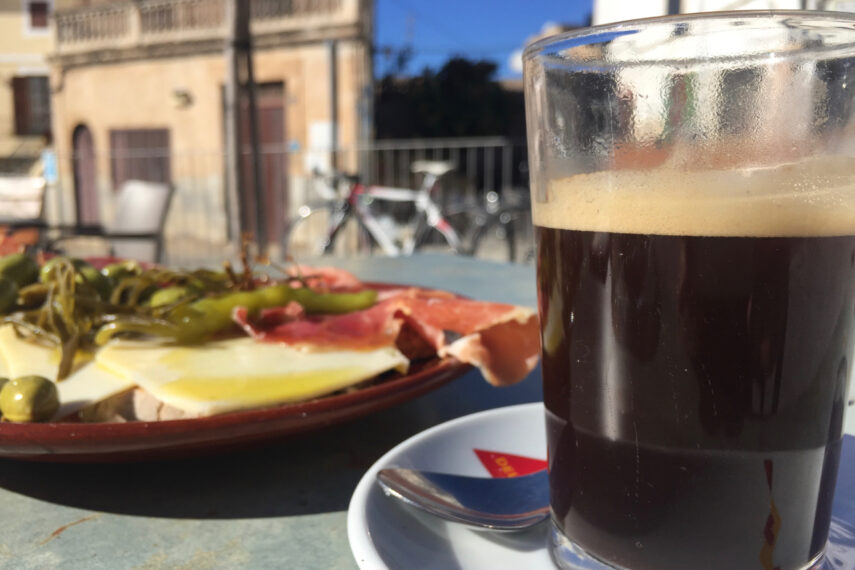
Pamboli, Daily Bread
Ask any Mallorcan what they eat for a hearty breakfast or a quick lunch, and pamboli will come up sooner or later. The dish could not be simpler. Take a slice of rustic bread, rub it with a halved tomato, pour on a generous amount of olive oil, and finish with a pinch of sea salt. From there, you can add whatever you like. Serrano ham and Mahón cheese are the usual choices, though nobody will judge you for keeping it plain. This is the merienda in its purest form, a hearty snack that works just as well as breakfast or a late afternoon pick me up.
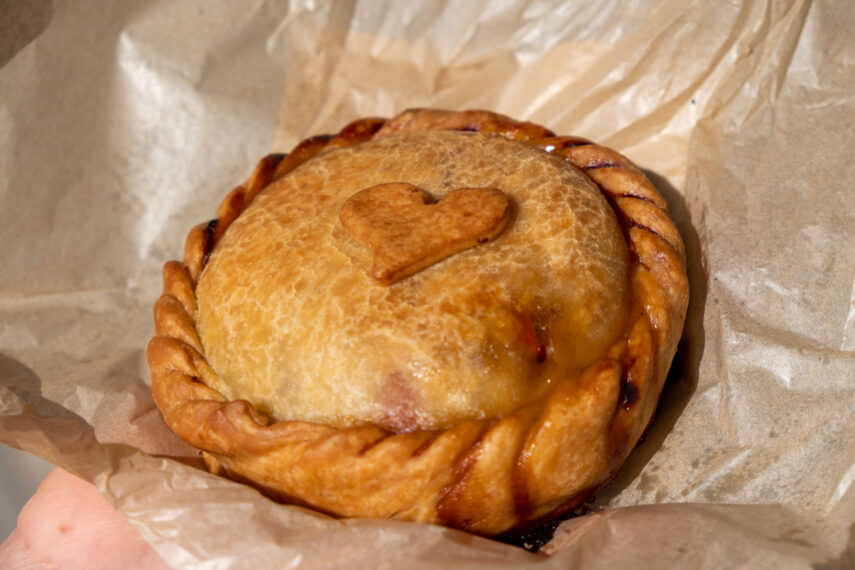
Empanada, a Handheld Classic and a Seasonal Delicacy
The empanada is where things get a little more playful. Unlike its Latin American cousins, the Mallorcan version is a small, individually sized pastry, usually filled with peas and meat. Adventurous eaters should look for the one filled with llampuga. This fish is caught only in late summer and early autumn, so it does not appear on menus the rest of the year.
According to the bakers behind Fornet de la Soca, the llampuga empanada has become even more popular than their ensaimada. And there are apparently only a couple of places left on the island where you can still find it. Forn des Teatre in the heart of Palma is one of them, so keep that name in mind for your next stroll through the old town.
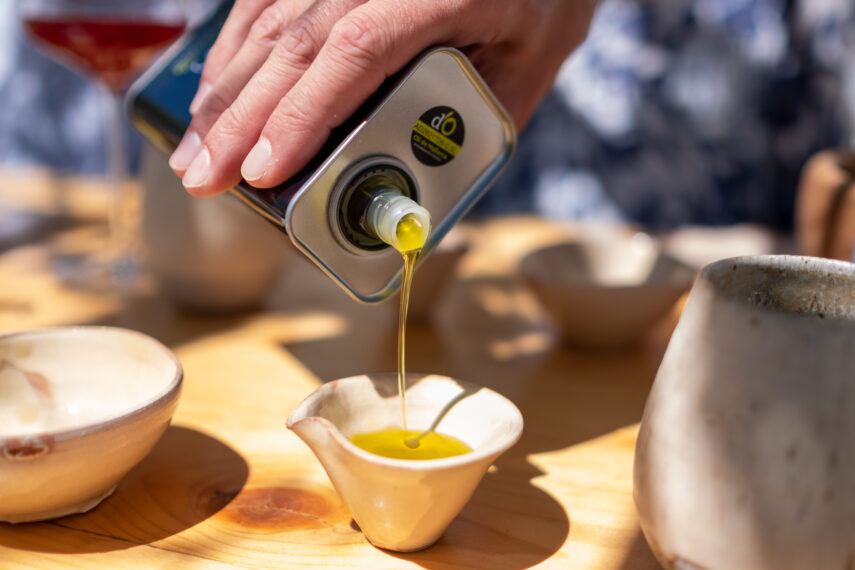
Olive Oil, the Island’s Liquid Gold
Before lunch or dinner, it is common practice on Mallorca to nibble on a small bowl of olives. Or to dip a small piece of bread straight into fruity local olive oil, then finish it with a pinch of coarse sea salt, ideally the prized Flor de Sal. It is deceptively filling, and more than one visitor has arrived at the main course already halfway satisfied, so pace yourself.
Three native varieties, Mallorquina, Arbequina, and Picual, are still grown and pressed across the island, and the D.O. Oli de Mallorca label guarantees the origin. Much like a good bottle of wine, a bottle of Mallorcan olive oil is worth bringing home. It keeps the taste of the Mediterranean sun long after the trip ends.
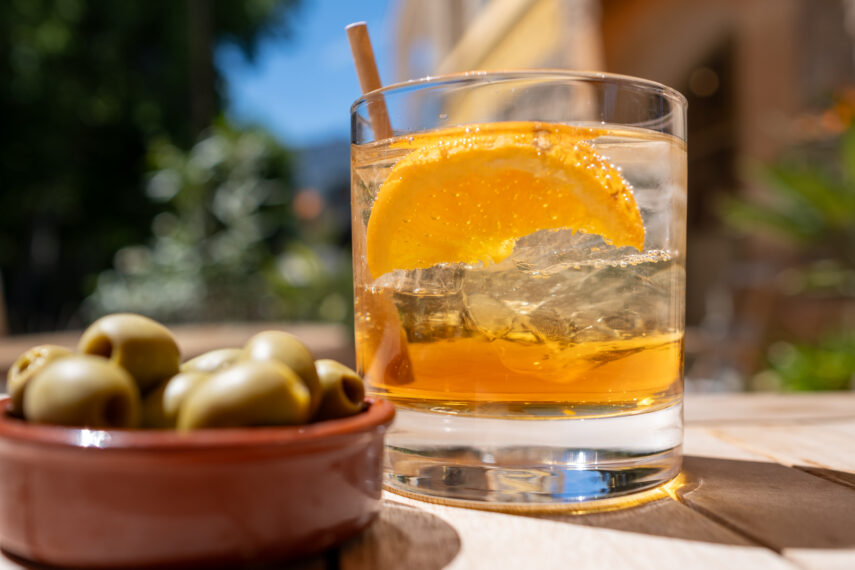
Amargéro, the Bitter Orange Behind Mallorca’s Newest Aperitif
Not every Mallorcan tradition is centuries old. Amargéro is a recent addition, yet it has spread quickly across the island’s bars and restaurants. The liqueur is made from the bitter oranges that are organically-grown on farms around Sencelles. Mixed with cava, it becomes a spritz. Poured over tonic, it turns into a classic aperitif. The color alone recalls a Mediterranean sunset. Restaurants known for Mallorcan cuisine, including Ca’n Boqueta in Sóller and Joan Marc in Inca, have already added it to their menus. So this is one flavor you can chase from town to town.
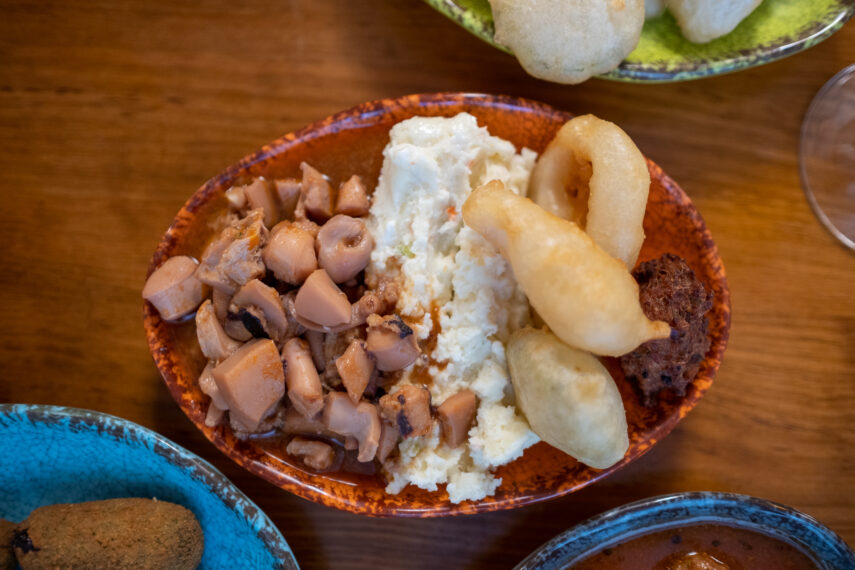
Variat, Best of Tapas, on a Single Plate
Everyone loves tapas, but choosing between a dozen tempting small plates can be its own kind of challenge. Variat solves that problem in one move. The dish gathers several Mallorcan tapas classics onto a single plate. Typically albóndigas, ensaladilla rusa, frito mallorquín, and pica-pica, sometimes with croquetas or calamares thrown in for good measure.
Variat has quietly become more popular with locals than tapas itself, and a bar that still serves it is usually a sign that it caters to neighbors rather than tourists. Pair it with a cold beer after a long bike ride or a hard day, and you will understand the appeal immediately. In Palma, Bar Bosch, Bar Cristal, and Bar Monaco are all worth a visit. And Bodega La Rambla or the cozier Bodega Morey are great picks if you want to build your own plate.
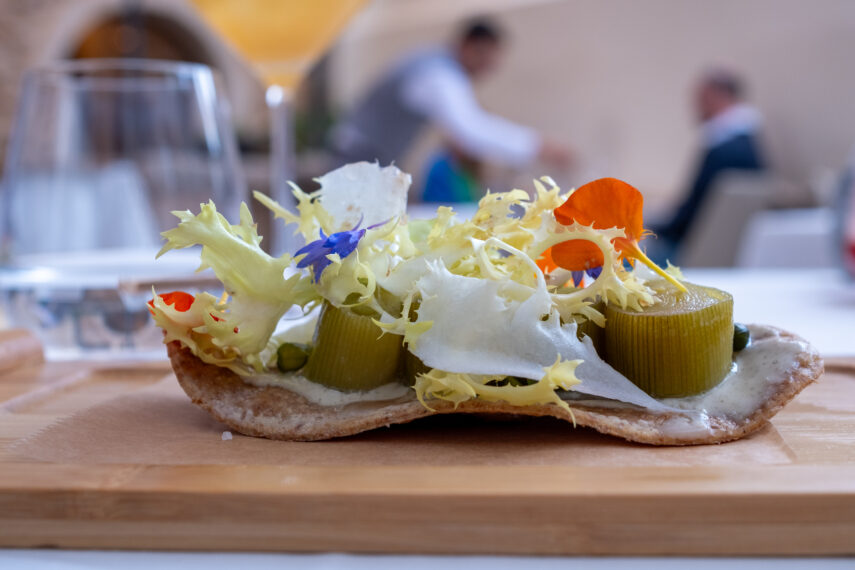
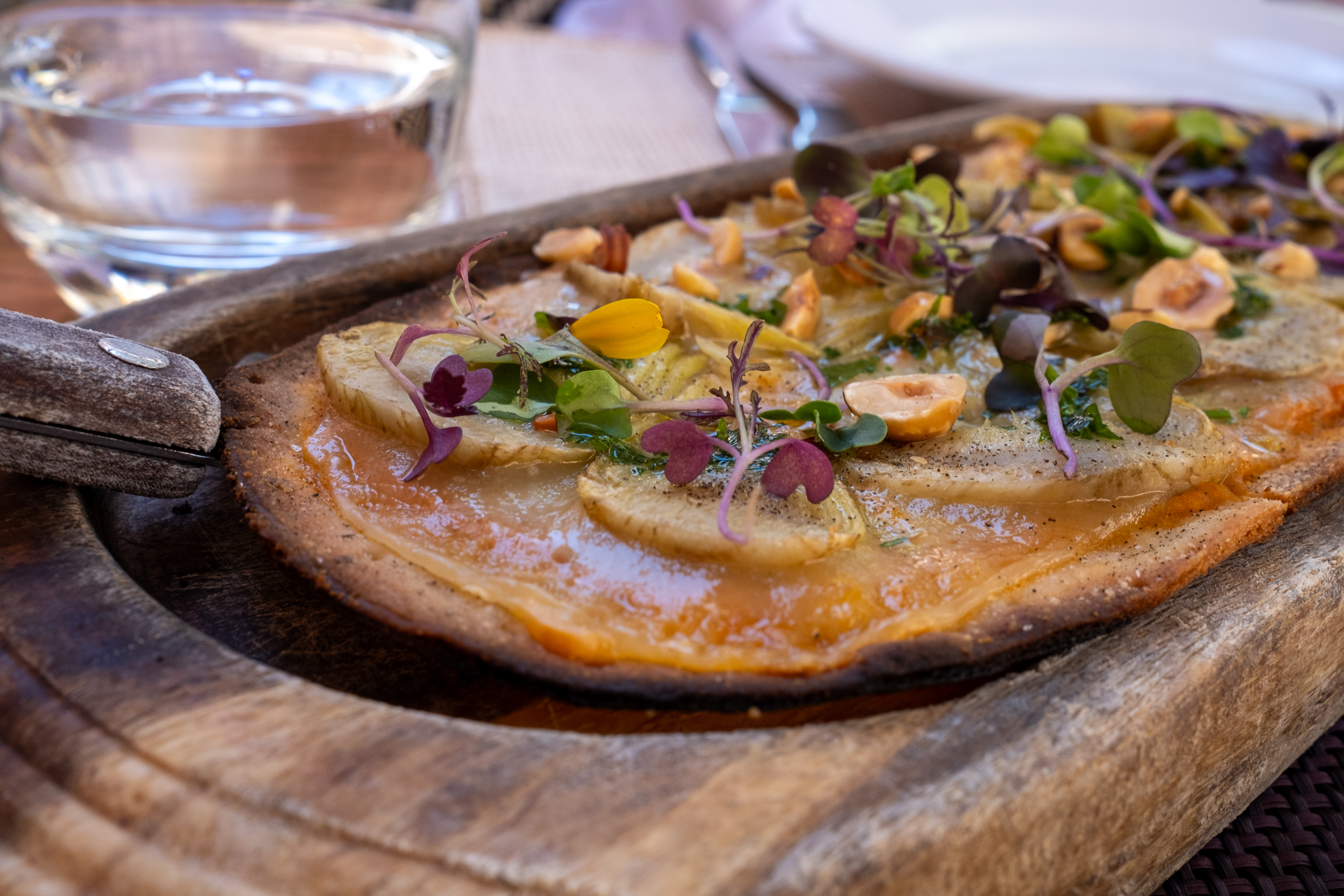
Coca, Mallorca’s Flatbread, and Definitely Not a Pizza
Even well known travel guides get this one wrong sometimes, calling coca a Mallorcan pizza. It is not. There is no cheese in the classic version, and the dough itself is closer to a cracker than to anything Italian. The most traditional topping is trampó, a mix of tomato, green pepper, and onion. Though bakeries across the island experiment endlessly with other combinations.
You will find coca sold by the slice at nearly every forn, or bakery, and it also shows up as a first course in more formal eateries. Restaurants like Mouna, Miceli and DaiCa have built loyal followings around their versions. And Ca na Sissy is another good stop if you want to try a seasonal twist on coca.
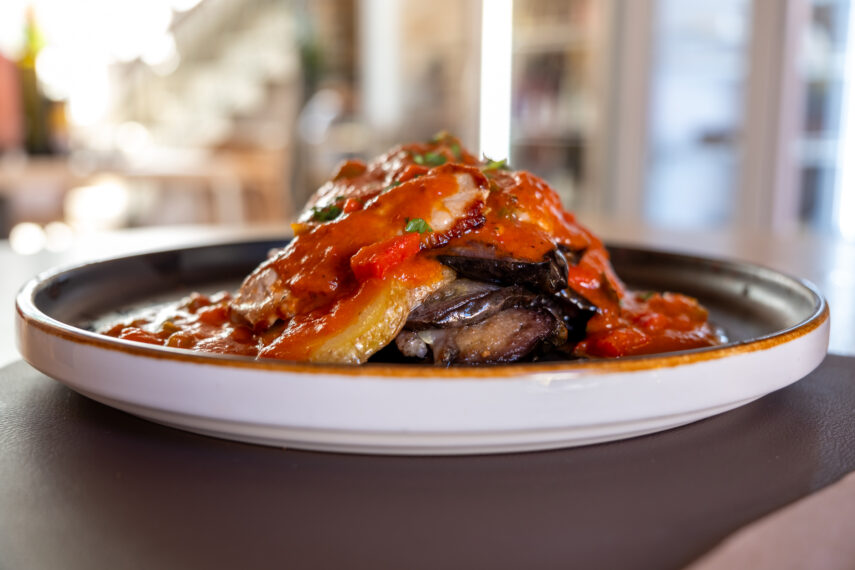
Tumbet, Layers of Summer Vegetables, Mallorca Style
If coca is the island’s answer to flatbread, tumbet is its answer to ratatouille, though calling it that undersells the dish a little. Potatoes, eggplant, and peppers are fried separately, then layered in a clay dish and topped with a simple tomato sauce. The result holds its texture better than most vegetable stews, since each ingredient keeps its own character instead of melting into the mix.
Tumbet can stand on its own or act as a side for grilled meat or fish, and either way it captures the rhythm of a Mallorcan summer garden. Look for it wherever traditional Mallorcan cooking is still taken seriously. Particularly in the island’s cellers, the old wine cellars turned restaurants that remain popular in towns like Inca.
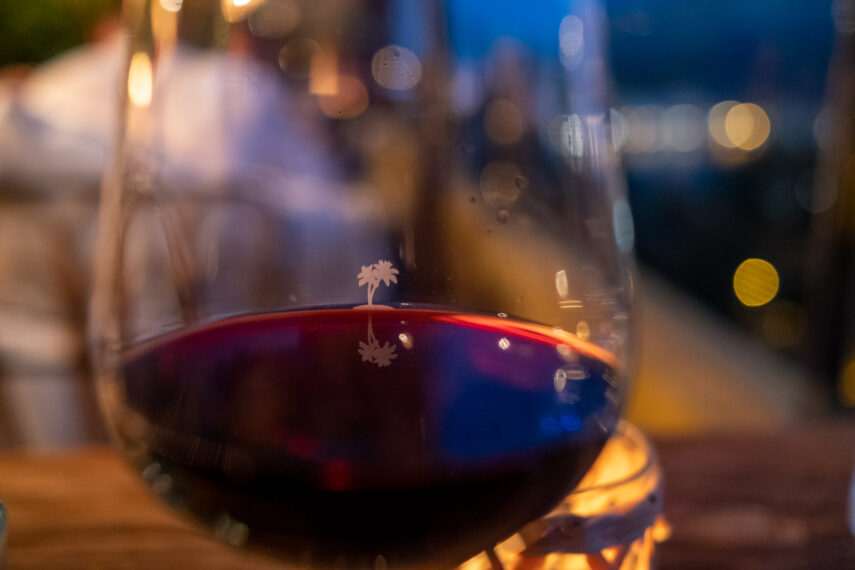
Wine, a Glass That Rarely Leaves the Island
No Mallorcan meal really feels complete without a glass of local wine on the table. The island grows its own native grapes, including Manto Negro and Callet. And its wine regions around Binissalem and Pla i Llevant have gained a real following over the past decade, even if the bottles rarely make it past the coastline. That scarcity is part of the charm. Since most of what is produced stays on the island, ordering a glass here means tasting something you likely will not find anywhere else.
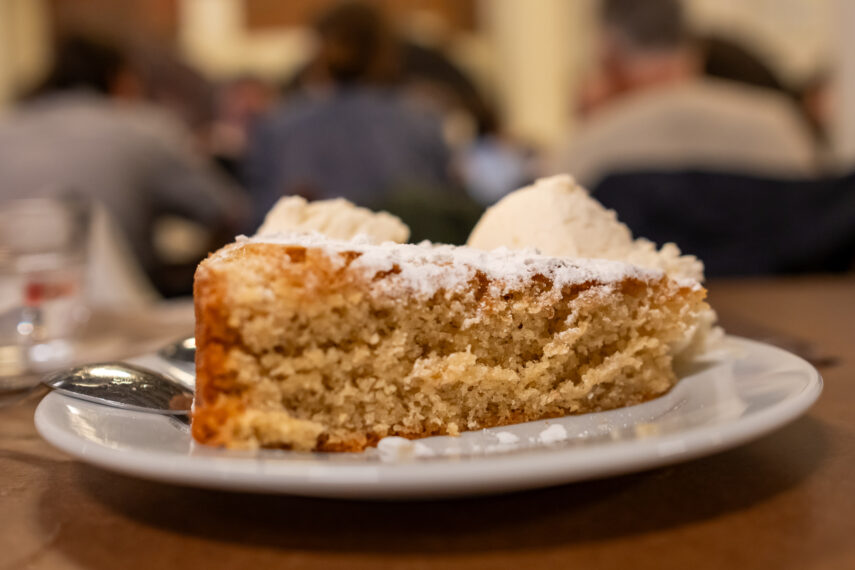
Gató, the Almond Cake Worth Saving Room For
Mallorca’s almond trees are famous for their blossoms. What follows the blossoms, though, is just as worth celebrating. Almonds turn up throughout the island’s kitchen, roasted before a meal or folded into desserts. But none of those desserts is more beloved than gató, a flourless almond cake with a moist, dense crumb. Order it the traditional way, with a scoop of almond ice cream on the side, and you have found the perfect way to end this particular tour of the island.
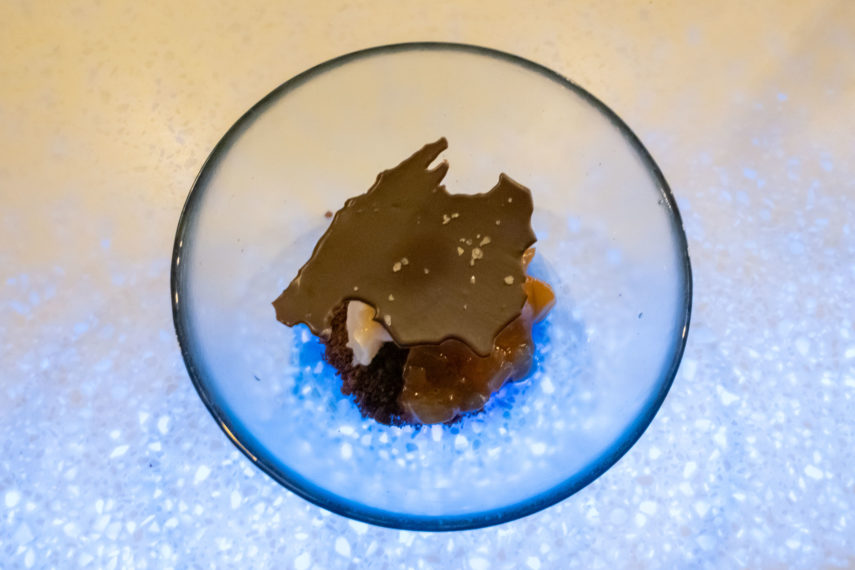
A Small Continent on One Plate
That is the thing about Mallorca. It never asks you to choose between mountains and coast, or between old traditions and new ones. And its food follows the same rule. An ensaimada from a hundred year old bakery sits comfortably next to a bitter orange aperitif invented a couple of years ago. A humble slice of bread with oil earns the same respect as a carefully layered tumbet. Perhaps the real answer to what to eat in Mallorca is simply this: stay curious and try a little of everything. Taste your way through this island and you will understand it far better than any guidebook could explain. So go find a table, order slowly, and let Mallorca show you who it really is, one bite at a time. 
Many of the local specialties featured in this article also make great gifts to bring home. Read more about souvenirs from Mallorca, right here.