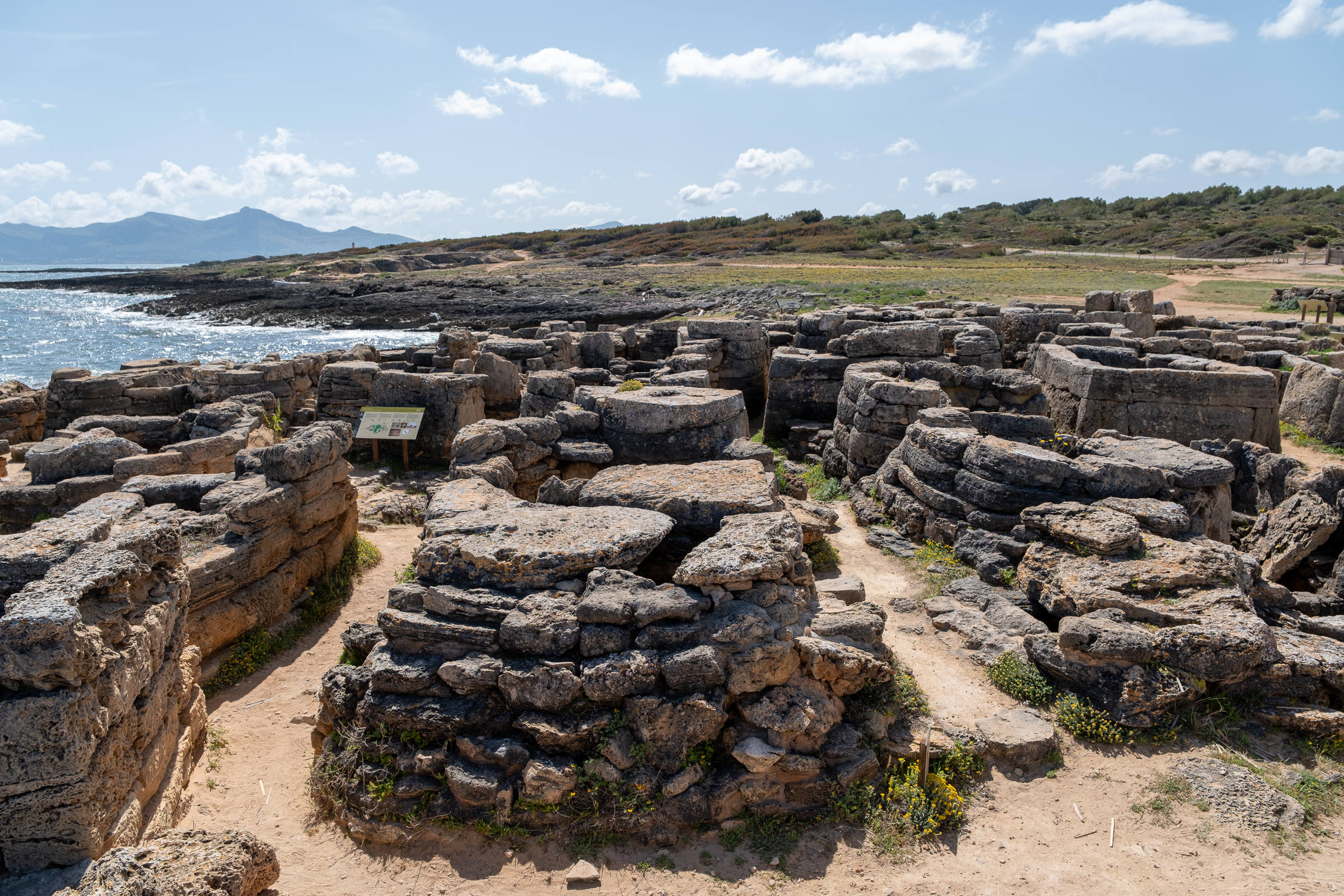
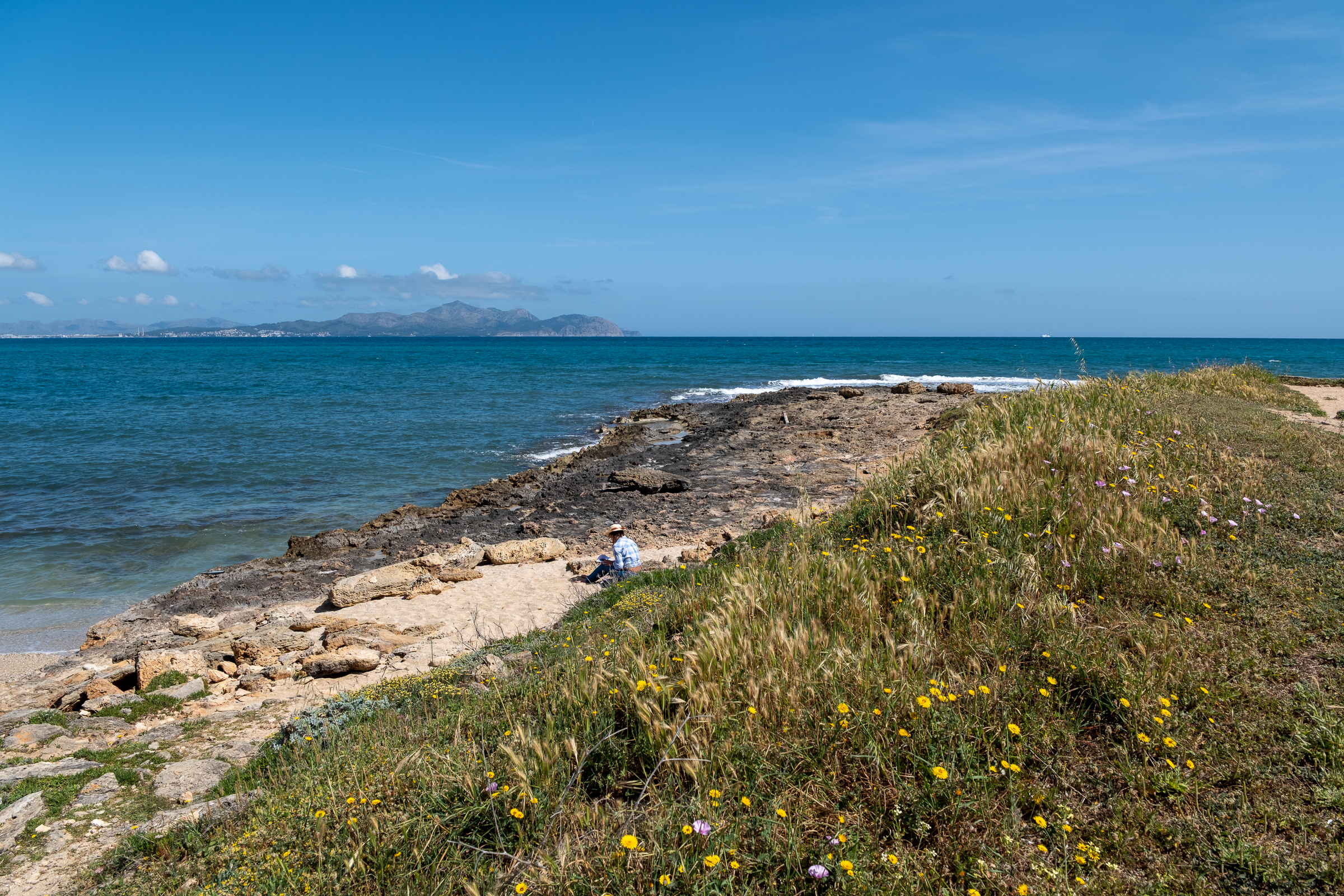
While vacationers splash in the turquoise shallows at Can Picafort, a few kilometers down the coast something entirely different waits. A narrow headland pushes out into the sea, and on it, small piles of stones and shallow depressions in the earth arrange themselves into a pattern so old it barely seems real. This is the Necròpolis de Son Real, popularly known as the Cemetery of the Phoenicians. You may have heard of it. But nothing quite prepares you for the moment you actually stand there, caught between awe and a kind of quiet disorientation.
A Thousand Years of the Same Life
That feeling deepens the more time you spend on the Finca Pública Son Real, the historic agricultural estate that frames the whole experience. Because what this place holds is not just ancient tombs and artifacts. It holds, if you pay attention, the long, slow arc of Mallorcan life itself. For century after century, not much changed here. Farmers worked the same fields, tended the same animals, and answered to the same social order within the thick walls of the possessió. Then, somewhere around the 1960s, everything did.
The Estate That Time Forgot
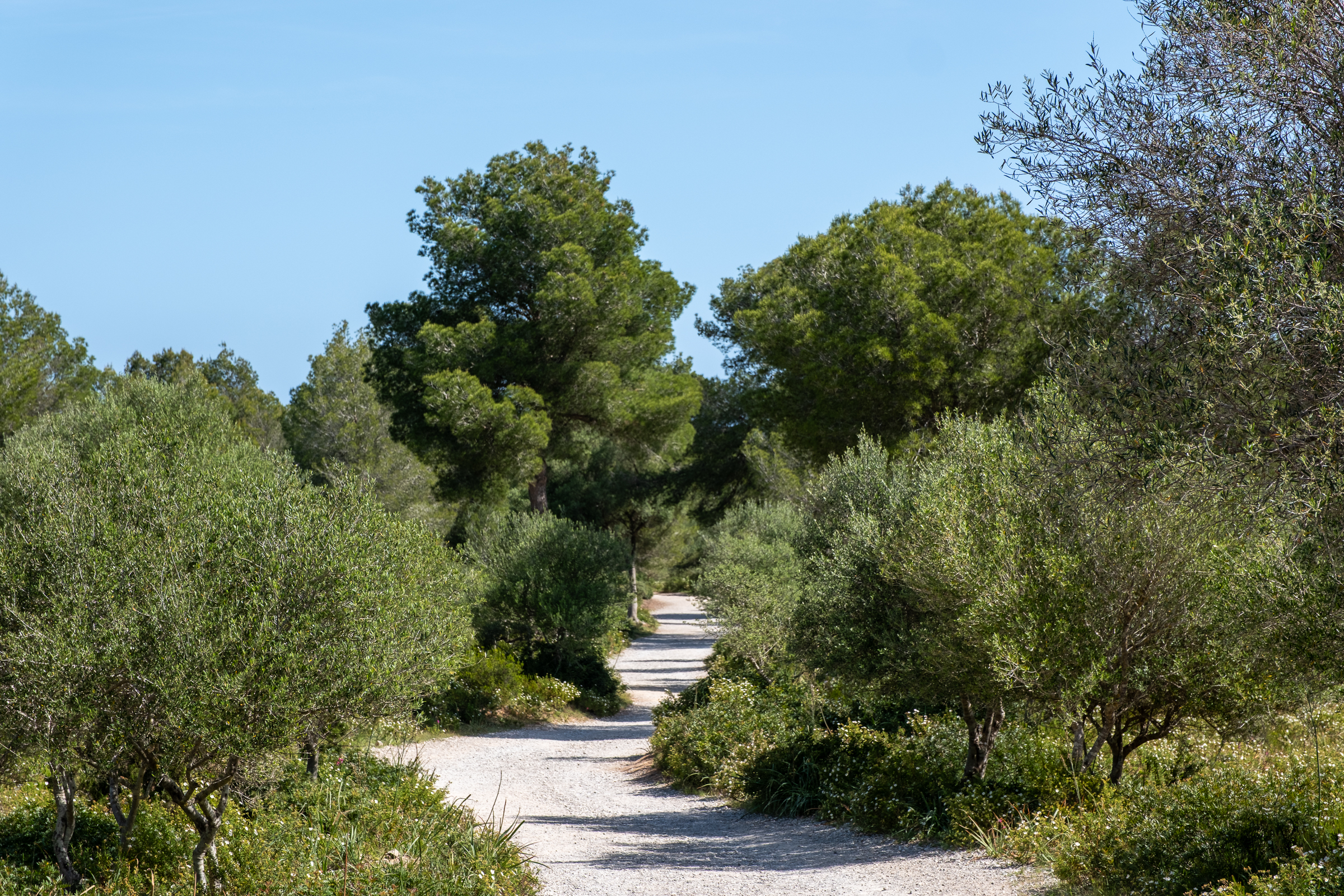
Approach the finca from the Ma-12 and the first thing you notice is the scale of it. Nearly 400 hectares of holm oak woodland, umbrella pines, low garrigue scrubland, and coastal dunes. The Balearic government acquired the estate in 2002, recognizing it as something irreplaceable: a living document of natural and human history. Four marked trails wind through the property, gradually opening up toward the sea as the trees thin and the light changes.
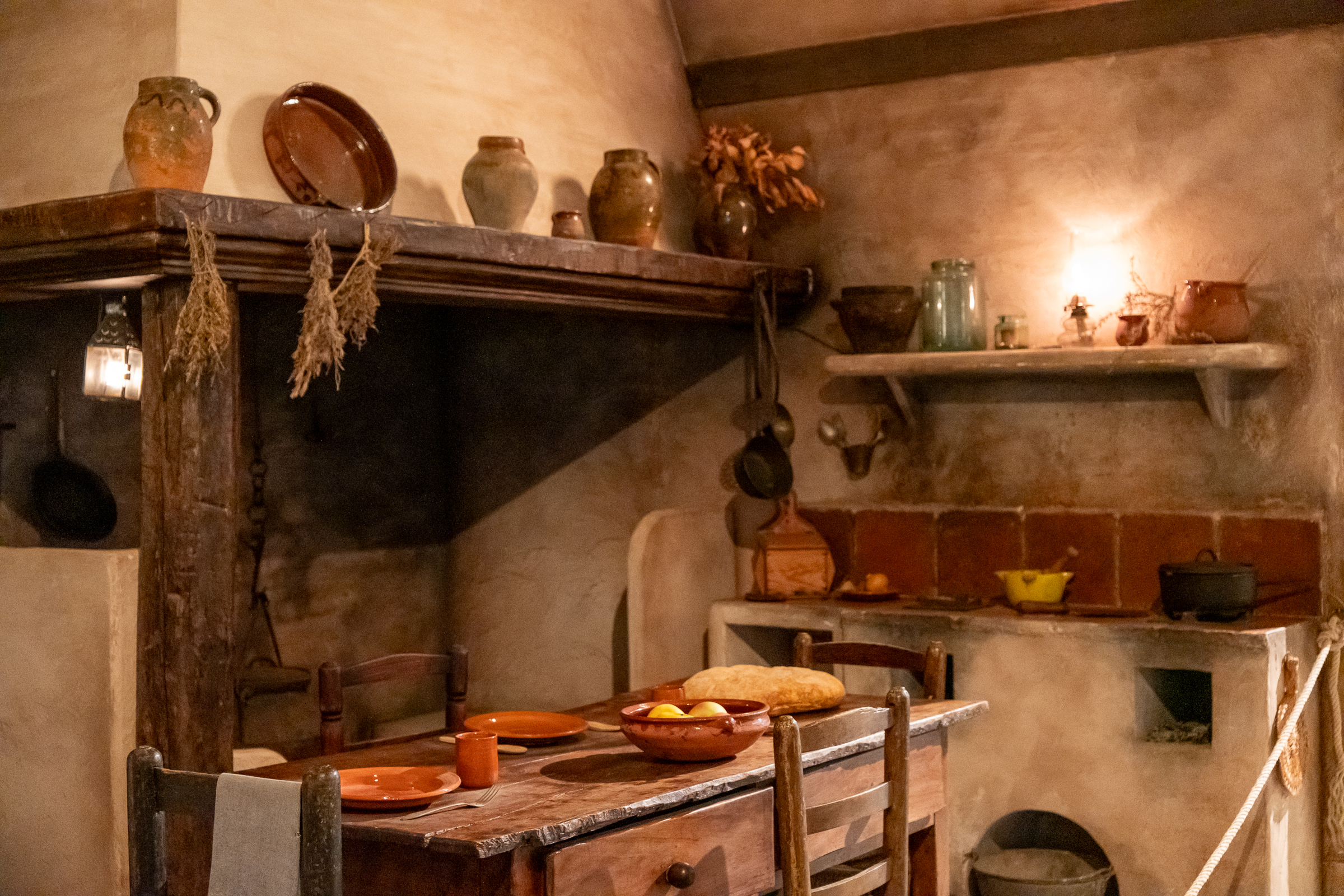
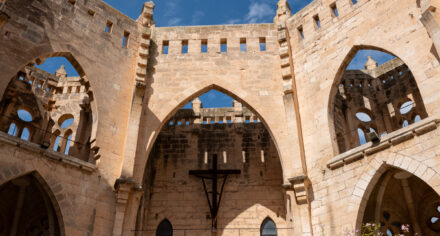
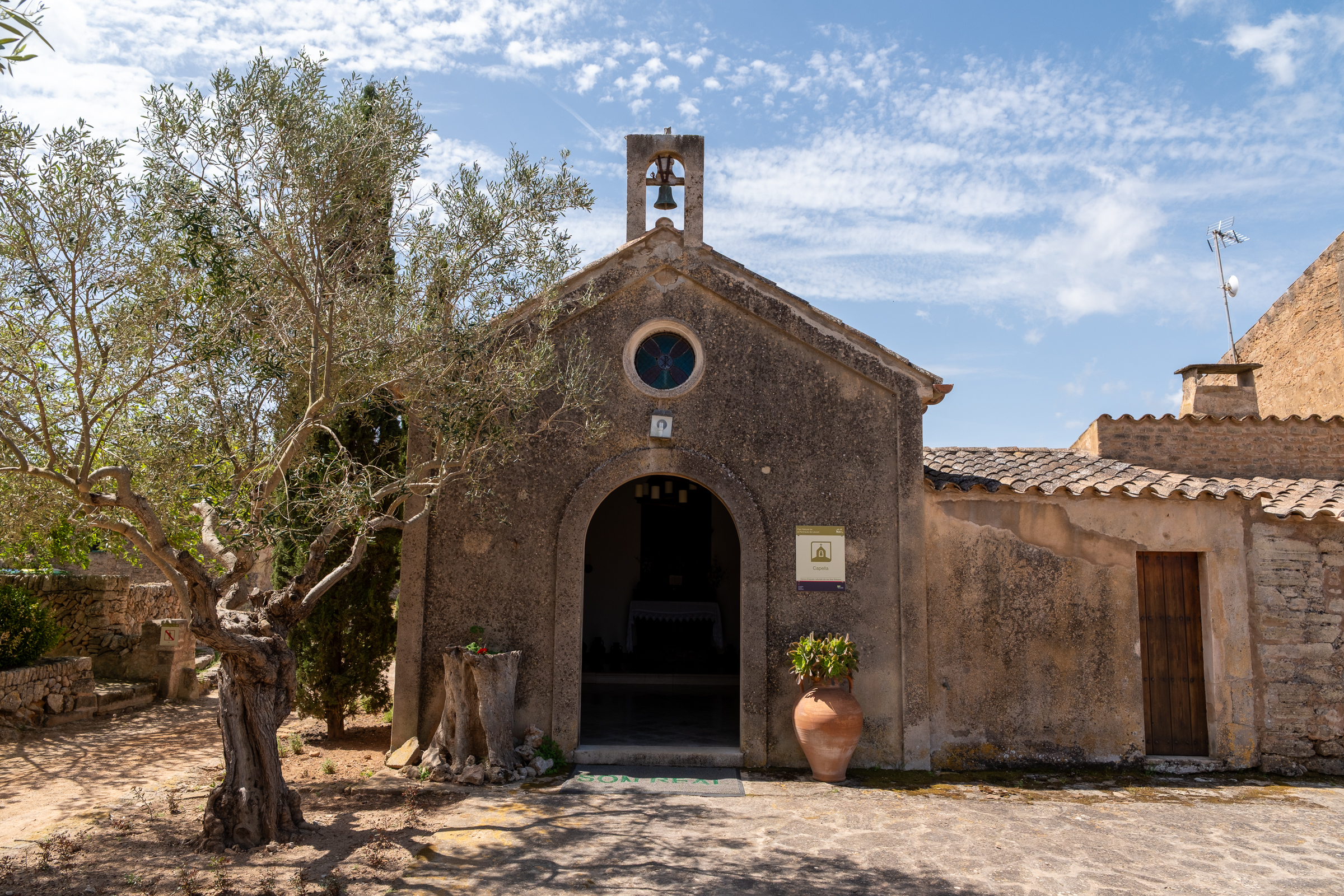
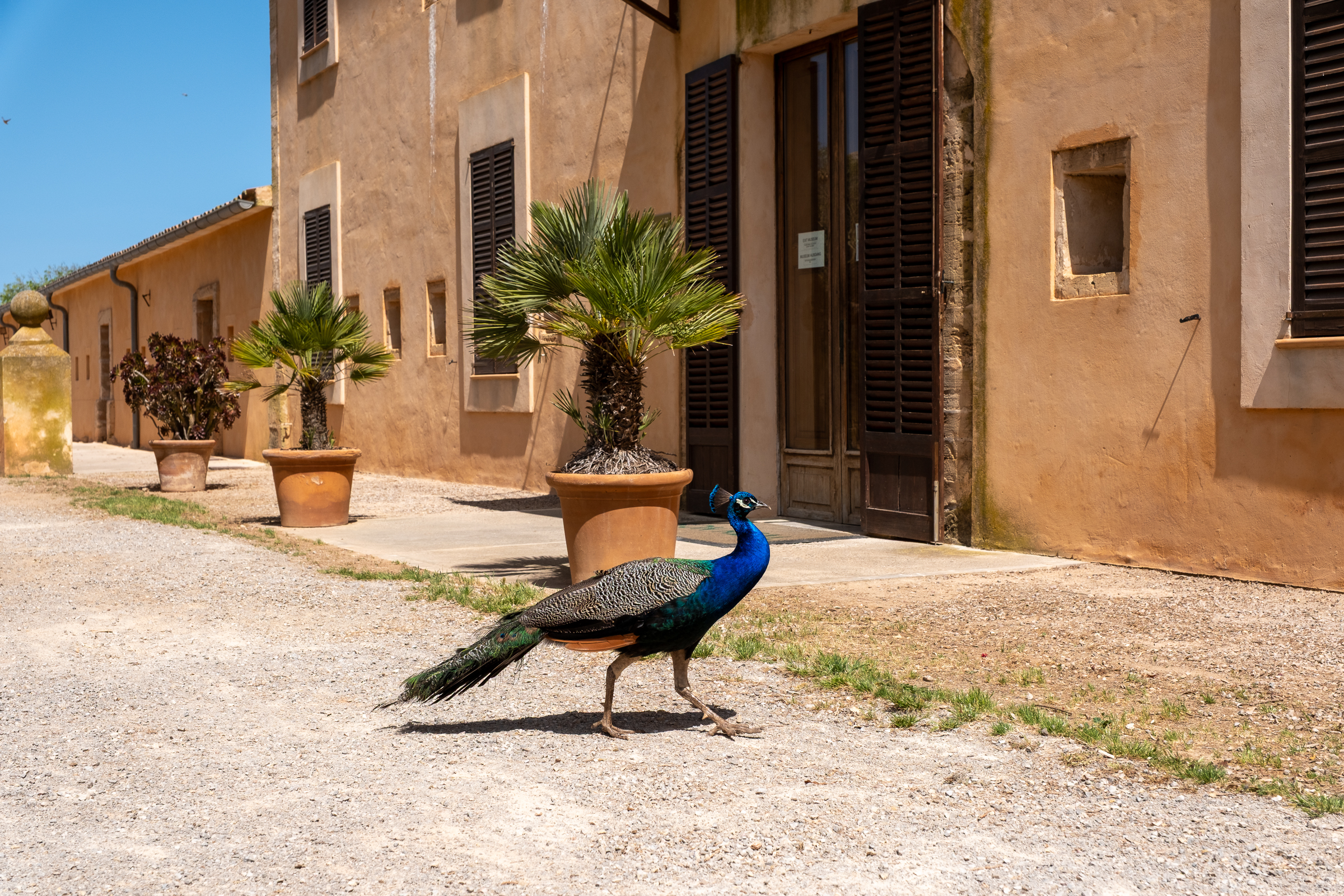
At the center of it all stands the possessió itself, a classic Mallorcan estate built during the Middle Ages and modified across the centuries. The manor, the chapel, the courtyard, the storehouses. These were not just buildings. They were the architecture of an entire social world, housing everyone from the landowner down to the day laborers who worked from dawn onward. At any given time, over a hundred people might have lived and worked here together. Today, the estate houses a small museum and interpretation center that brings that vanished world carefully back to life.
Three Thousand Years in a Single Walk
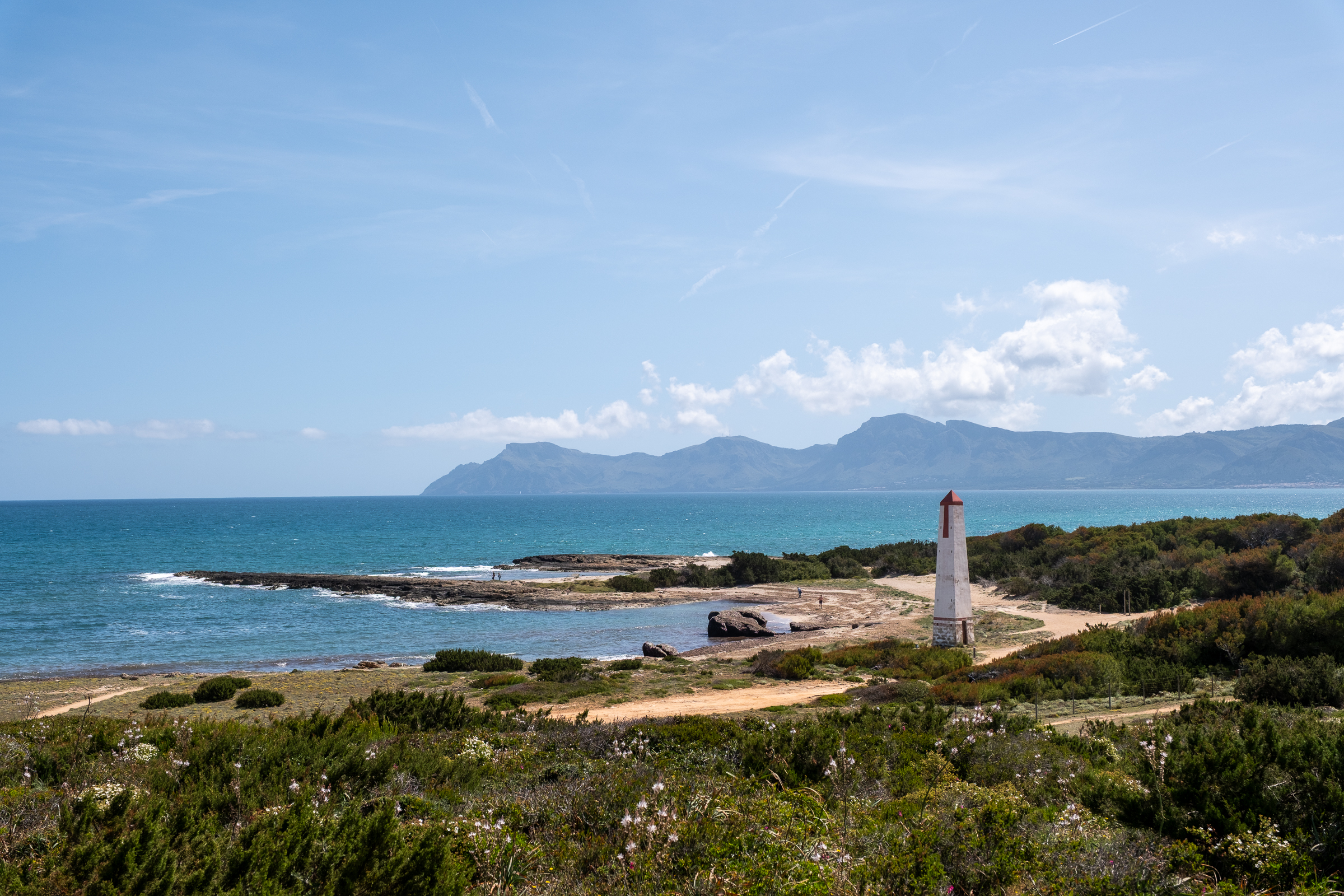
Follow one of the trails to the coast and the timeline begins to stretch. Out in the dunes, a series of white, obelisk-like towers rise with an almost eerie symmetry. These are navigation towers built for the Spanish Navy in 1941, used until 1970. Submarine crews once aligned pairs of them to calculate a precise firing position. Fourteen pairs in total, standing silently in the sand like sentinels whose purpose has been quietly forgotten.
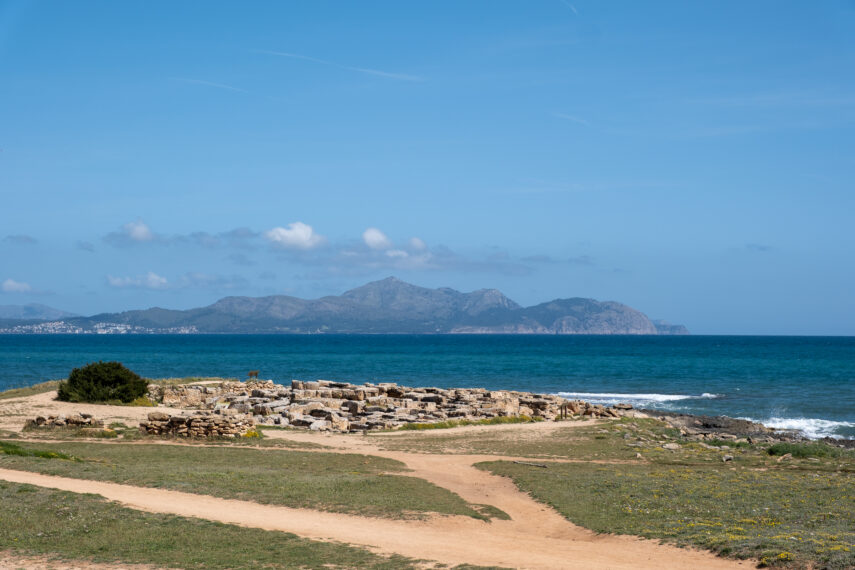
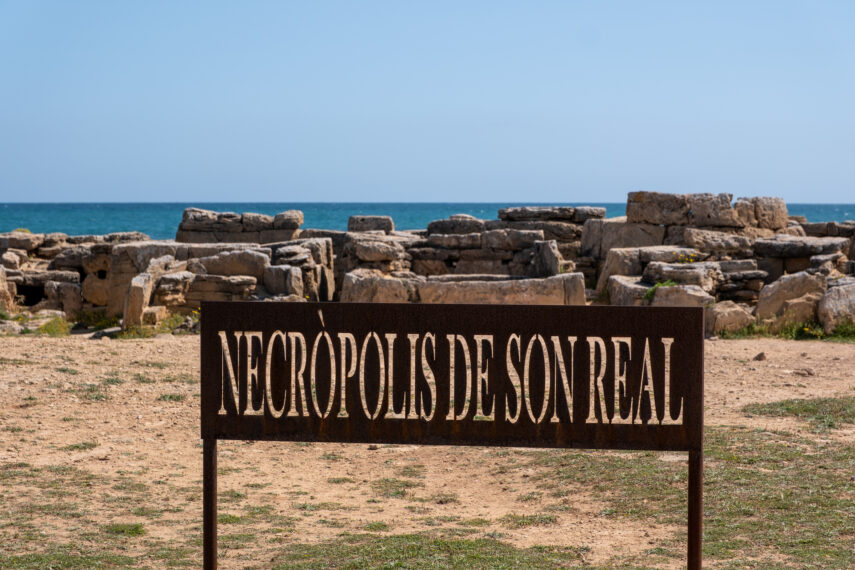
And then, a little further on, the necropolis itself. The oldest tombs here date back to around the 7th century BC, making them roughly 2,700 years old. More than 130 of them have been excavated so far, holding the remains of over 300 people. Some of the later tombs are shaped like small ships or horseshoes. Alongside the bones, archaeologists found jewelry, pottery, and metal objects. One compelling theory holds that this was an aristocratic cemetery, reserved for those who never had to work the land. Whether or not that’s true, the mystery is part of what makes it so arresting.
What Changed, and What Didn’t
Standing on the headland with the sea on three sides and the pines at your back, the coastline looks remarkably similar to how it must have looked when the first boats arrived from across the Mediterranean. That continuity is, in its own way, the most striking thing about Finca Son Real. The people changed. The empires changed. The faith changed. And yet the same fields were plowed, the same animals were kept, the same wind came off the same sea. Until, rather suddenly, it all stopped.
Mass tourism rewrote this island faster than anything in the previous two and a half millennia. The rural economy that had shaped Mallorcan life since the Bronze Age unraveled within a generation. Today, places like Son Real exist partly as memory and partly as a quiet argument: that something worth understanding lived here before the hotels arrived.
Getting There
Finca Son Real is located at km 17.7 on the Ma-12 between Artà and Port d’Alcúdia. Parking is free. The museum and interpretation center are open year-round from 9 a.m. to 4 p.m., also free. Bike rentals are available on-site. There is no café or food stand, so bring water and something to eat. And if you plan to walk all the way out to the necropolis along the shore, bring a towel. The sea is right there, and it has been there for all of it. 
Read more about coastal hikes on Mallorca, here, and the history of the island, right here.