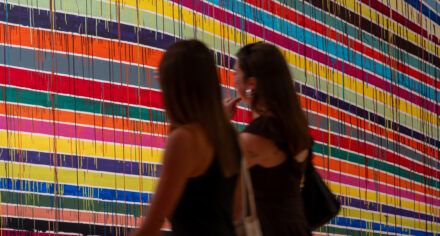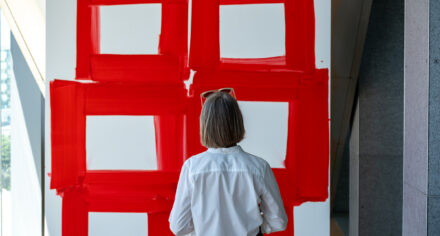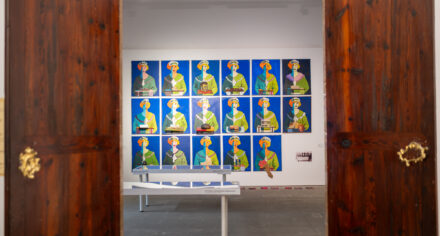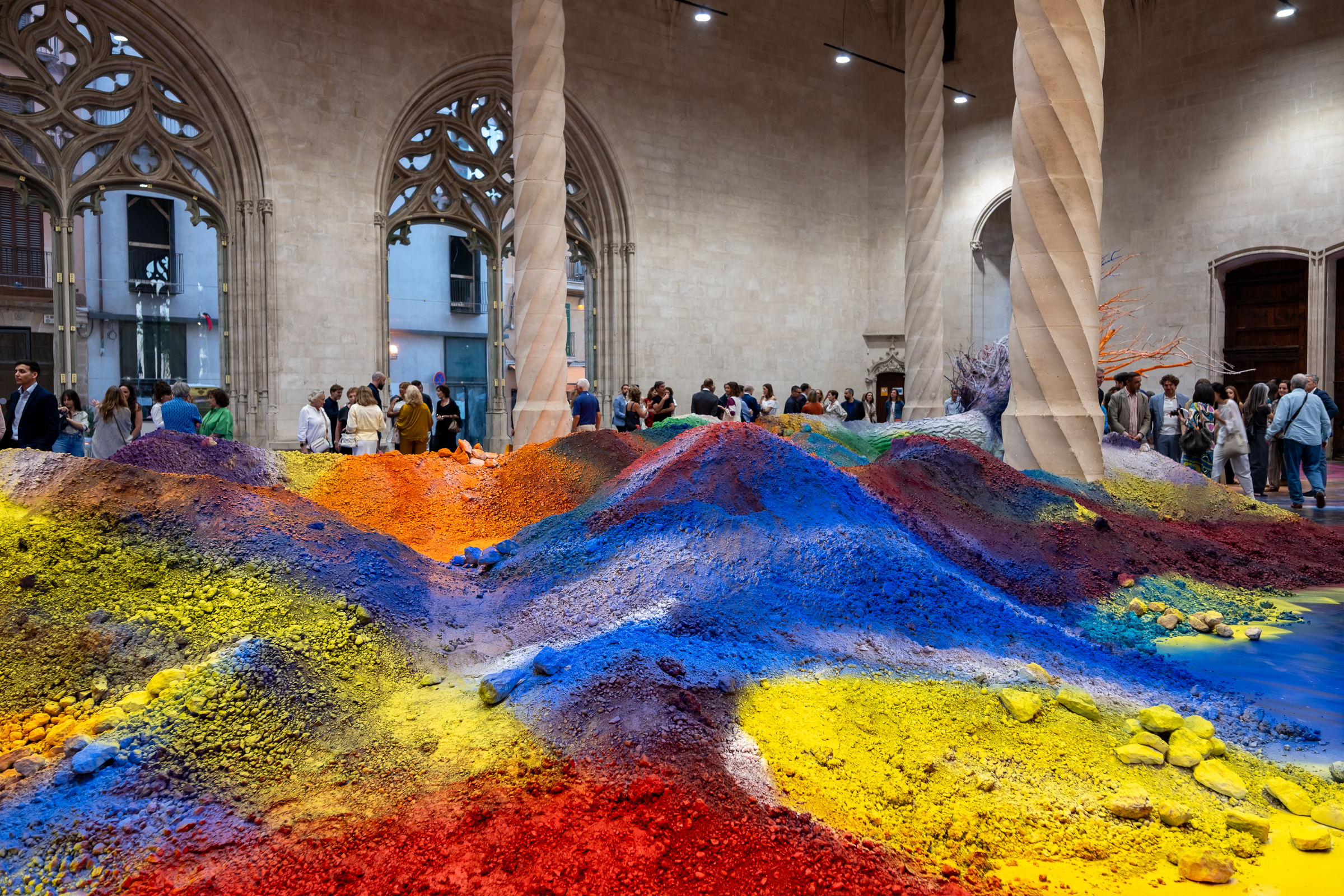
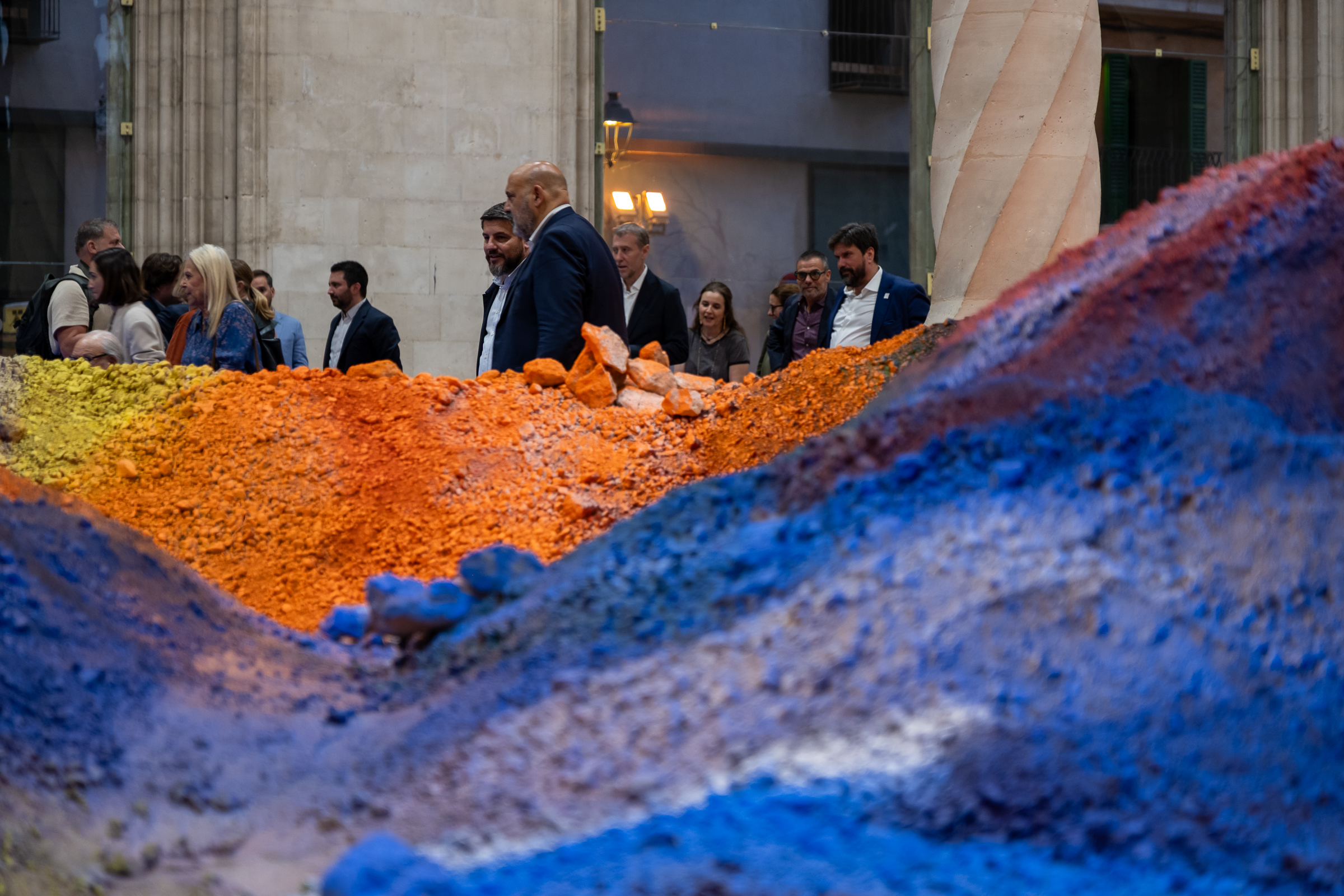
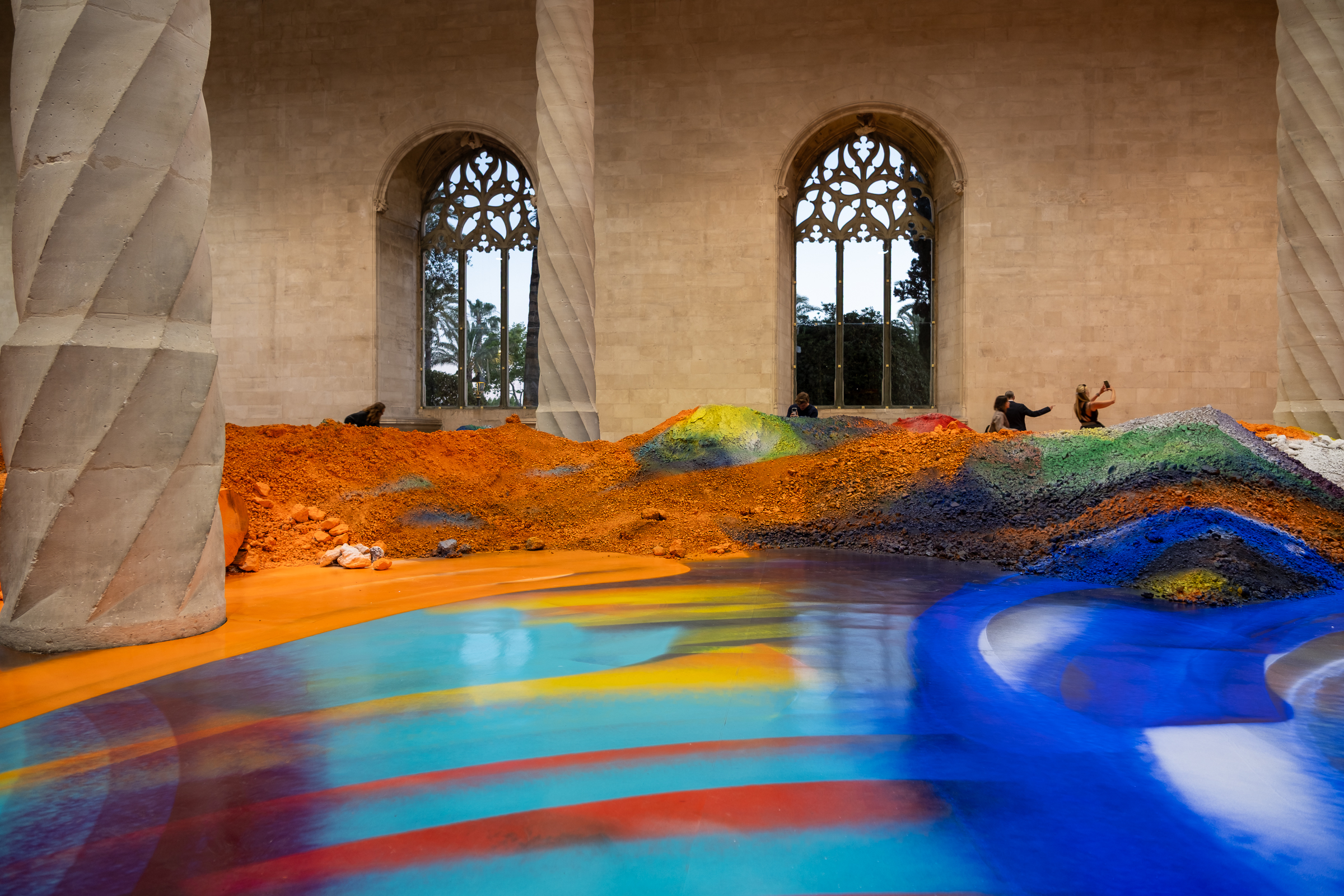
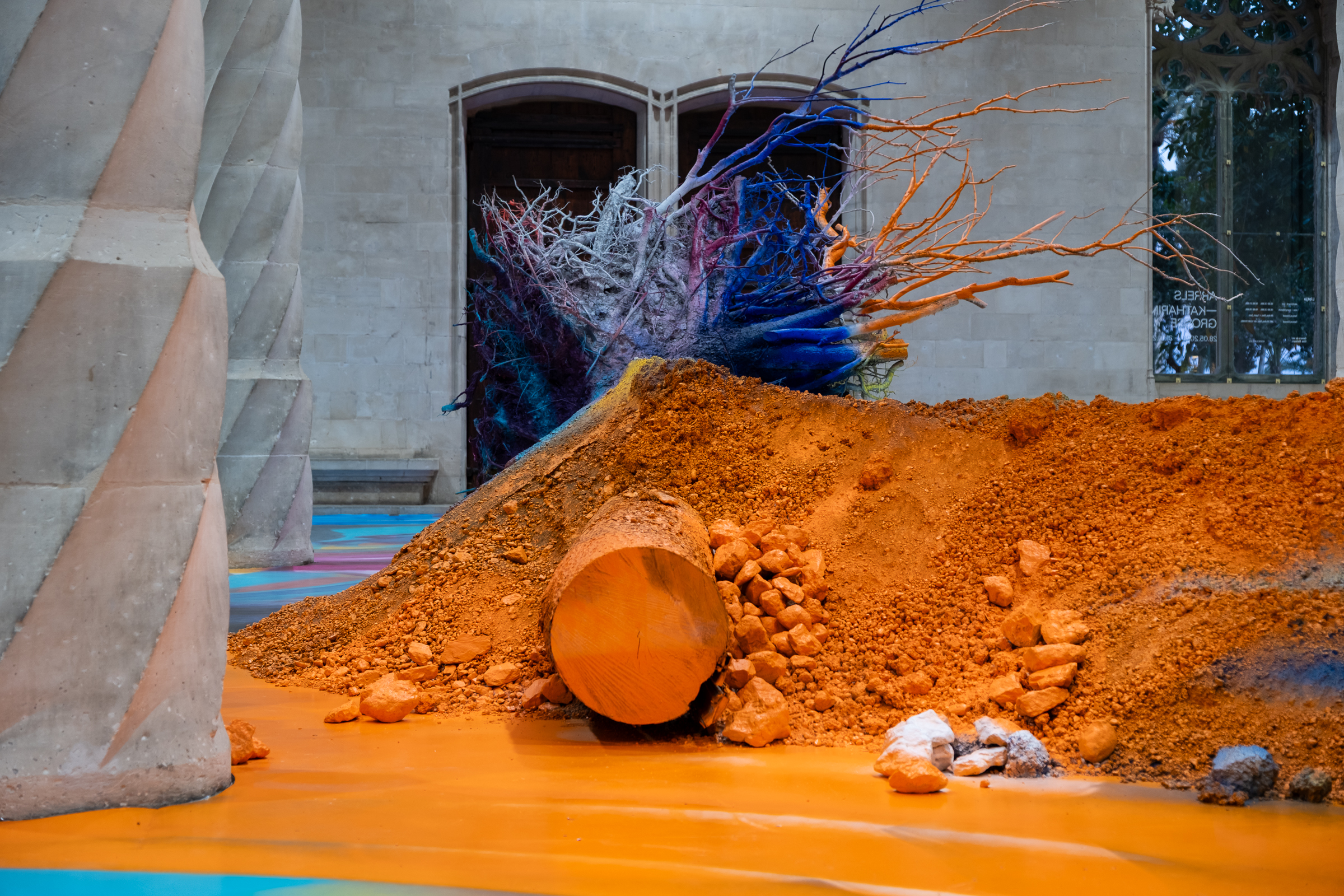
You step through the heavy wooden doors and stop. The light inside La Llotja falls differently today. The six spiralling columns still twist upward toward the vaulted ceiling, just as they have for nearly six centuries. But something has changed entirely. Color floods the room. It moves across stone, spreads onto the entire floor, pools in shadows, and erupts where you least expect it. Katharina Grosse’s exhibition “Arrels” (Catalan for roots) doesn’t hang on the walls of La Llotja. It inhabits them. The artist has built a landscape inside a landmark, conjuring something between painting, sculpture, and living terrain. The historic Gothic hall, which has always had the quiet gravity of a cathedral, now pulses with an energy that feels almost geological. Visitors slow down. They drift. They lean in and step back. No one rushes.
Opening Night
The vernissage takes place tonight, May 27th, the artist herself in attendance. And the crowd arriving at La Llotja knows exactly what kind of evening this is. Palma’s art world, together with curious locals and visitors from further afield, fills the space with an anticipation that’s palpable. The conversation flows easily in Mallorqui and Castiliano, in English and German.
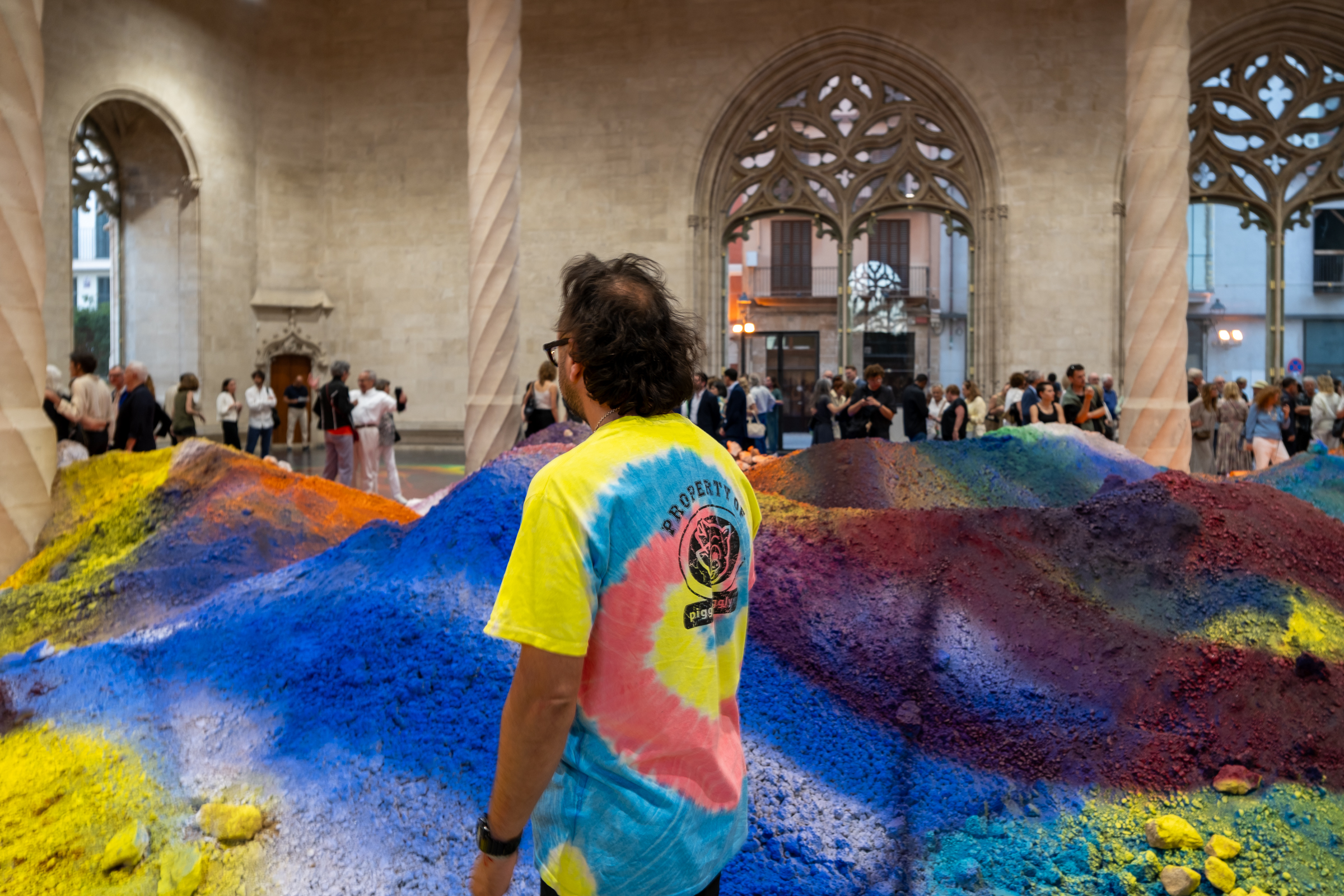
People circle the work, pause, exchange glances. Some gesture quietly toward a particular sweep of color or a strange accumulation of form on the floor. The atmosphere is curious rather than solemn, open rather than self-conscious. La Llotja does that. It grounds even the most ambitious contemporary art. And when Katharina Grosse is present in the room, the connection between artist, work, and place becomes impossible to ignore.
Katharina Grosse Redefines Painting
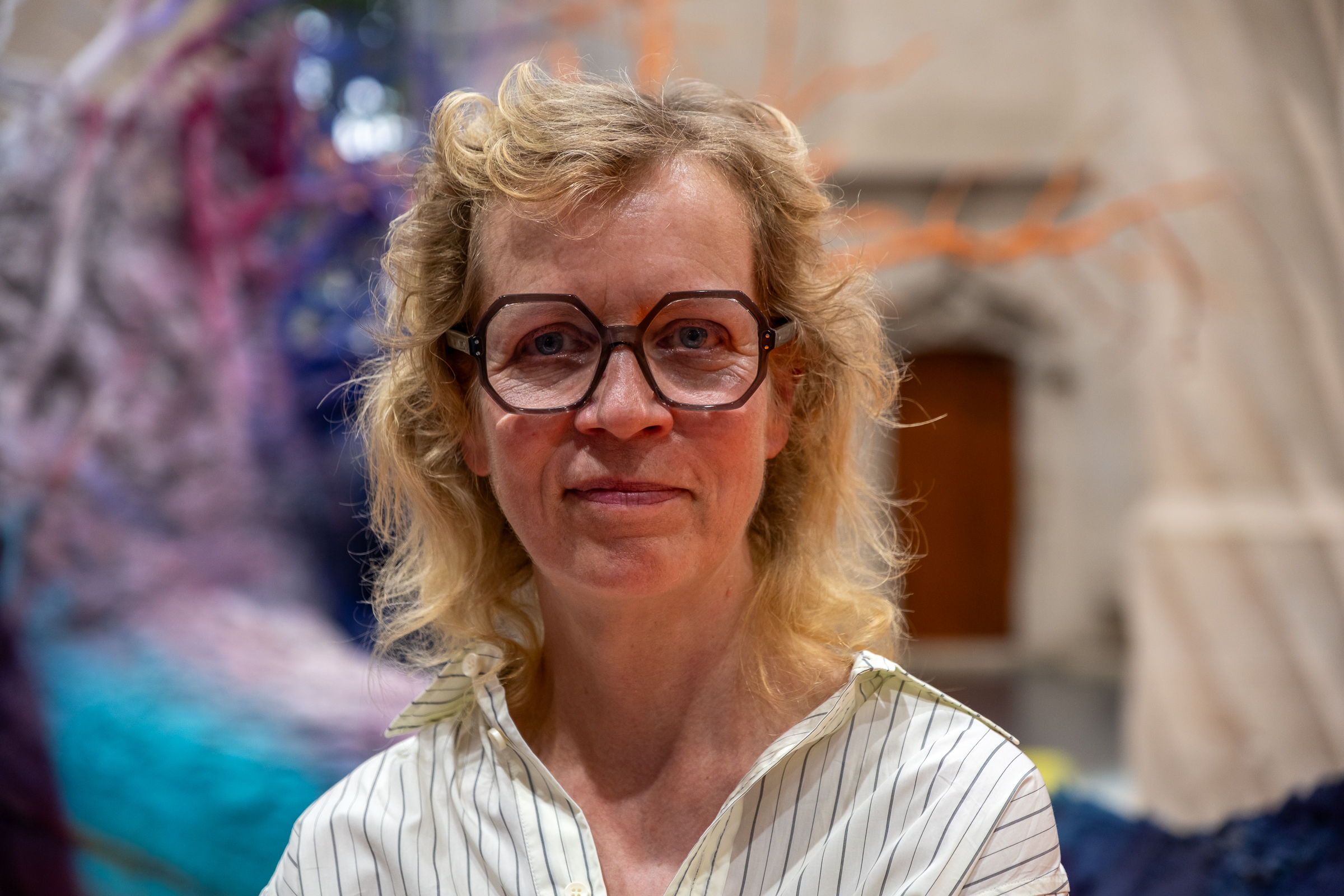
Born in Freiburg im Breisgau and based between Berlin and New Zealand, Katharina Grosse has spent more than three decades doing something that sounds impossible. She has redefined what painting is. Her tool of choice is an industrial spray gun. Her canvas is everything: walls, floors, fabric, soil, trees, entire buildings. She makes no distinction between painting and sculpture, between inside and outside, between surface and volume.
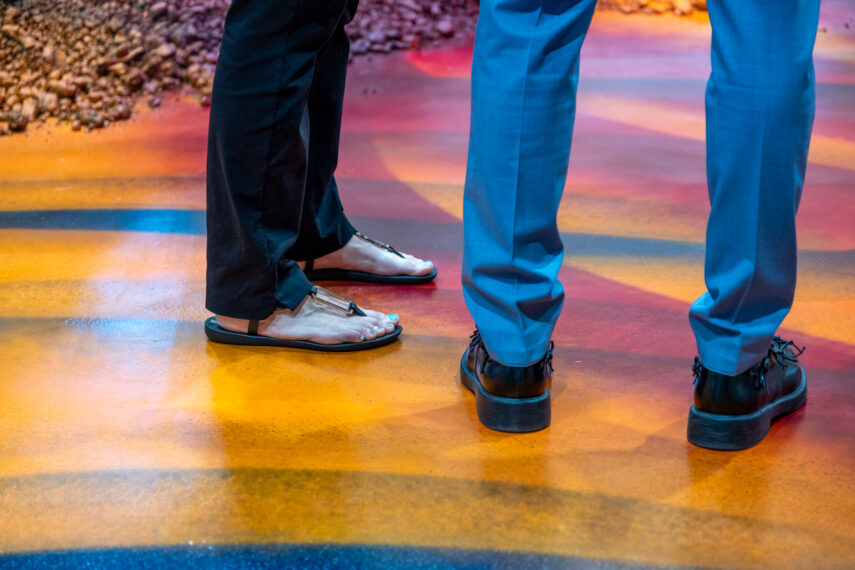
For Grosse, paint doesn’t go onto the world. It goes into it. The result is a kind of sensory immersion that pulls the viewer inside the work rather than placing them in front of it. Her installations have transformed train stations, museum halls, stretches of coastline, and urban ruins across Europe, the Americas, and beyond. “Arrels,” however, is something she herself describes as one of the clearest integrations of installation and architecture she has ever achieved.
The Stage That Makes Everything Possible
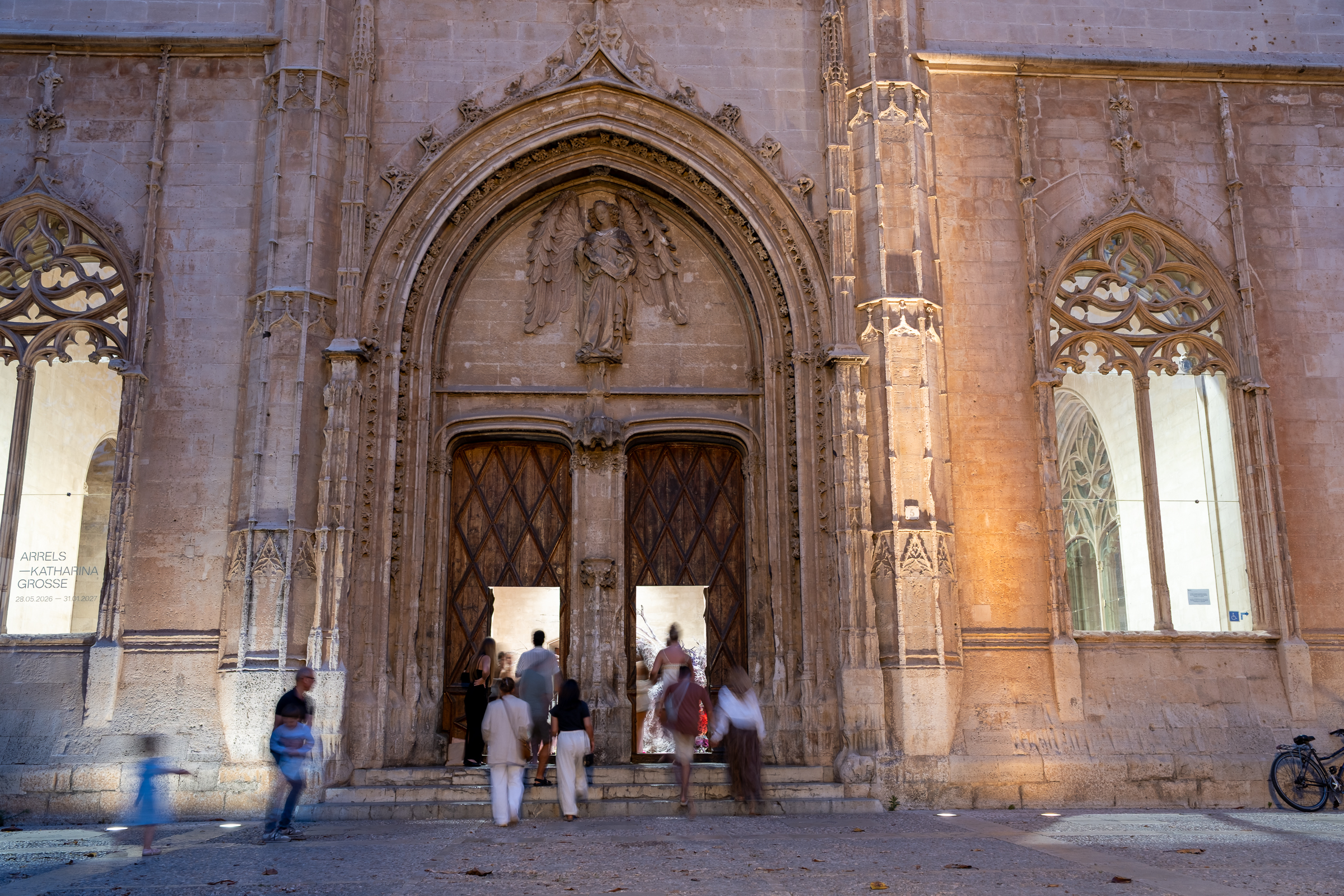
Not every building can hold work like this. But La Llotja was practically built for it. Constructed in the early 15th century as Palma’s bourse of maritime trade, the building is a masterpiece of Catalan Gothic architecture. All pinnacles, octagonal towers, and enormous blocks of Mallorcan limestone. Inside, a single vast hall of extraordinary height and light. The gargoyles on the exterior have been watching the city change for nearly 600 years.
And that interior, that one great, luminous room, has proven itself, again and again, to be one of the most powerful exhibition spaces in the Mediterranean. Rebecca Horn filled it with mirrors and music. Jaume Plensa floated two stainless steel faces inside it in what felt like a conversation across time. Julian Opie brought his graphic human figures here on the move. Each time, the building gives the art something you can’t manufacture: weight, history, resonance.
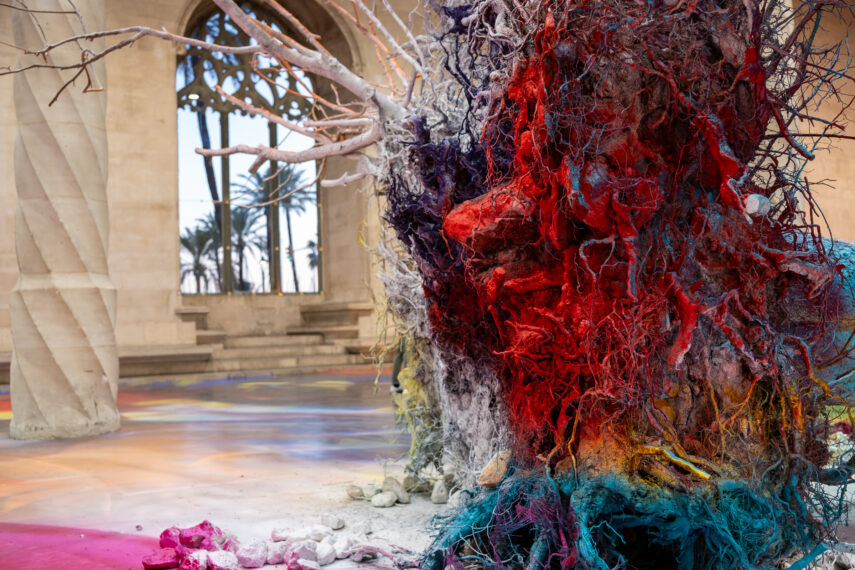
With “Arrels,” Grosse does something unprecedented even within this extraordinary lineage. Because for the first time, the site itself becomes the subject, its history as a space of exchange, its permeability, its deep symbolic roots in the island. She cannot paint directly onto its protected walls. So instead she builds a landscape within it, working around and through the architecture until the boundary between artwork and building dissolves entirely.
Visit Katharina Grosse: Arrels
The exhibition runs until January 31, 2027, so there’s time to visit more than once, which you will want to do. The experience changes with the light, with the season, with how many people share the hall with you. Opening hours are 10:30 am to 1 pm and 4 pm to 9 pm (from November onwards, the afternoon session closes at 7 pm). Admission is free. 
Read more about La Llotja and a nocturnal visit to this extraordinary building, or look back at earlier exhibitions including Julian Opie: On the Move, Jaume Plensa: Mirall, and the immersive performance Cartografía del Imaginario.
Pl. de la Llotja, 5
07012 Palma de Mallorca