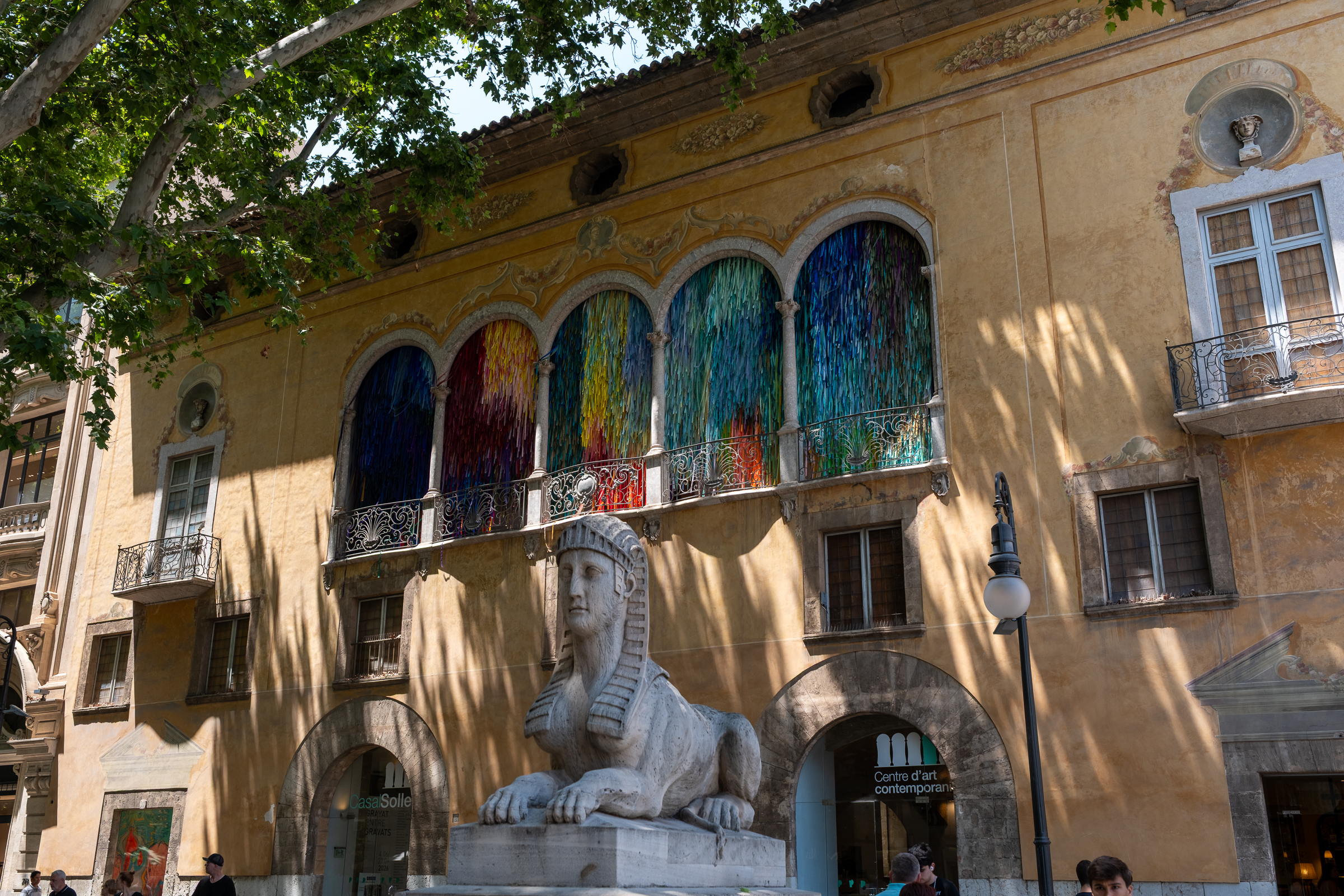
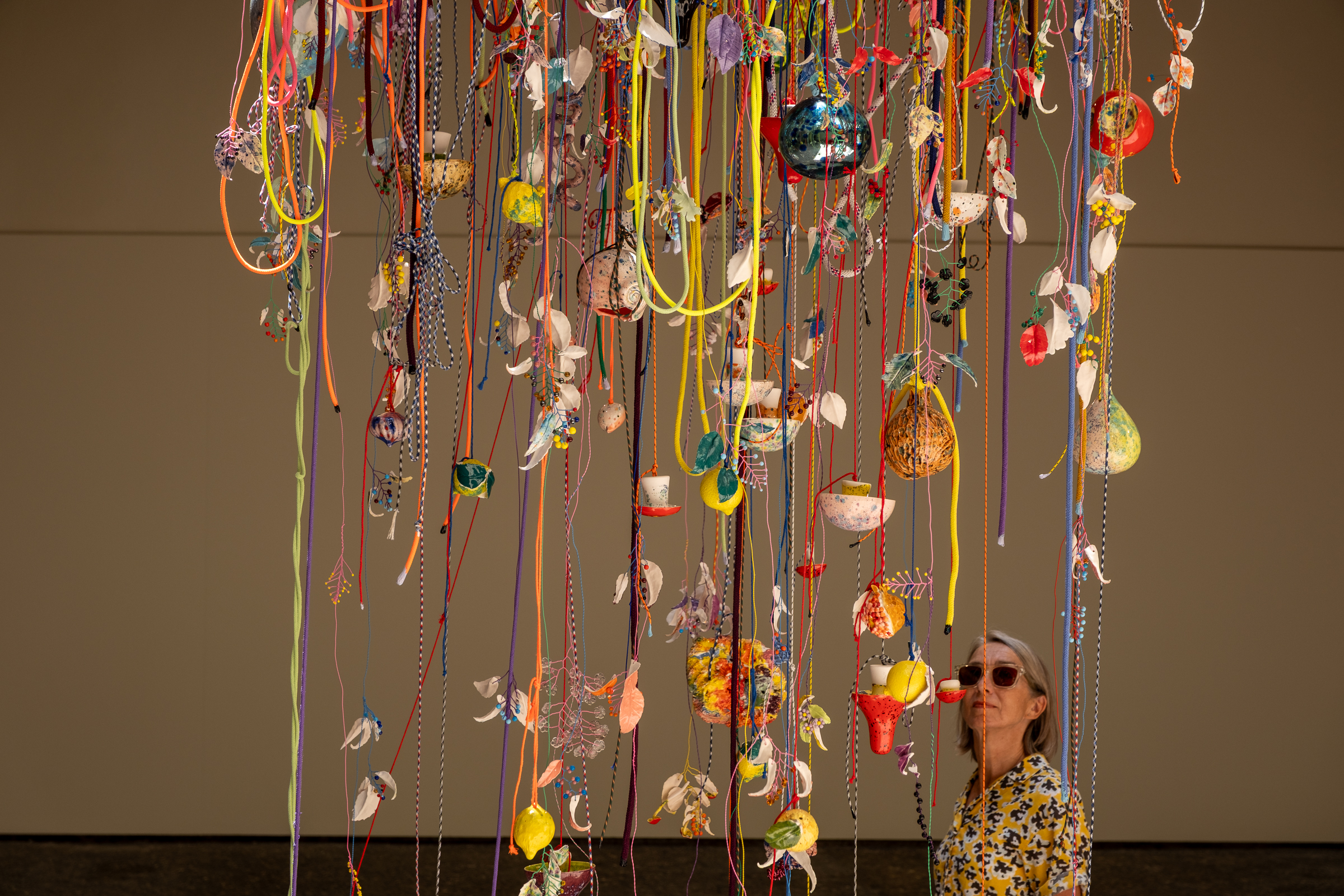
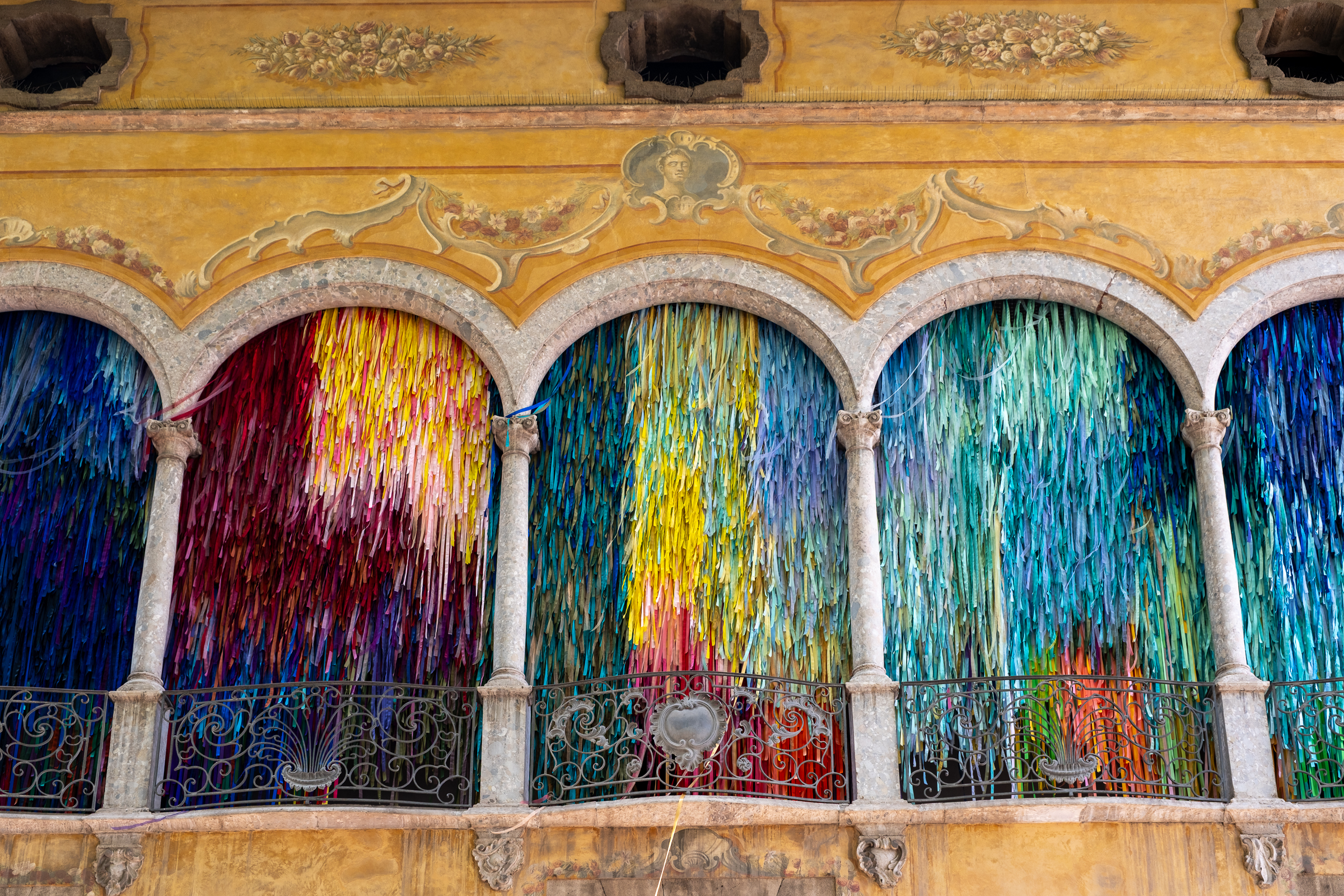
Passeig del Born hums with its usual crowd of shoppers and tourists marveling at the noble facades. This summer, though, something else pulls the eye upward. On the balcony of Casal Solleric, colorful strips of fabric sway in the wind, almost as if an underwater current were pushing them along. Ceramic fragments on a seabed reflect the light behind glass. And down in the courtyard, ropes and crystal hang like debris caught mid drift. Nuria Mora quietly turned the neoclassical mansion that anchors Palma’s grandest boulevard into a sunken world. Her exhibition is called “Había en el fondo del mar,” or “There Was at the Bottom of the Sea.” Its title comes from a 1931 poem by Luis Cernuda. So even before visitors step inside, the building already tells a story about wreckage, memory, and everything the sea quietly keeps.
Three Sunken Installations Take Over Casal Solleric
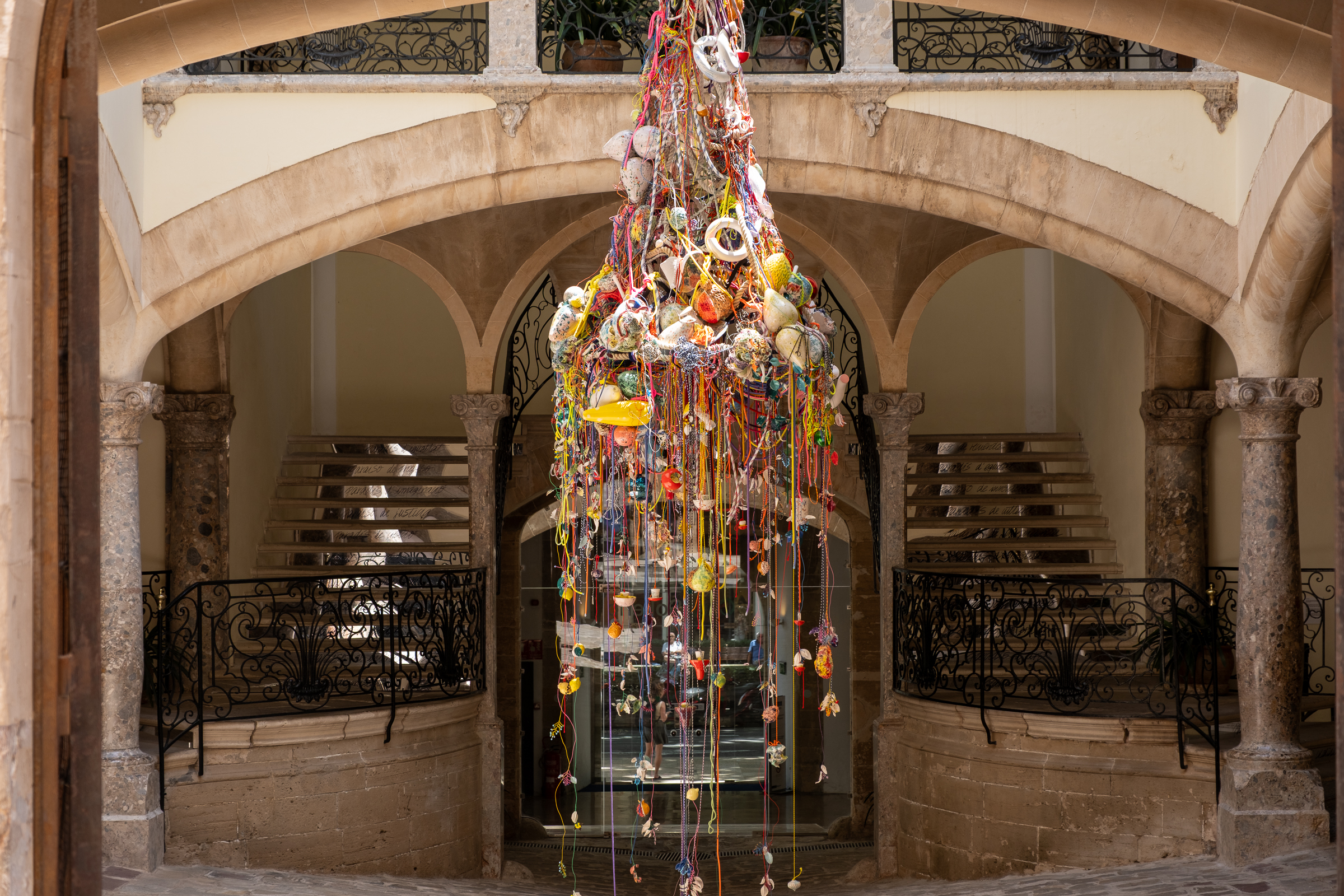
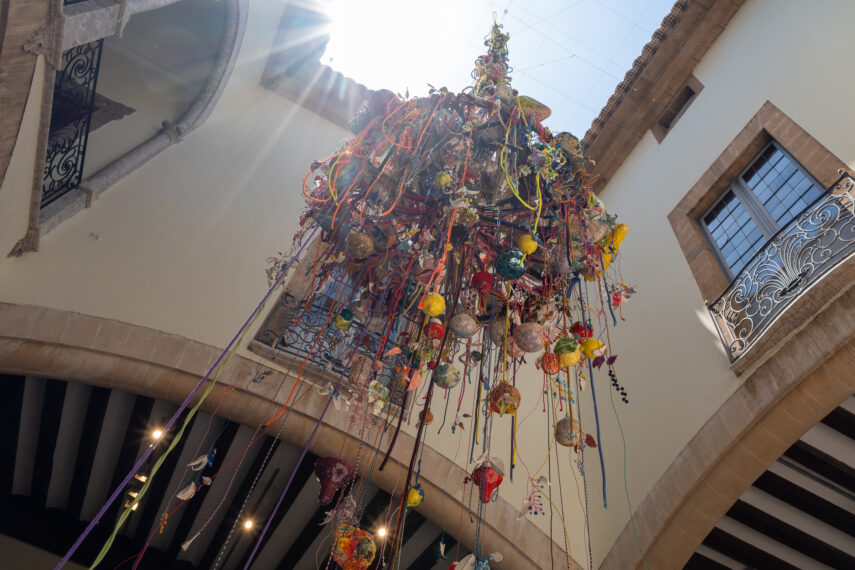
Madrid born artist Nuria Mora doesn’t settle for a single room. Instead, she spreads her intervention across three very different parts of Casal Solleric, each one built specifically for its spot. The first piece colonizes the interior courtyard, the heart of the historic house. There, fragments of recovered and newly made ceramics form what Mora calls a “pecio,” the Spanish word for a shipwreck resting on the seabed.
The second installation climbs onto the building’s loggia, the balcony overlooking the Passeig. Finally, the third fills the street level showcase window, visible to anyone walking by, whether they planned to see art that day or not.
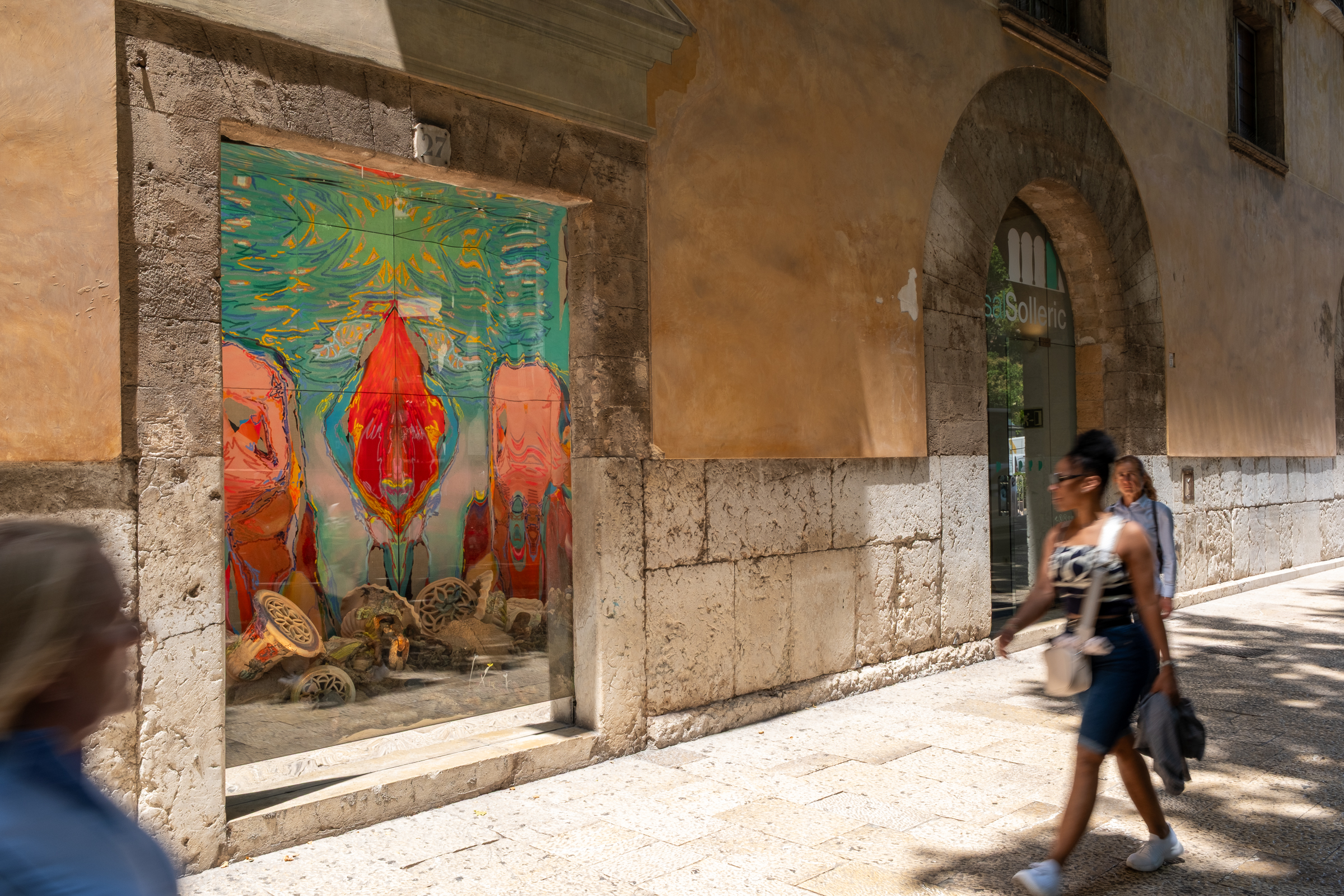
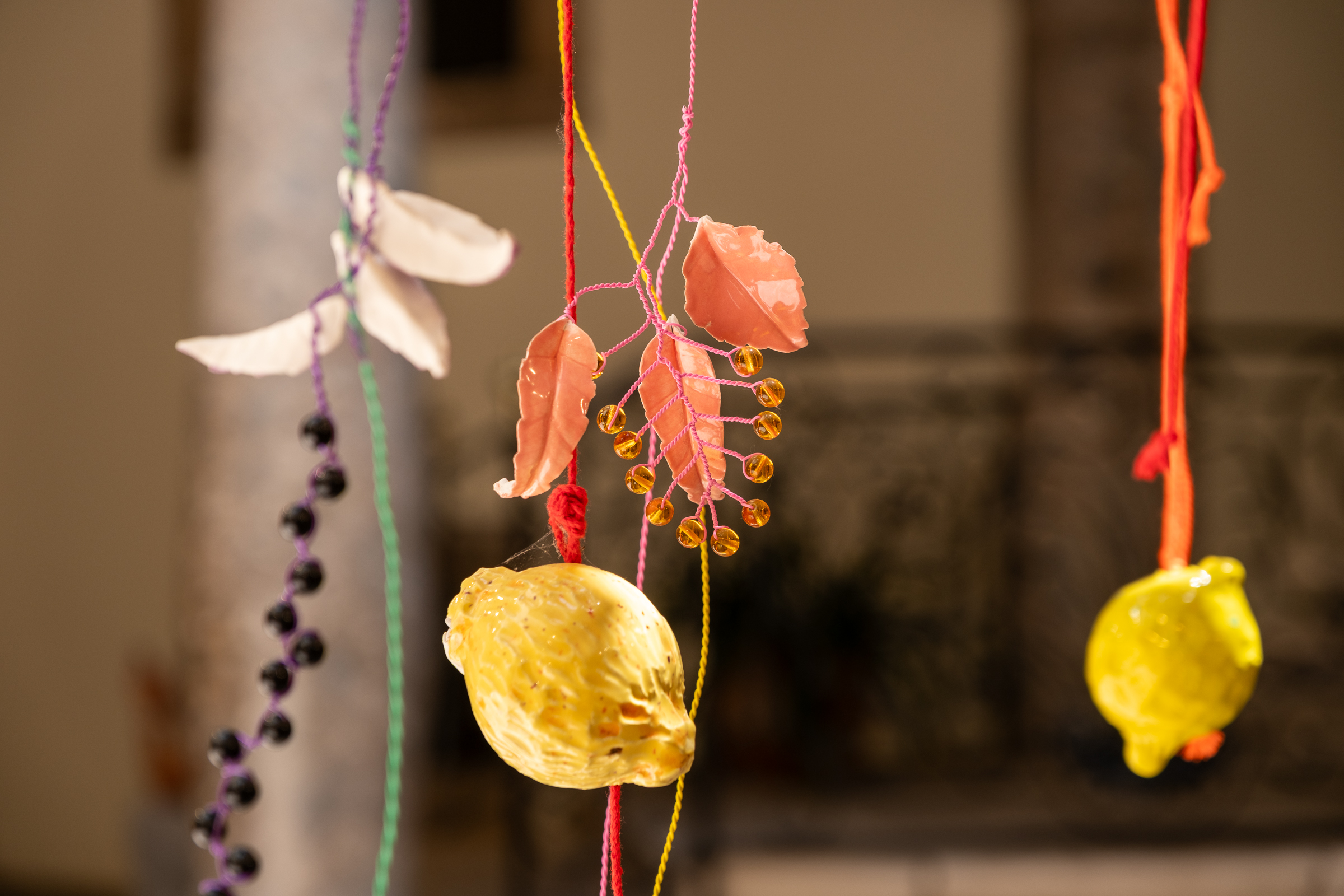
That is exactly the point. Passersby become accidental witnesses, their own reflections mixing with glass, coral like ceramic shapes, and glints of found material. Meanwhile, museum visitors move from patio to Passeig del Born, slowly piecing together a submerged world that ties the architecture of the Casal to the sea just a short walk away. Notably, the ceramics grew out of a collaboration with Gerreria Pere Coll, a traditional pottery workshop in Pòrtol, which keeps the project grounded in Mallorcan craft even as it drifts toward myth.
Nuria Mora, the Artist Behind the Wreck
Long before she filled museum courtyards, Nuria Mora was painting where nobody had asked her to. Born in Madrid in 1974, she came up through the city’s street art scene in the late nineties, trading illegal walls for a language built on geometry and organic form rather than tags or characters. That instinct for transforming overlooked spaces never left her, and it still shows here today.
Mora studied both interior architecture and fine arts in Madrid, and that combination explains why her installations feel less like objects placed in a room and more like the room itself rearranging around them. Over the years, her work has traveled from Tate Modern in London to Fundació Joan Miró in Barcelona, and even to Mallorca before, at the Pilar i Joan Miró Foundation. For “Había en el fondo del mar,” though, she leaned into something far more personal.
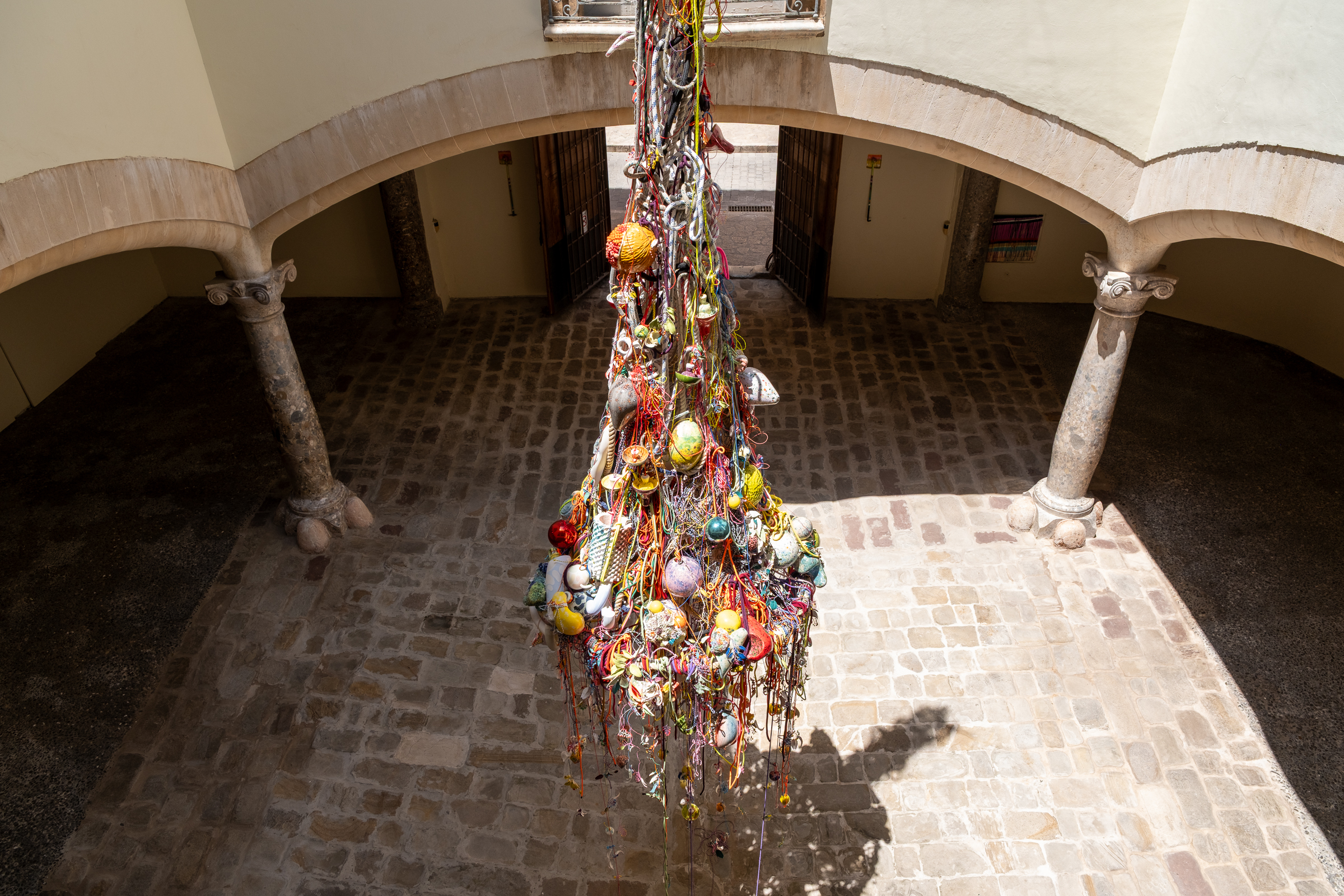
For Mora, the shipwreck doubles as a stand in for family history, a jumble of inherited fragments that keep shifting shape the longer you look at them. Fittingly, she conceived the project the same year archaeologists began recovering the Ses Fontanelles wreck from the Bay of Palma, one of the most significant underwater finds in the Mediterranean. Suddenly, her poetic metaphor and the city’s real maritime past line up almost perfectly.
Casal Solleric Keeps Turning Heads
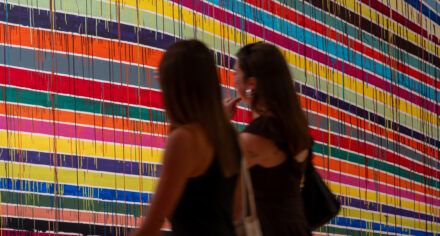
None of this would land quite the same way anywhere else. Exhibition after exhibition, Casal Solleric has built a reputation for letting contemporary artists take real risks inside its eighteenth century walls. Last year, German artist Markus Linnenbrink wrapped the same courtyard in waves of saturated color, turning the patio into what felt like a walk in painting. Before that, the group show “Connecting” used the whole building to explore how art and architecture talk to each other across centuries.
Nuria Mora’s shipwreck now joins that lineage, proving once again that this courtyard can become almost anything, whether a color field, a conversation, or, this time, the ocean floor. So the next time you cross Passeig del Born and glance up at that balcony, remember. There really was something at the bottom of the sea, and Casal Solleric decided to bring it up for air.
Practical Information
Nuria Mora “Había en el fondo del mar” runs through September 6, 2026, at Casal Solleric, Passeig del Born, 27. The show spreads across the patio, loggia, and showcase window. Open Tuesday through Sunday, admission is free.