Ask anyone about Bilbao and watch what happens. One person lights up about the Guggenheim. Another raves about the pintxos, those jewel-like bites of bread and topping that line every bar counter in the old city. Someone else mentions the cooler Basque temperatures, a welcome contrast to the scorching Spanish summer. And yet another will tell you about the bridges, those extraordinary steel and stone arcs that stitch together the banks of the Nervión River like sentences in a story still being written. Every single answer is right. And every single one tells only part of the story. Because Bilbao, above all else, is a city in transformation. A city that embodies change the way few others do.
Once an industrial heavyweight drowning in post-boom decline, it reinvented itself so completely that urban planners around the world still talk about the Bilbao Effect. And perhaps that is exactly why, in a moment when so much feels uncertain, a visit here feels quietly, unexpectedly hopeful. Change, Bilbao seems to say, can actually work. So follow along for a small journey of discovery through streets and squares, bars and cafés, over bridges and along the river. And of course, to the building that started it all.
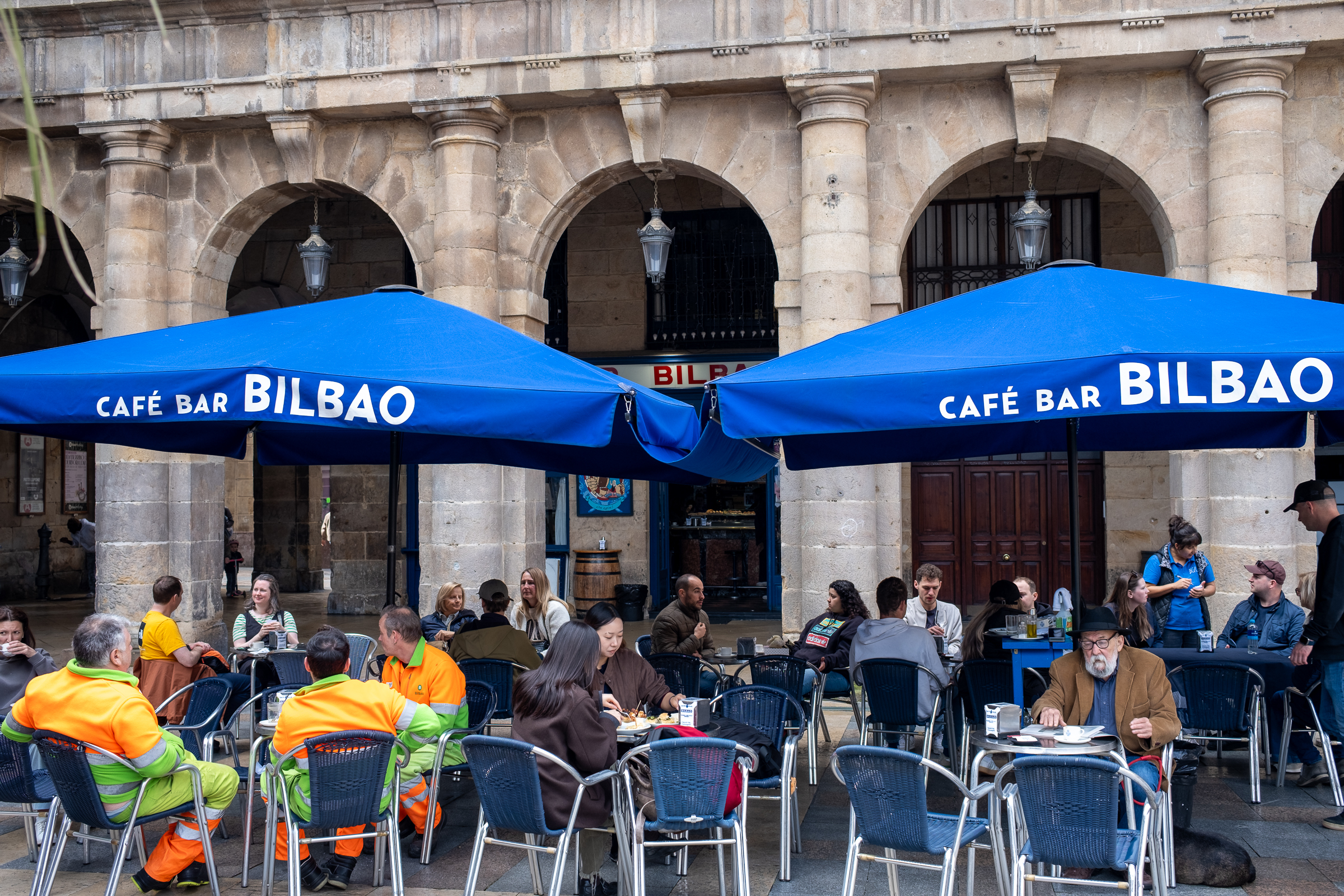
Where Bilbao Wakes Up Slowly
Let’s start at the Plaza Nueva. The neoclassical arcade square, with its uniform arched facades and its unhurried rhythm, almost feels like a stage set. Except that everything happening on it is entirely real. Pull up a stool at the Bar Bilbao, one of the oldest bars in the city, order a café con leche, and simply watch. The construction workers taking their merienda, the mid-morning snack that is still a non-negotiable ritual here. An older gentleman unfolds his newspaper without looking up. Two neighbors catch each other on the corner and settle in for a conversation that will clearly not end soon. There is no performance here, no tourism theater. Just the daily life of a city going about its business.
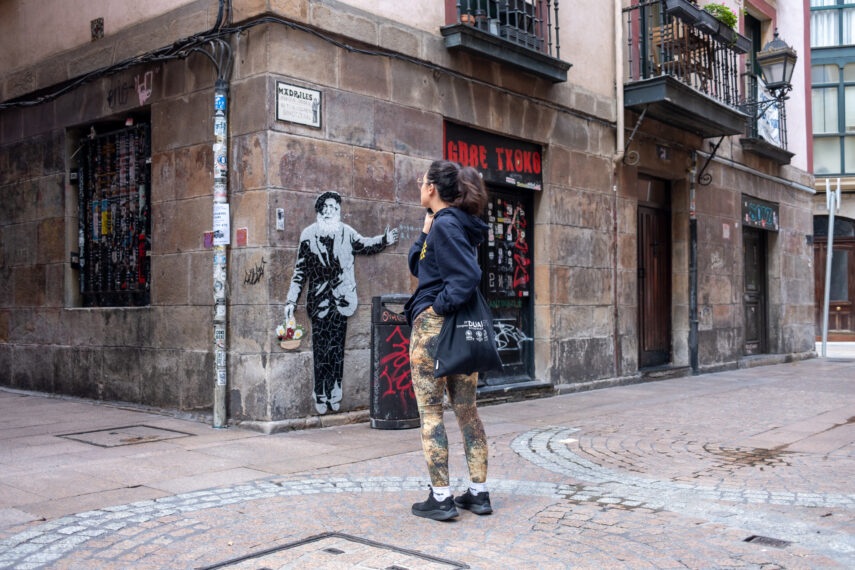
Siete Calles
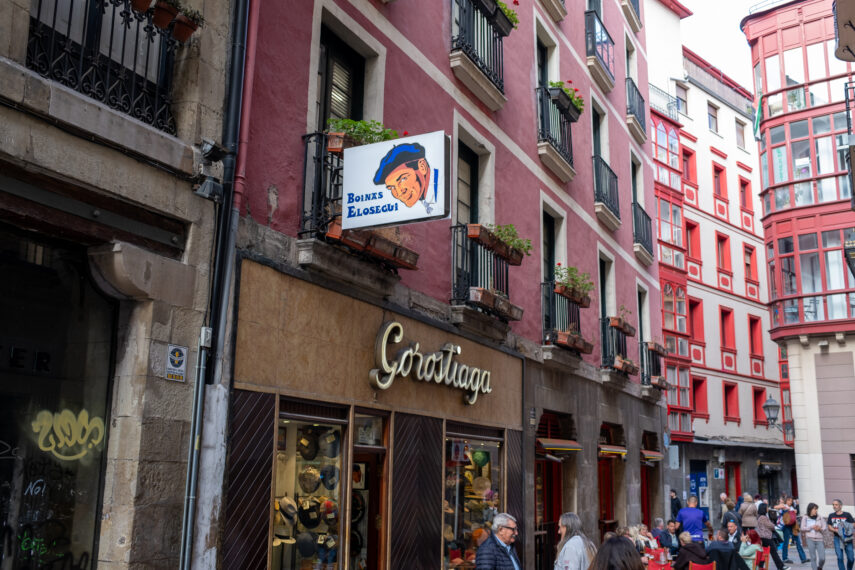
From there, it is only a few steps into the Siete Calles, the seven medieval streets that form the grid of the old town. In the morning, they are still calm. Here and there, the clinking of empty bottles being collected is the only soundtrack. The evidence of last night’s lively bar scene tidied away before the city properly opens its eyes. This is actually the best time to be here. The narrow lanes reveal themselves without crowds. The old shop signs, the tiled doorways, the small independent bookshops and hat makers and food stores that have somehow survived. Consider a detour into the Mercado de la Ribera, the huge covered market on the river’s edge. Then, eventually and at your own pace, make your way toward the water.
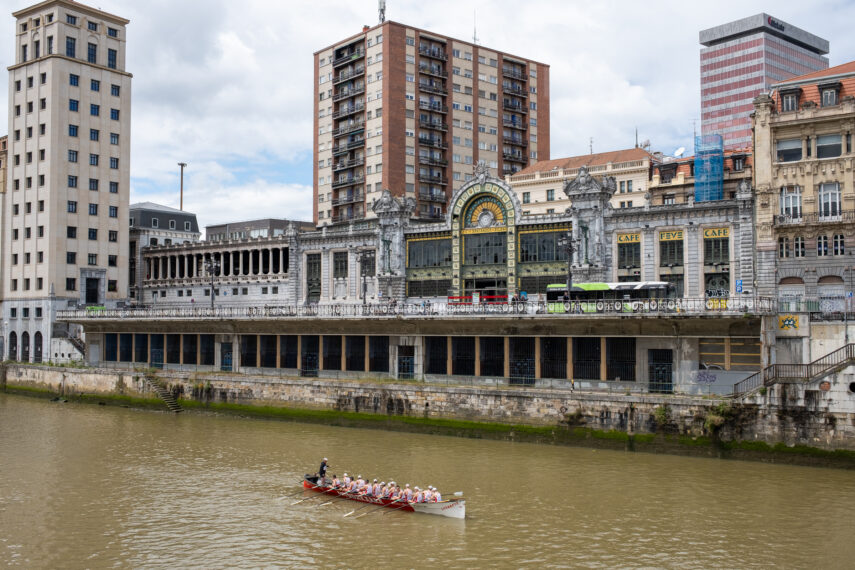
Along the Nervión to the Guggenheim
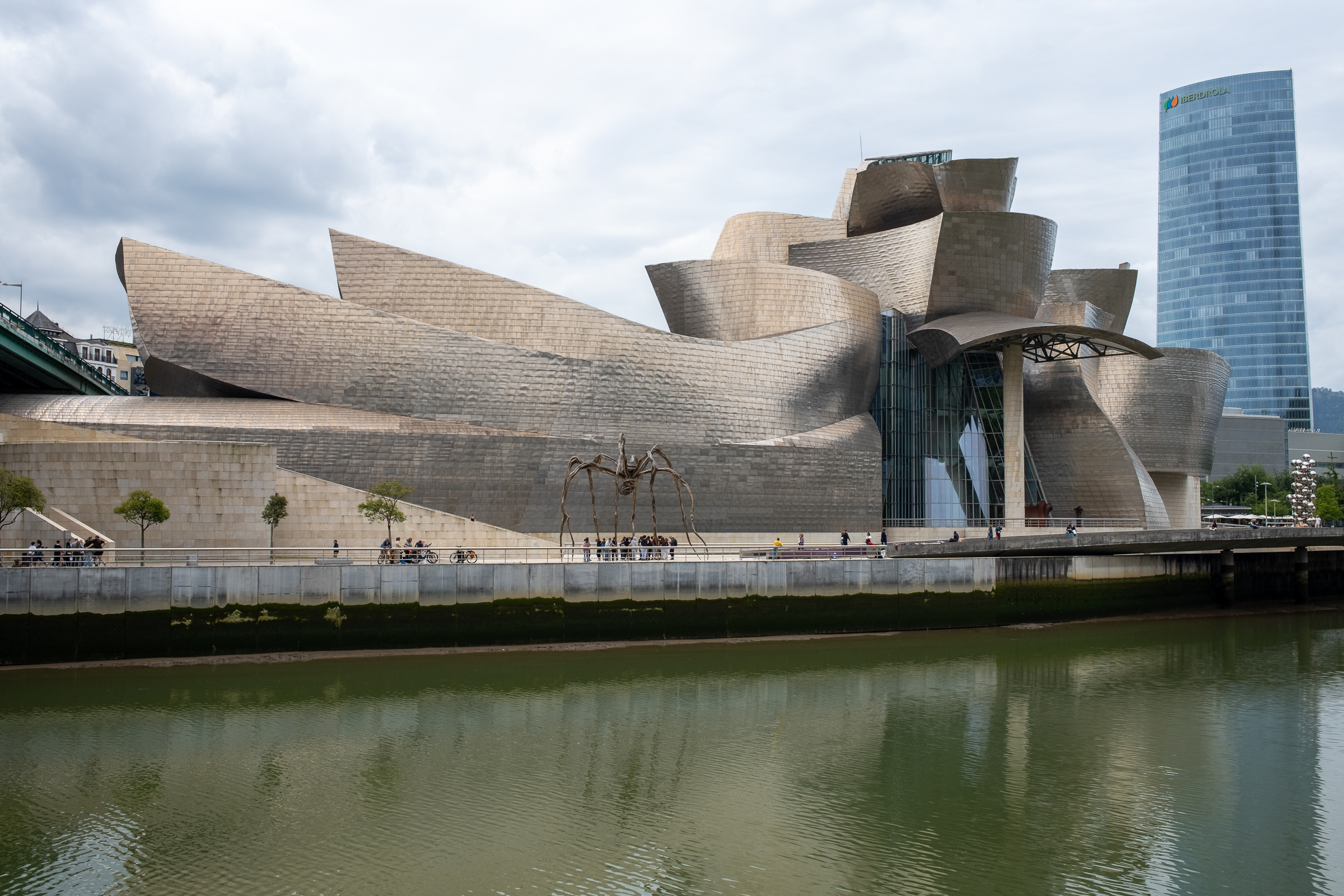
Follow the Nervión westward and let the river lead you. The walk along the waterfront is one of those urban pleasures that feels both designed and effortless. Broad promenades, occasional benches, joggers and dog walkers and cyclists sharing the path without friction. And then, gradually, it appears. First as a glint of light off titanium panels. Then as a shape that refuses to resolve into anything familiar. Finally, fully, as the Guggenheim Museum Bilbao, Frank Gehry’s masterpiece, completed in 1997, and still as disorienting and thrilling as the day it opened.
Book your tickets online and in advance. The queues at peak times are real, and there is no reason to stand in them when timed-entry passes are readily available on the museum’s website. With that sorted, you are free to arrive and simply look. And looking, before you ever step inside, is already an experience.
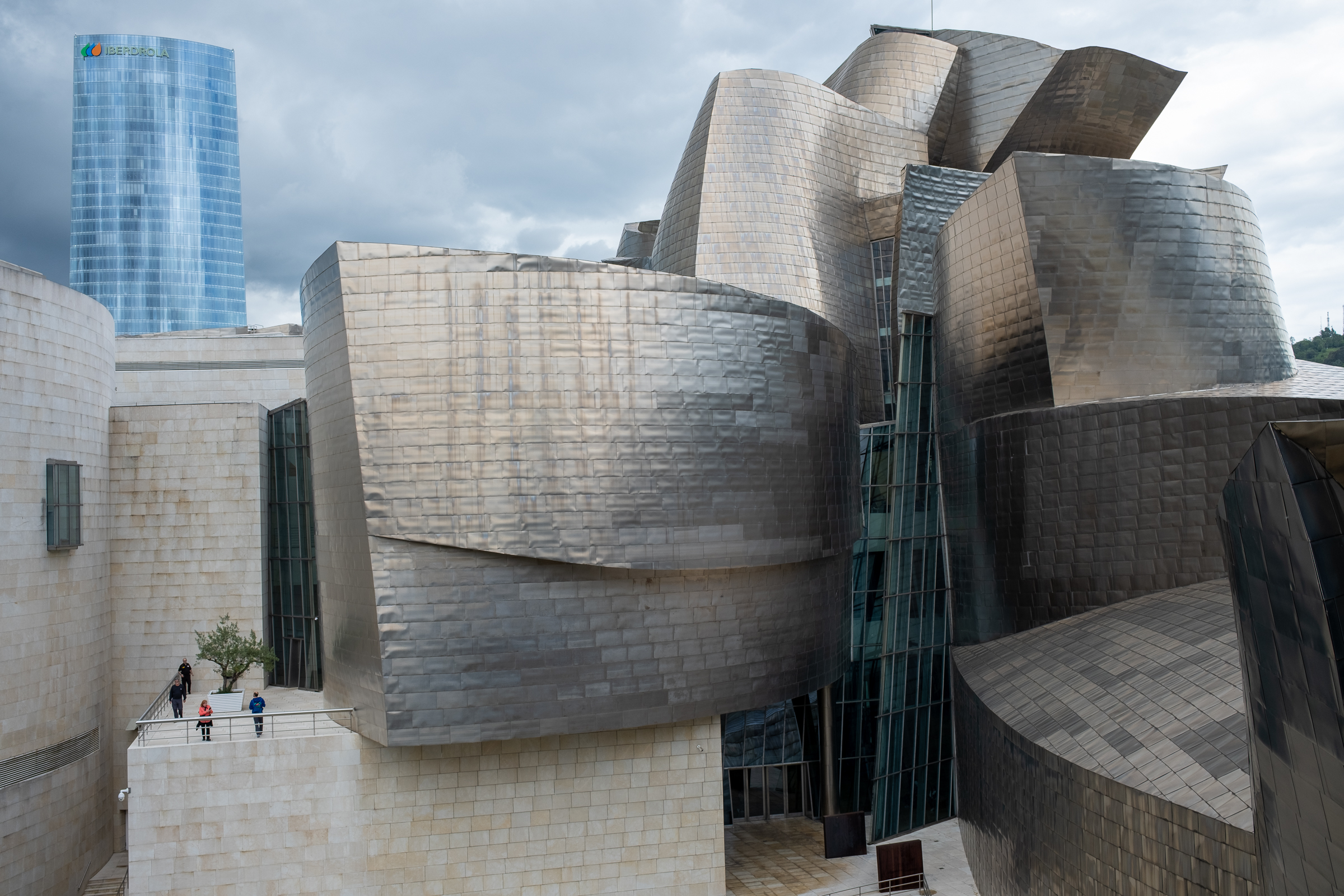
The Glow of the Building
Gehry’s building does something very few buildings manage. It changes. Not structurally, of course, but visually, constantly, with the light. The titanium cladding of roughly 33,000 individual panels, each one slightly different, catches and reflects and shifts throughout the day. In the morning, it glows soft silver. By midday, it blazes. In the late afternoon, it turns warm and almost golden, while the curved forms that seemed aggressive earlier become somehow softer, more organic.
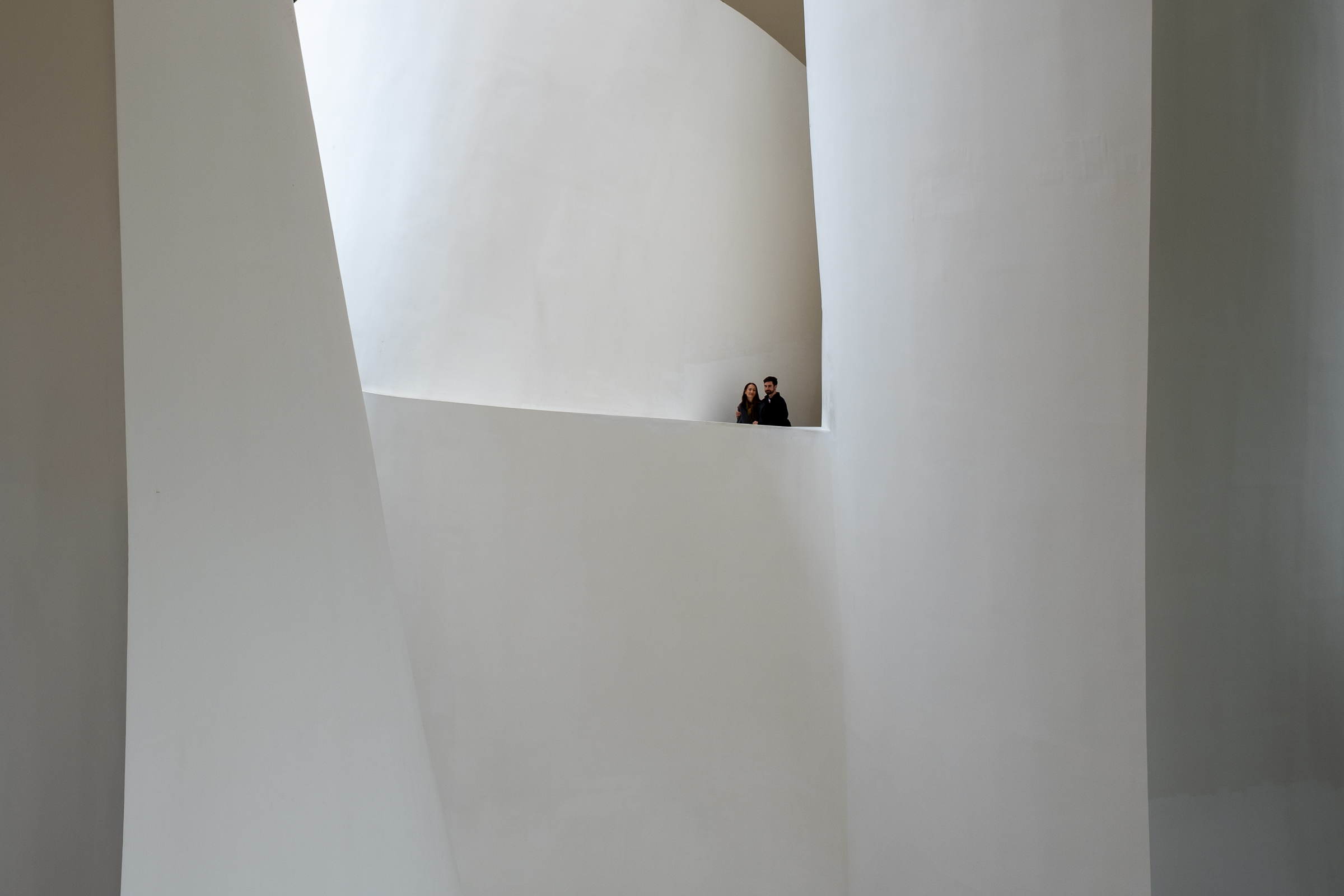
Inside the Guggenheim: Space, Scale, and Art
Step through the entrance and the interior does something immediately unexpected. It overwhelms, but gently. The central atrium soars upward in a cascade of curved white walls and glass, flooding the space with light. It is one of the great interior spaces in contemporary architecture, and it sets the tone for everything that follows. Here, the building is not merely a container for art. It is a participant.
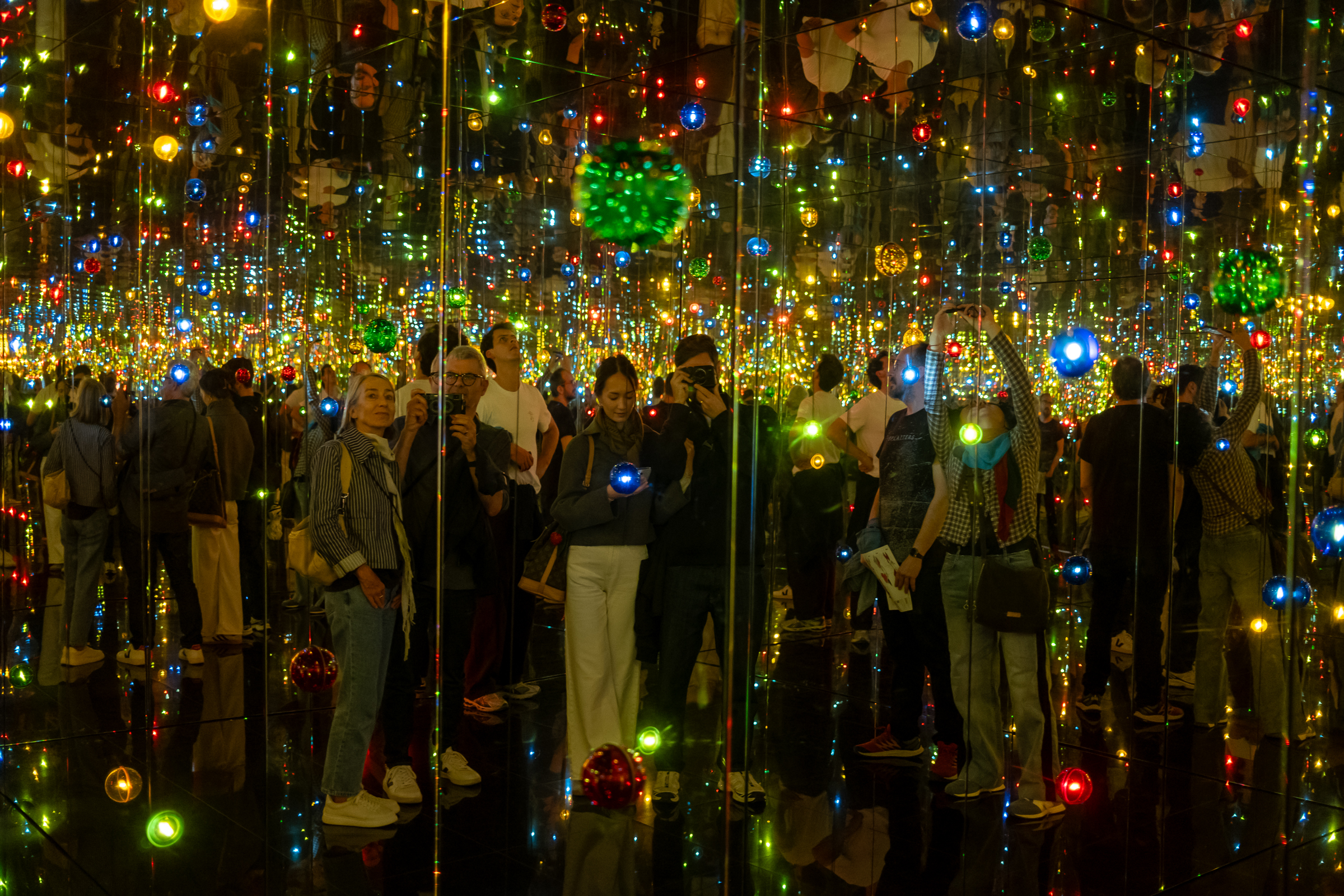
The Current Program
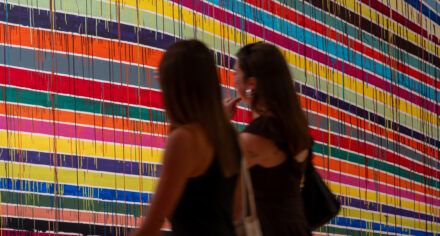
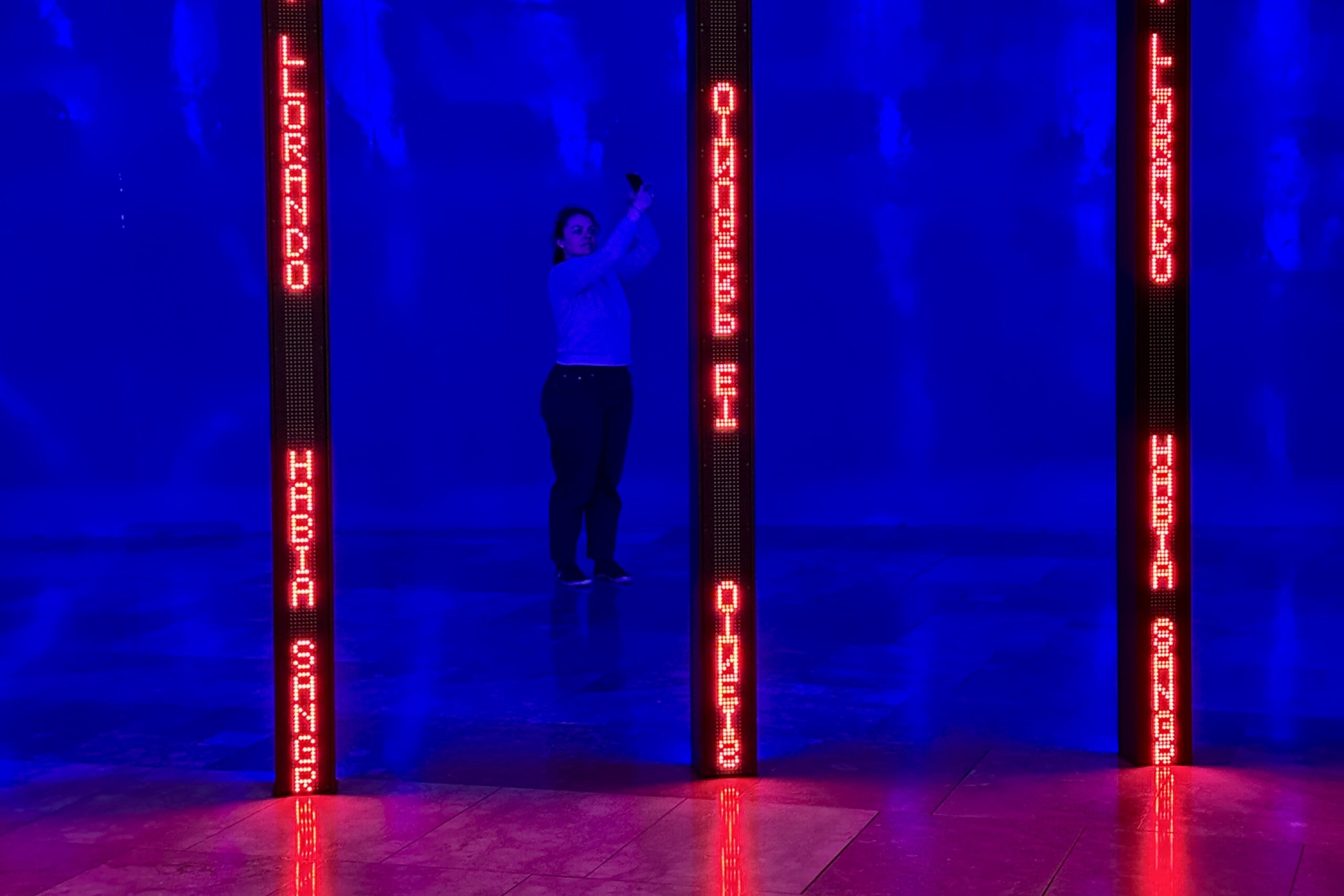
The ongoing collection exhibition runs through the end of 2026 and brings together new acquisitions alongside long-term loans, presenting key figures of the second half of the 20th century. Jean-Michel Basquiat, Yves Klein, Andy Warhol, Cy Twombly in dialogue with one another across Gehry’s galleries. Yayoi Kusama’s signature Infinity Mirrored Room delivers a kaleidoscope of light and reflection. It draws visitors in and holds them there, lost in an endlessly multiplying universe of color and form.
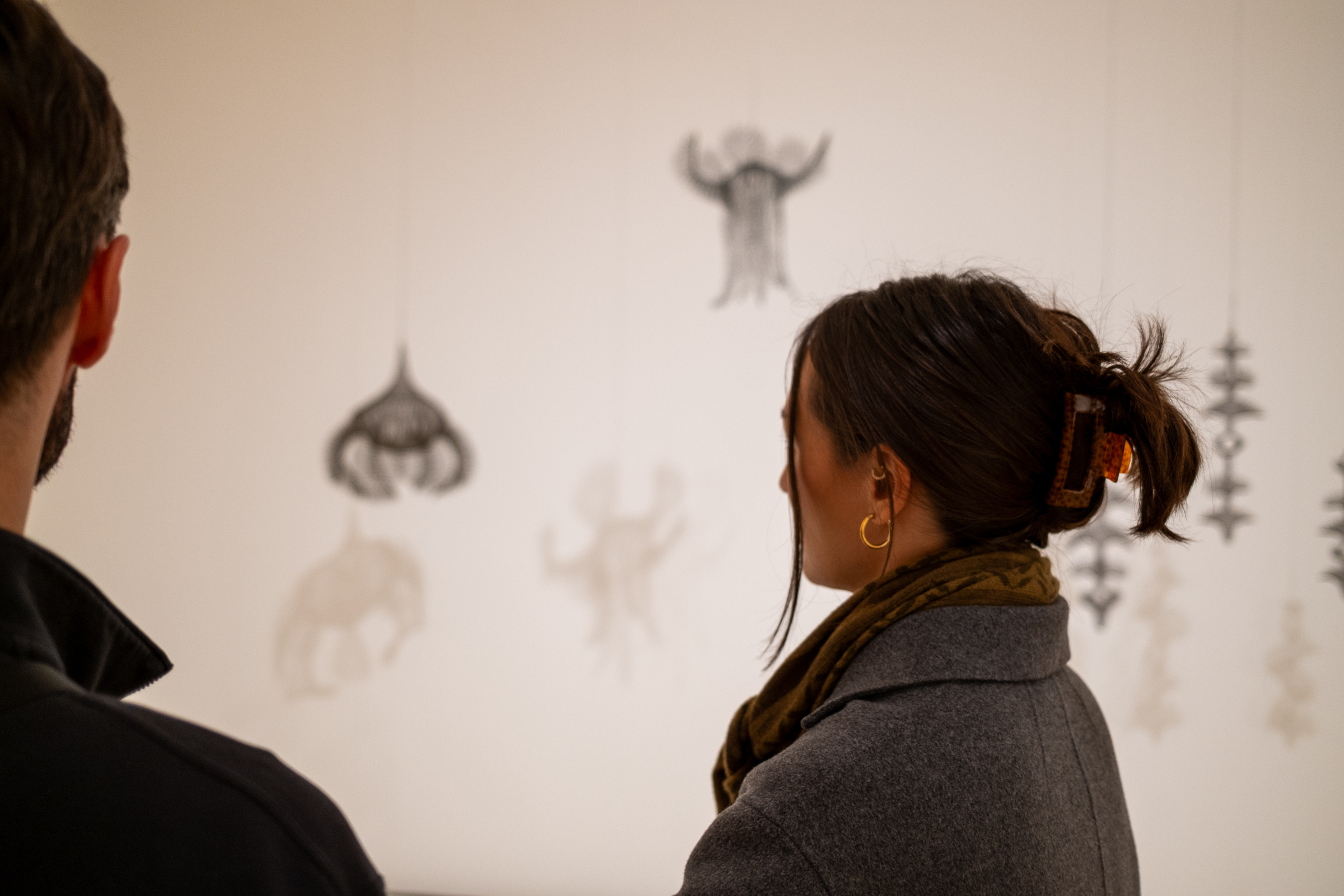
Running through September 2026, the Ruth Asawa retrospective transforms several galleries with her intricate hanging sculptures woven from copper and brass wire. Suspended in Gehry’s open spaces, they cast shifting shadows, an effect that feels almost choreographed. Also on view through October is a focused show on Jasper Johns alongside magnificent textile sculptures by Igshaan Adams.
The Work Becomes Physical, Then Spatial, Then Almost Musical
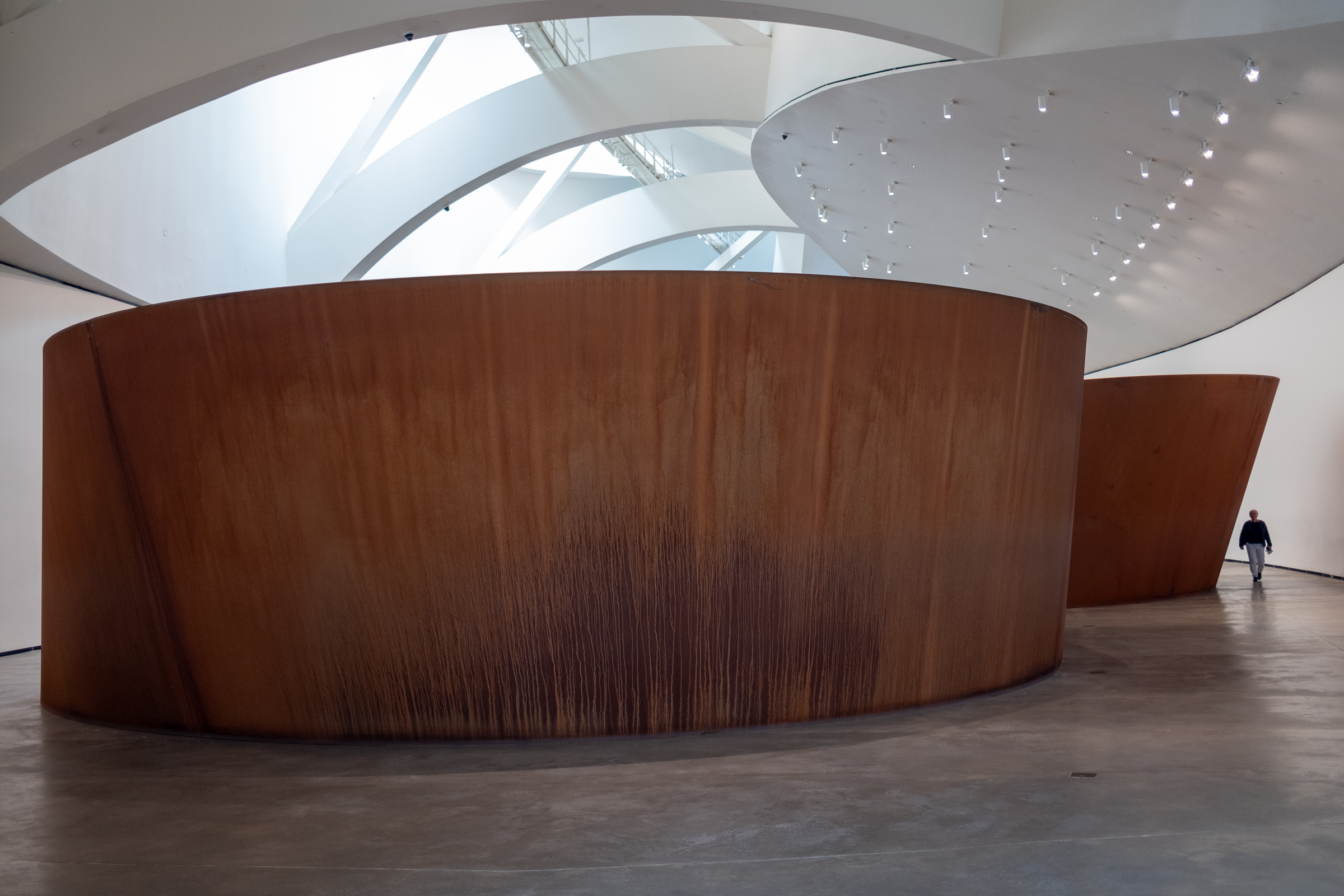
And then there is Richard Serra. His permanent installation in the ground-floor gallery. The sequence of massive weathering steel plates that curve and lean and loom. Step inside one of Serra’s forms and something strange and wonderful happens. The acoustics shift. Sound behaves differently. Footsteps echo. Voices carry. The work becomes physical, then spatial, then almost musical. It is an experience for the body as much as the eyes, and it lingers long after you leave.
The Building and its Contents in Constant Conversation
Throughout the building, moreover, the architecture itself keeps interrupting, in the best possible way. Sometimes it steps back and lets the art speak alone. Sometimes it steps forward as an equal. The building and its contents are in constant conversation, and following that conversation is one of the genuine pleasures of a visit here.
Bridges, Banks, and the City in Between
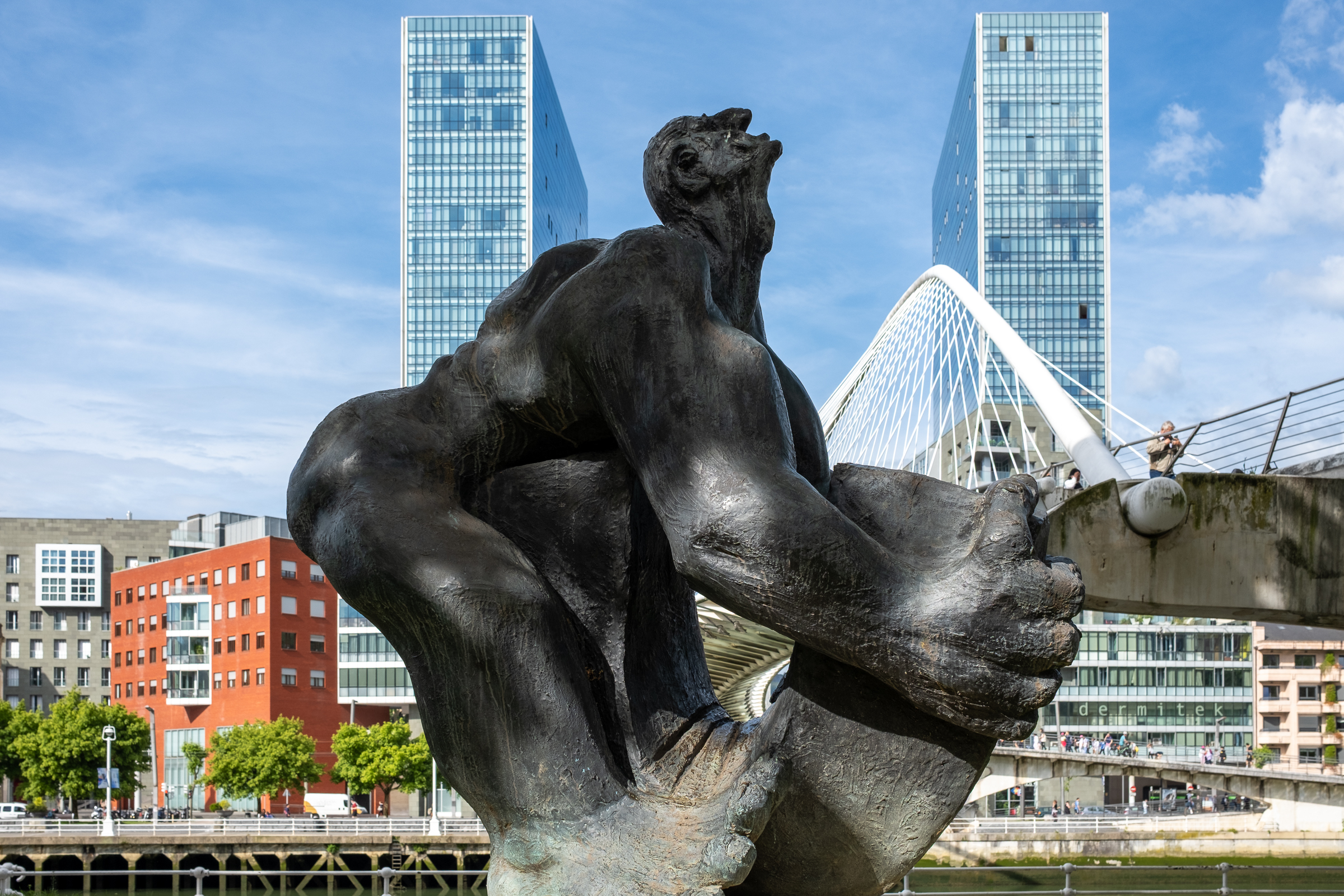
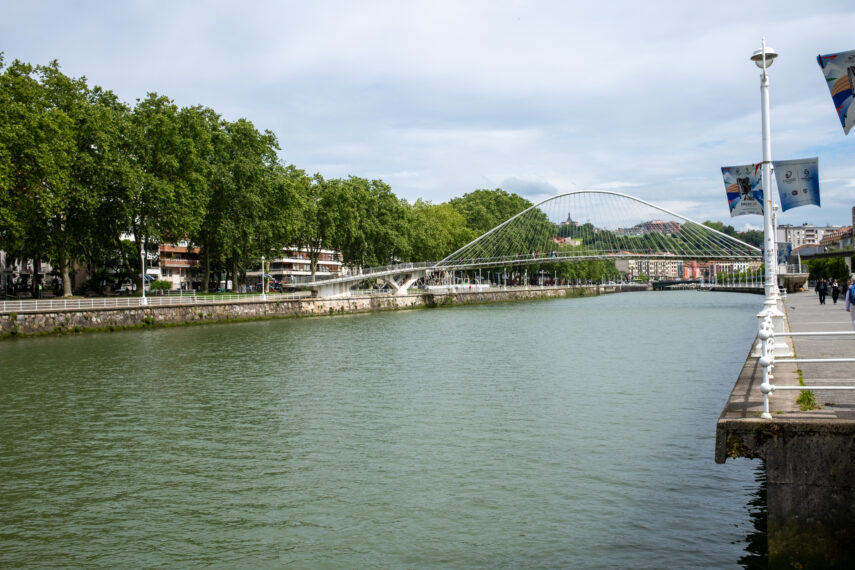
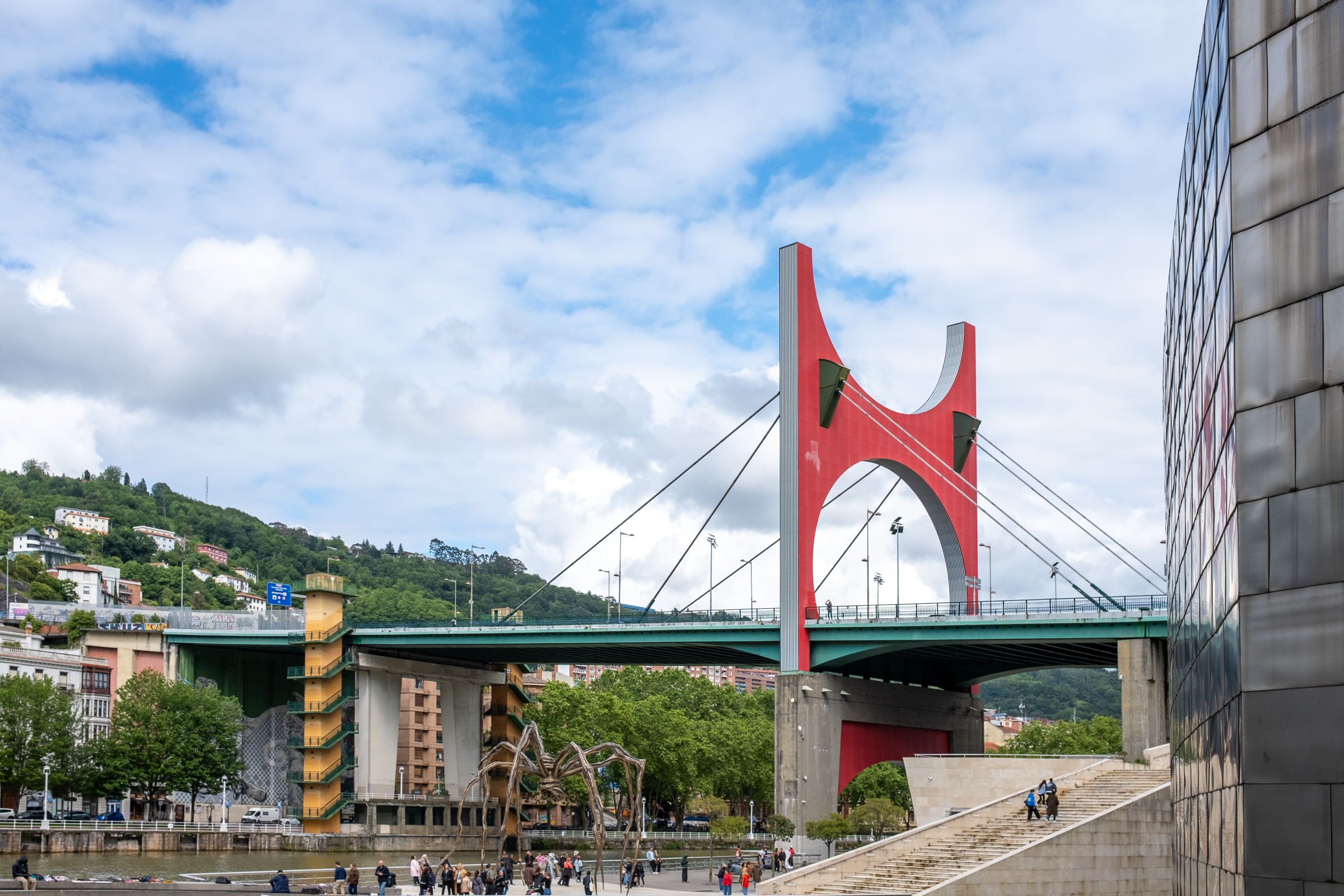
Step back outside and cross the Puente de La Salve, or any of the other bridges. Because Bilbao is, among other things, a city of bridges, and each one is worth pausing on. They range from the utilitarian to the sculptural, from solid stone arches to slender pedestrian spans of steel, and together they map the city’s relationship with its river. Not just practically, but emotionally. The Nervión was the artery of Bilbao’s industrial age, clogged with shipping and heavy freight, its banks lined with shipyards and steel mills. Today, those same banks are walkways and parks and cultural spaces.
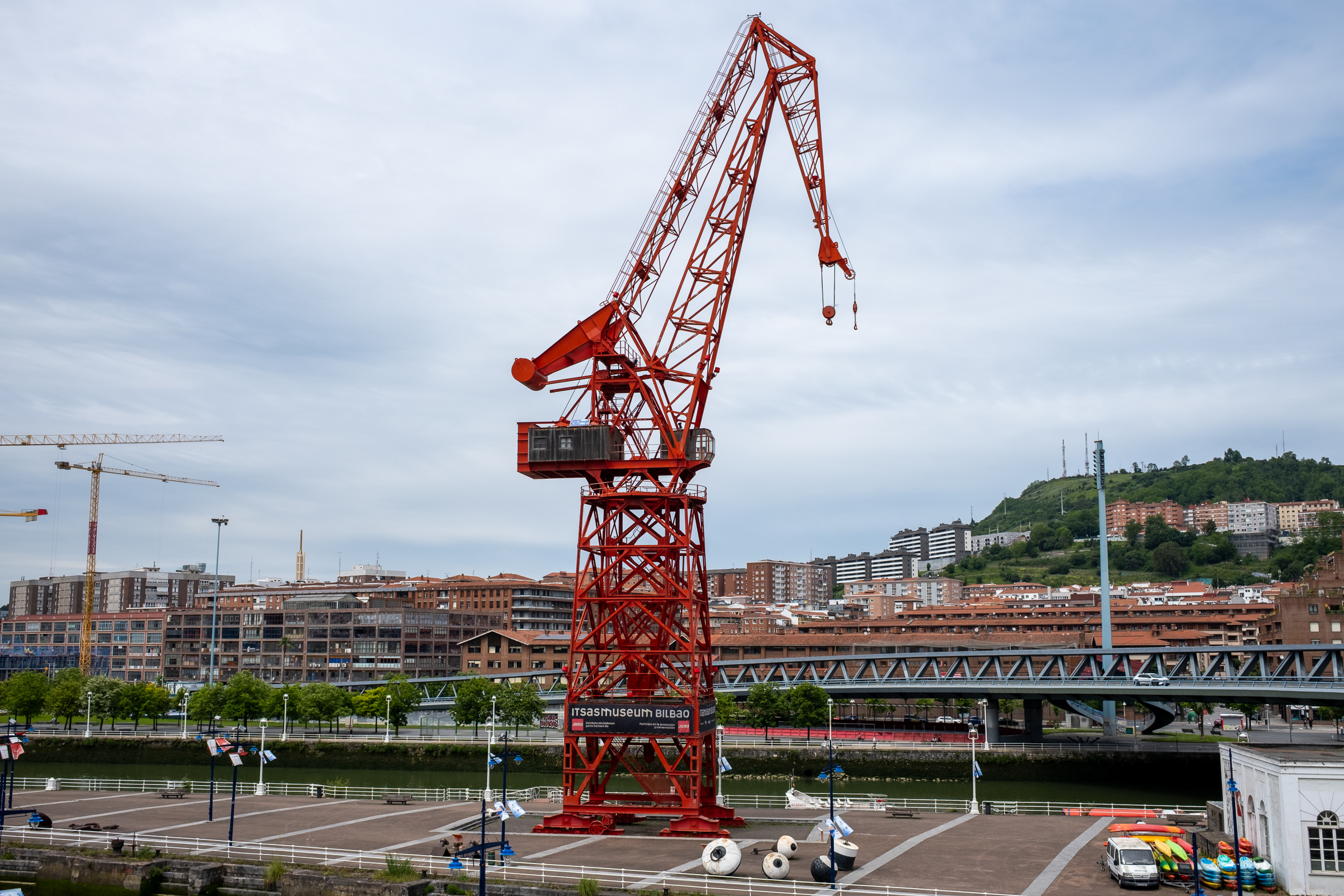
Walk further along the waterfront toward what was once the harbor district. Almost nothing of the old industrial infrastructure remains visible. The transformation has been so thorough, so deliberate, that the past has been largely paved over. Whether that is loss or liberation is a question worth sitting with. Either way, the result is a city that feels forward-facing, light on its feet, comfortable in its new skin in a way that younger cities sometimes are not.
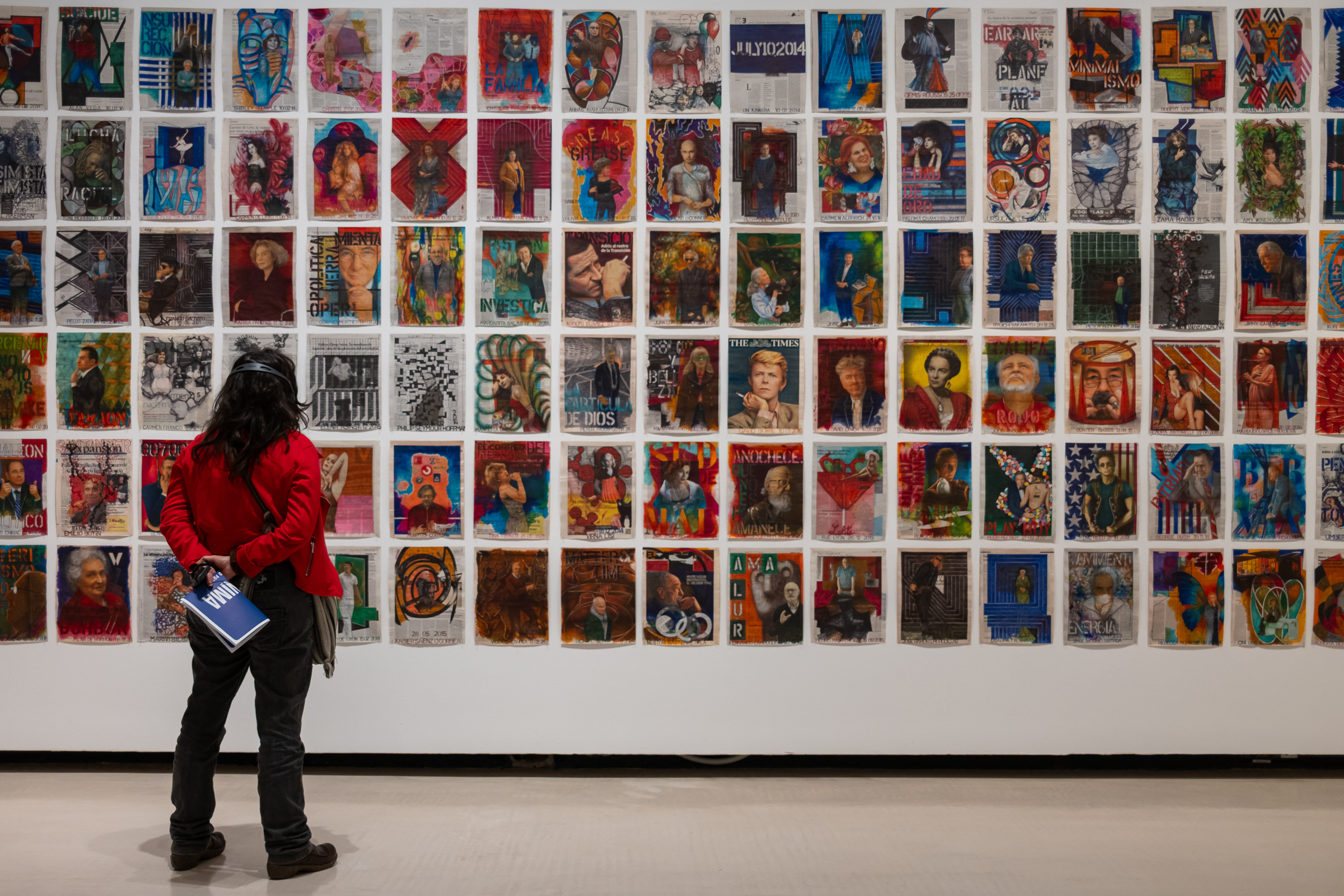
Make a small detour to the Azkuna Zentroa. The former warehouse turned into a cultural center designed by Philippe Starck. And then wander back through the Abando with its wide boulevards, splendid stores and proud apartment buildings. Saunter along noble Gran Via. Take your time, the city rewards the unhurried visitor.
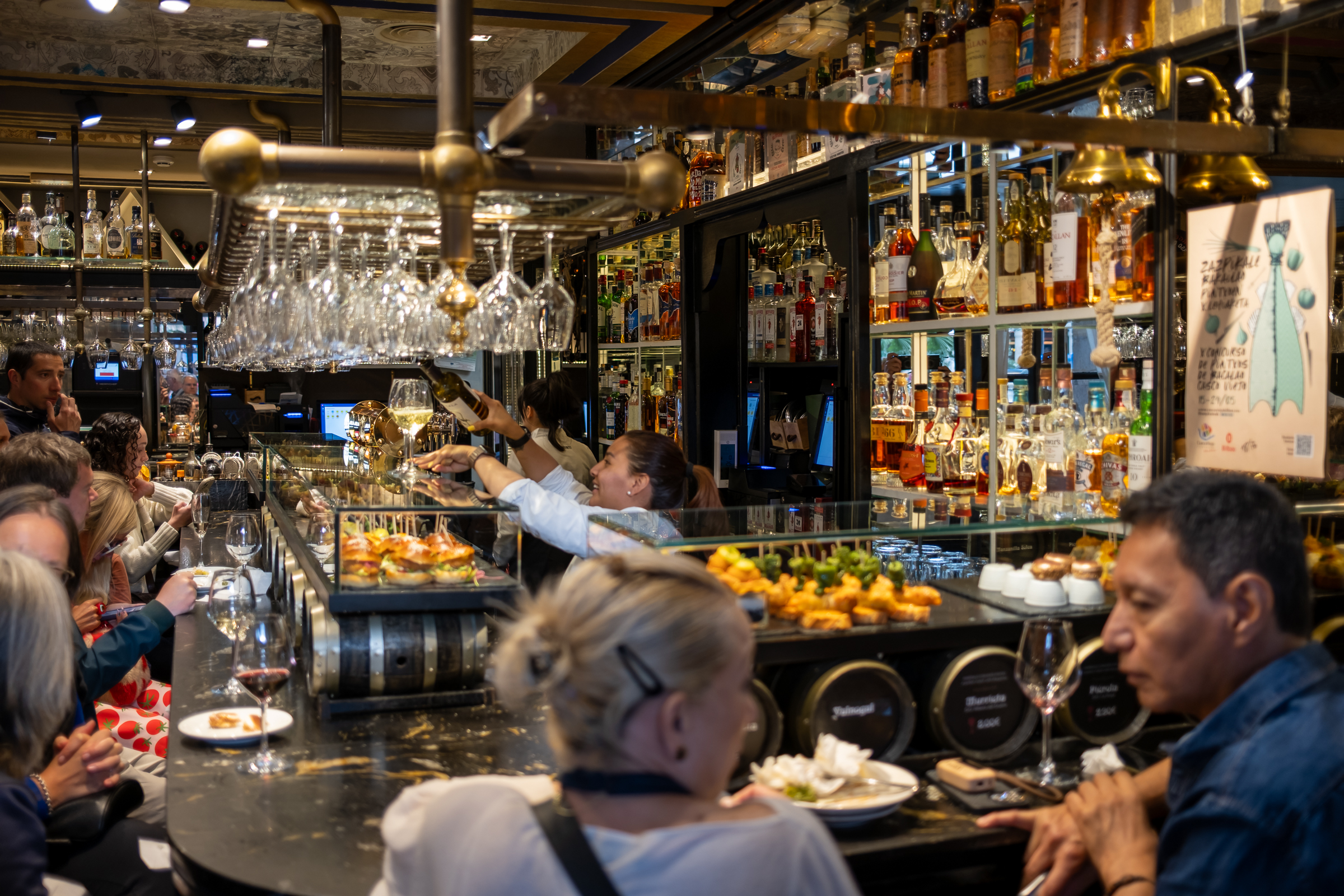
Evening: Pintxos, Then Wherever the Night Takes You
As the afternoon softens into evening, the Siete Calles shift gear entirely. The bars that were quiet at ten in the morning are now busy, their counters loaded with pintxos, those small, perfect compositions of bread, anchovy, pepper, cheese, cured ham, and a hundred other combinations. Each one balanced on a single toothpick or simply balanced on instinct. The ritual is easy to learn and deeply satisfying to repeat. Walk in, order a glass of wine or a cold beer, eat two or three pintxos standing at the bar, pay for what you took, and move on to the next place.
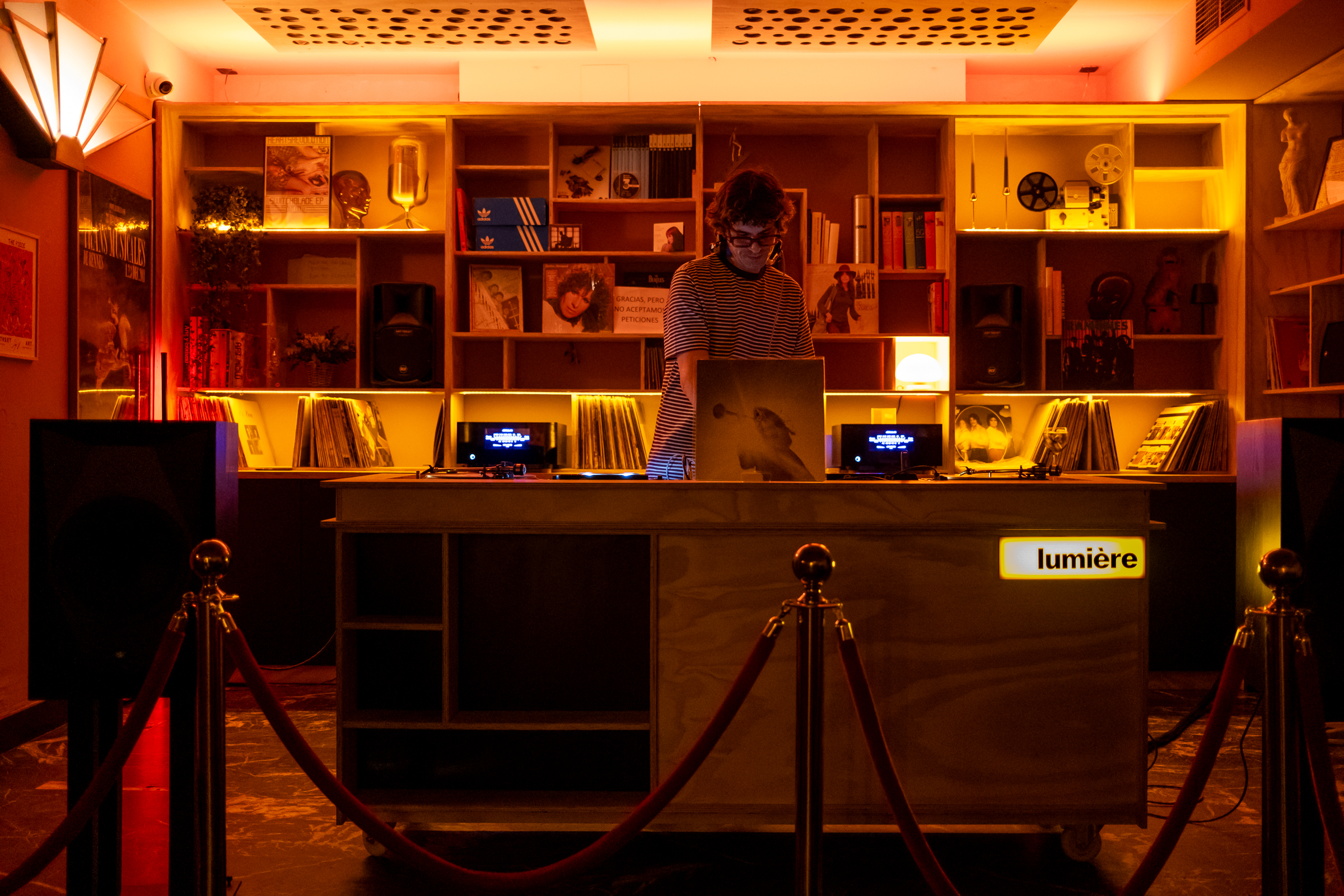
Let the Evening Stretch
Let the evening stretch. Move from bar to bar without a plan. Fall into conversation if the opportunity presents itself. This is, after all, the whole point, not just the food, but the particular quality of life that the pintxos ritual embodies. Later, as the night properly takes hold and the streets fill with a mixed, lively crowd of locals and visitors, make your way eventually to a bar like Lumière, where the music gets louder, the drinks keep coming, and the crowd spans generations and backgrounds in that easy, unforced way that Bilbao seems to manage particularly well.
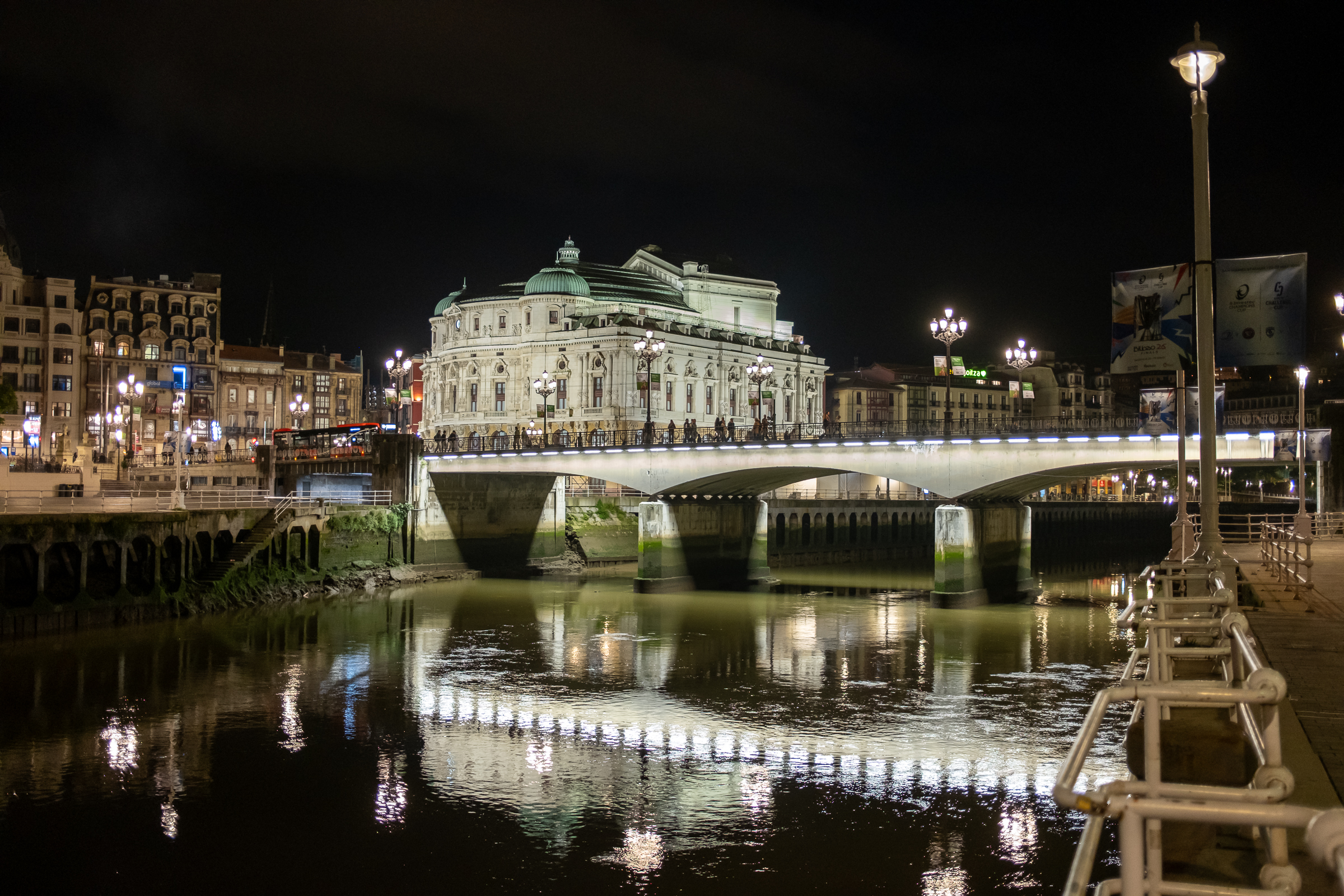
Finally, walk home along the river. At night, the Nervión is black and still, reflecting the light from the bridges above it. Those bridges are illuminated now, their steel and stone glowing against the dark. And in this light, they look less like infrastructure and more like what they actually are. Connections. Between the old city and the new. Between the industrial past and the cultural present. Between where Bilbao was and where it is going. It is a good city to end a day in. And an even better one to wake up in the next morning and start all over again.
Getting There
Bilbao Airport (BIO) is well connected to major European hubs, with direct flights from Palma and many other cities. The airport is about 12 kilometers from the city center, the A3247 bus takes roughly 20 minutes. Once in the city, Bilbao is extremely walkable, and public transport covers everything else efficiently. For the Guggenheim, book tickets in advance at guggenheim-bilbao.eus to avoid queues, particularly in summer.