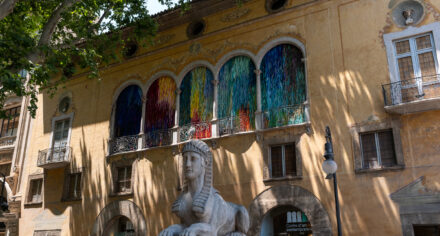
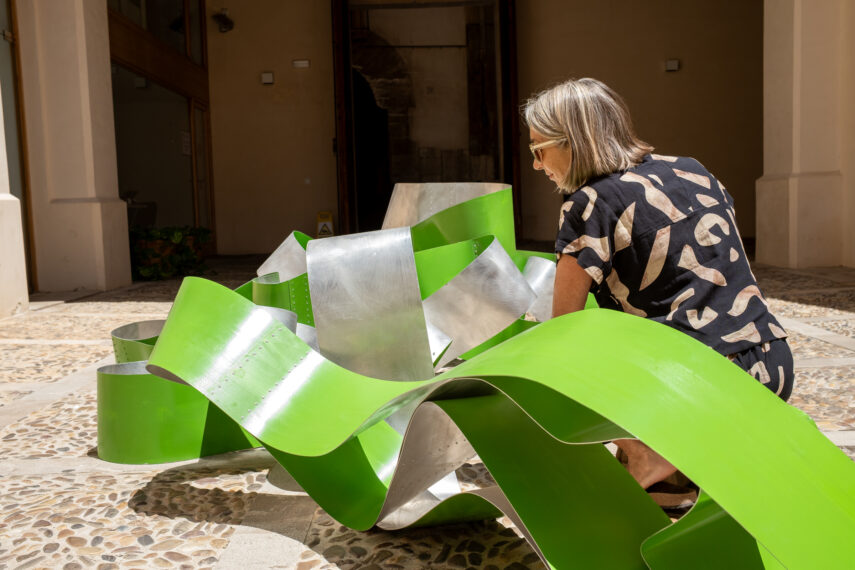
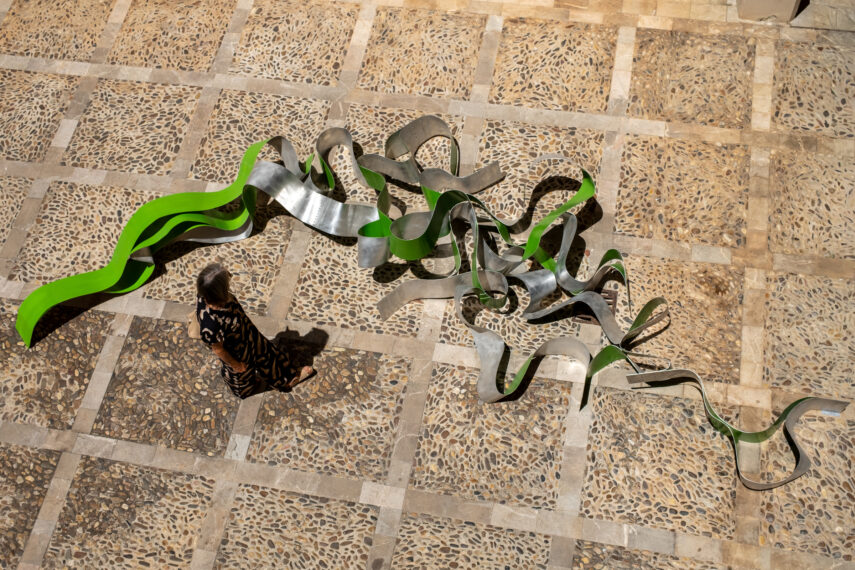
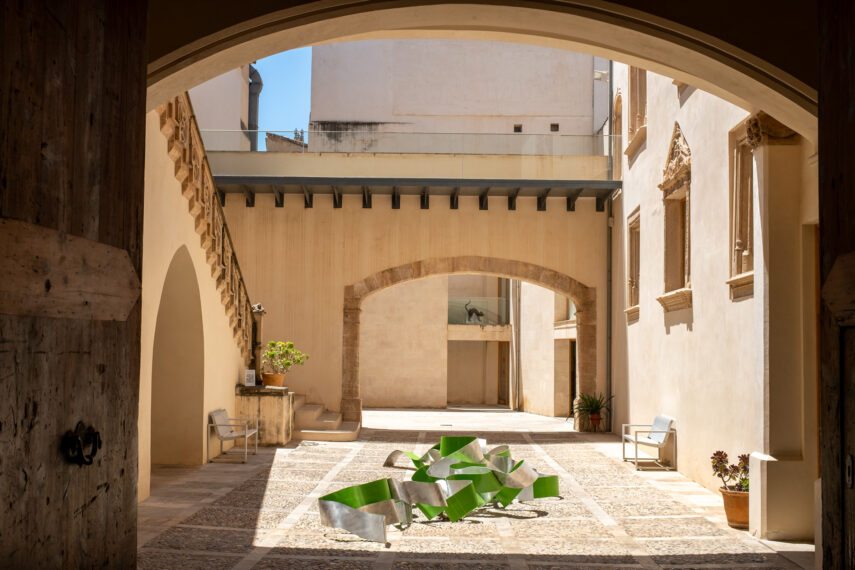
Walk through Palma’s old town and you might miss it. A narrow gap between weathered stone facades leads toward Carrer de l’Almudaina. But slow down. Look through the wide portal of Ca n’Oleo, and something stops you in your tracks. Beyond the shadowy entrance, the courtyard opens into a flood of light. Right in the center sits a sculpture glowing in an electric shade of grass green: Posidònia by Juan Carlos Nadal. Visitors who weren’t even looking for art find themselves drawn in anyway. They pause at the threshold, then edge closer, curious and a little hesitant.
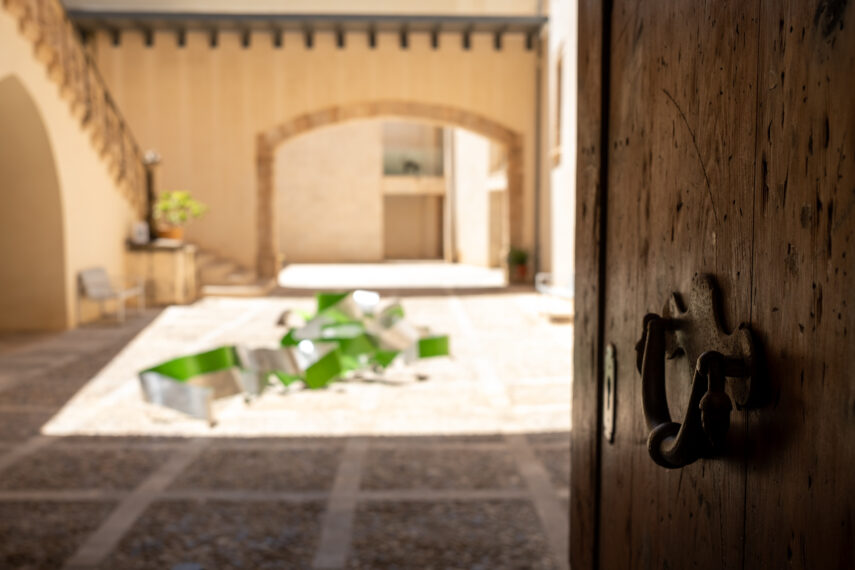
A Burst Of Green In A Sunlit Courtyard
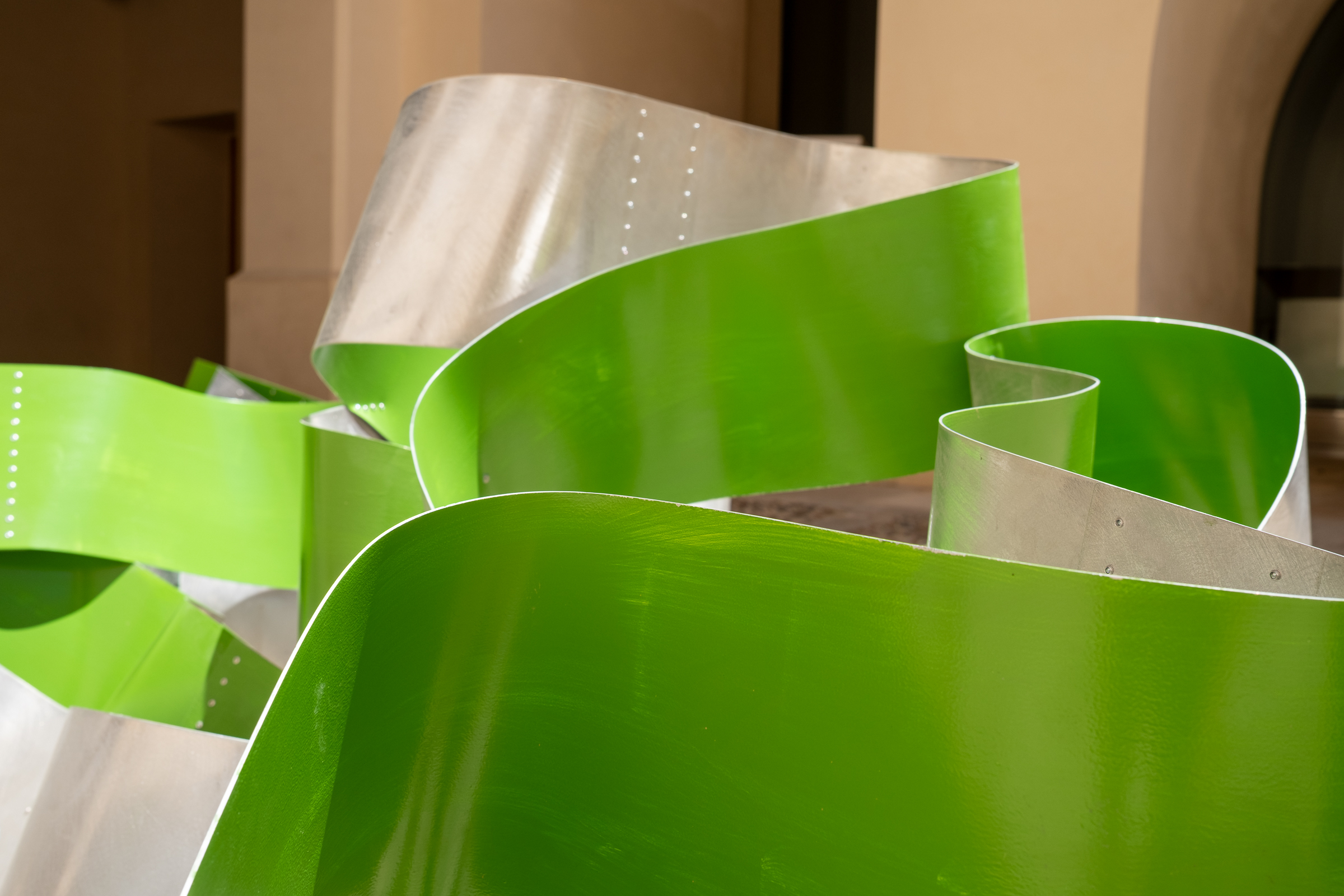
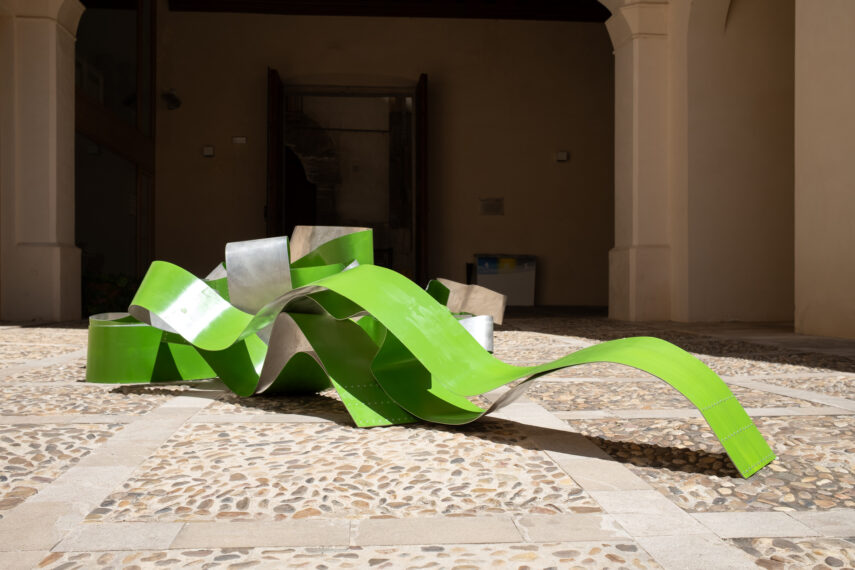
As they get nearer, the piece reveals its rippling forms. Suddenly the connection clicks. This is seagrass, cast in metal and glowing as if lit from within. The work captures both the fragility and the quiet importance of a plant many people barely notice. At most, they blame the seagrass for spoiling a white sandy beach.
Why Posidonia Matters So Much
So why would an artist dedicate an entire sculpture to a plant? Because Posidonia oceanica, often called Neptune grass, does more than most people realize. This seagrass forms vast underwater meadows across the Mediterranean. On Mallorca alone, these meadows stretch across hundreds of square kilometers.
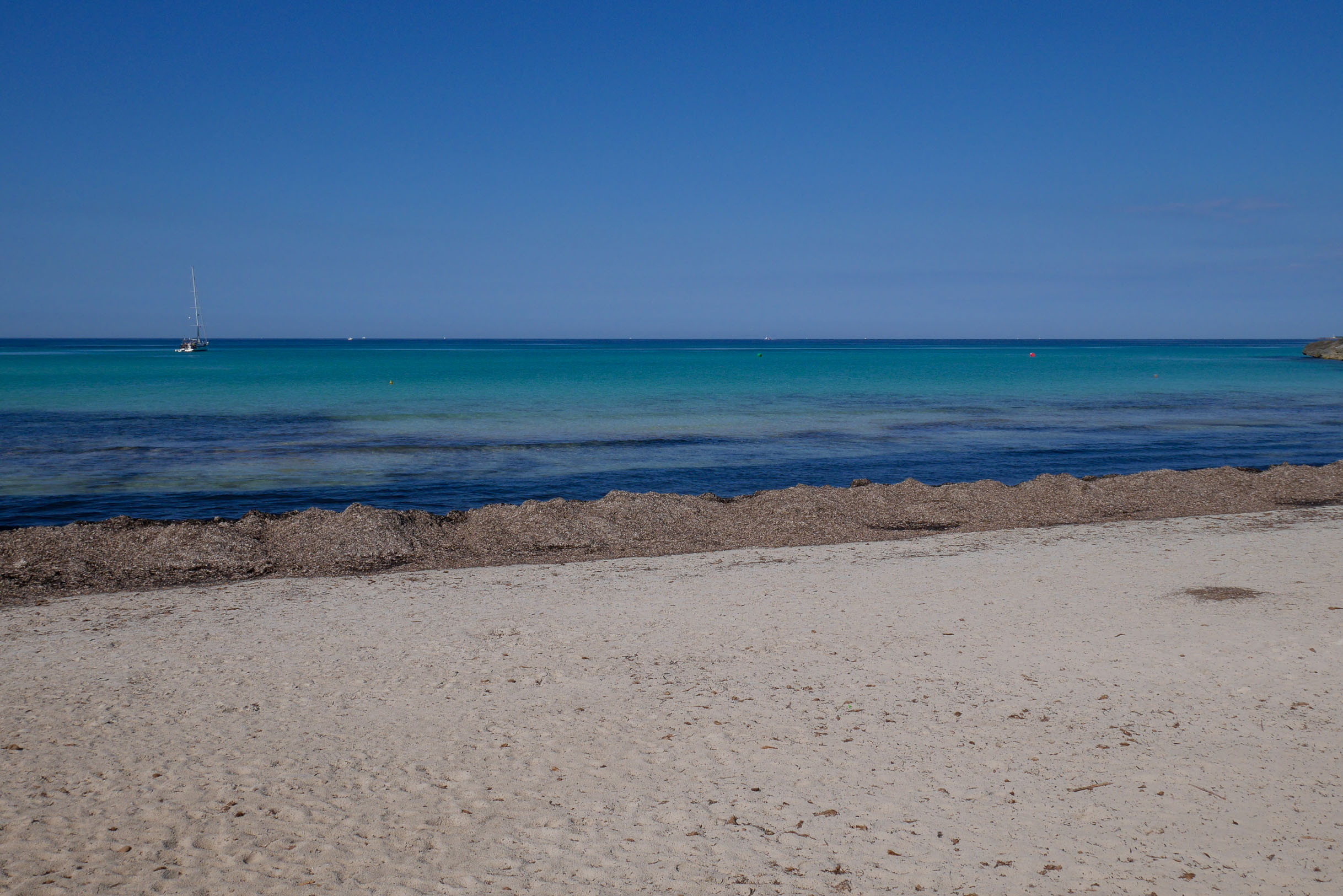
As a result, the plant plays an outsized role in keeping the sea healthy. It produces oxygen, it absorbs huge amounts of carbon dioxide, it stabilizes the seabed. And it shelters countless marine species.
A Slow Grower Under Constant Pressure
However, this slow-growing plant is under serious pressure. Illegal anchoring, pollution, coastal development, and an ever-expanding tourism industry all take a toll. Because Posidonia grows so slowly, recovery from damage can take decades, sometimes even centuries.
In response, the Balearic government introduced a decree back in 2018 banning anchoring on Posidonia meadows. Even so, enforcement remains a challenge. Experts say the meadows continue to face ongoing threats, despite the protections on paper.
From Underwater Ripples To Solid Form
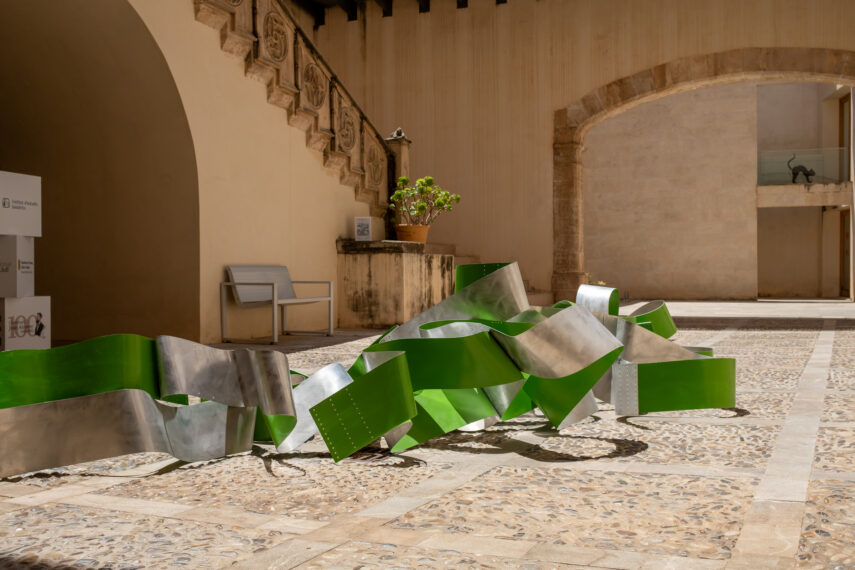
The sculpture comes from Juan Carlos Nadal, a Valencian artist whose work has long circled around movement, rhythm, and the traces left by natural forces. For Nadal, Posidonia isn’t a one-off subject. The seagrass has appeared throughout his recent practice, including in a video piece that echoes the plant’s slow, breathing motion through sound and imagery.
For this large-scale piece, crafted from enamel on aluminum, Nadal translated those underwater ripples into solid, sculptural form. The result feels both organic and otherworldly. Rather than simply admiring it from a distance, viewers are invited to think about the relationship between people and nature.
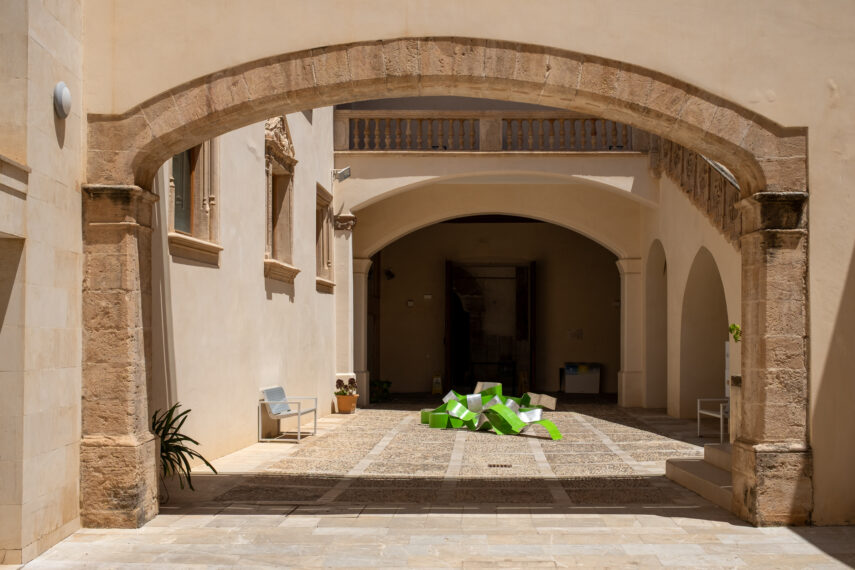
The sculpture’s installation at Ca n’Oleo was organized to mark World Environment Day and World Oceans Day. Behind the initiative are the Directorate General for Culture and the Baleària Foundation. During the inauguration, the Minister of Tourism, Culture and Sports highlighted how the work reminds visitors of Posidonia’s importance to the region’s marine ecosystems.
Ca n’Oleo: A Quiet Stage For Contemporary Art
Finding contemporary art inside a centuries-old courtyard is part of what makes this exhibition special. Ca n’Oleo is exactly the kind of place where that contrast comes alive.
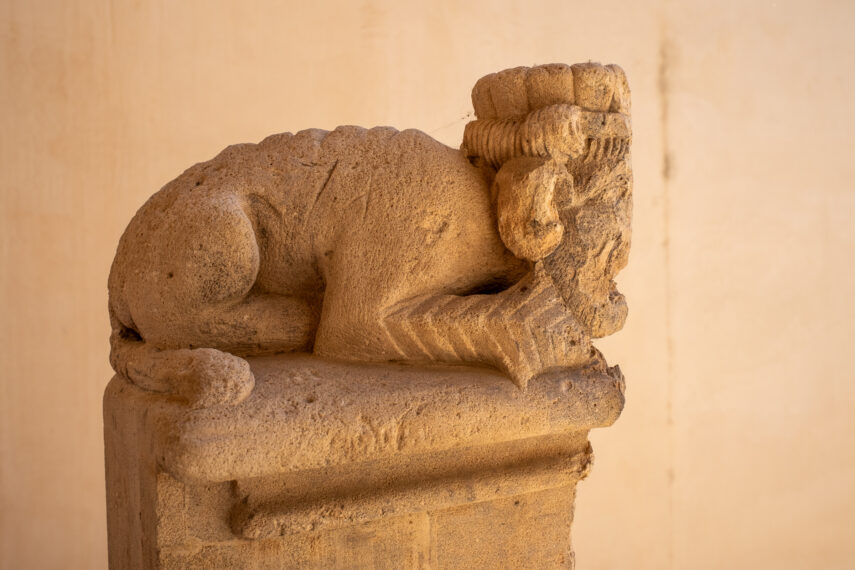
The building dates back to the 16th century, when it underwent major transformations. It still holds a gothic staircase in its courtyard, considered one of the few surviving examples of its kind in Palma. After decades of neglect and a long restoration process, the building now serves as the headquarters of the Balearic government’s Directorate General for Culture. That makes it the perfect setting for Posidònia. The courtyard is one of those hidden patios that define Palma’s old town, a space where past and present meet under the same roof.
Leaving With A New Way Of Seeing The Sea
By the time visitors step back through that same stone portal and into the narrow street, something has usually shifted. A curious glance through an archway becomes, almost without anyone planning it, a small lesson about the sea that laps against Mallorca’s shores every day.
The bright green form sitting quietly in Ca n’Oleo’s courtyard isn’t just a striking piece of art. It’s a reminder that the clear water so many people love depends on a plant that rarely gets a second look. Sometimes it takes stepping into an unexpected courtyard to start seeing something familiar in a completely new light.
Plan Your Visit
The Posidònia sculpture is on display in the courtyard of Ca n’Oleo, Carrer de l’Almudaina 4, Palma. Admission is free, and the piece will remain on view until September 5, 2026. Since the building also houses offices of the Directorate General for Culture, it’s best to visit during regular weekday office hours. Checking ahead is recommended. 
Read more about the Patios in Palma, here.
C/ de l’Almudaina, 4
07001 Palma