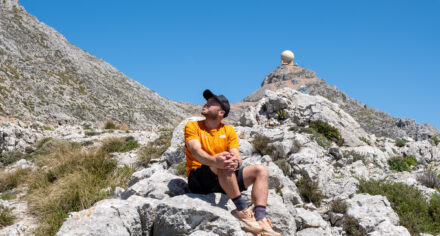
There are Tramuntana hikes that charm you, and then there is Puig Tomir. At 1,103 meters, one of the highest peaks in the northern Serra de Tramuntana does not ease you in. On the steepest sections it demands you use hands and feet. But here is the thing: it gives back more than it takes. Few hikes on the island match the sheer variety of landscape, the sense of raw mountain adventure, or the panoramic reward waiting at the summit trig point. Locals love to say that Tomir comes from the Mallorcan expression tot mir (everything I see). Whether that’s true or not, the mountain certainly lives up to it. If you are ready to earn your view, Puig Tomir is calling.
From Lluc to Puig Tomir
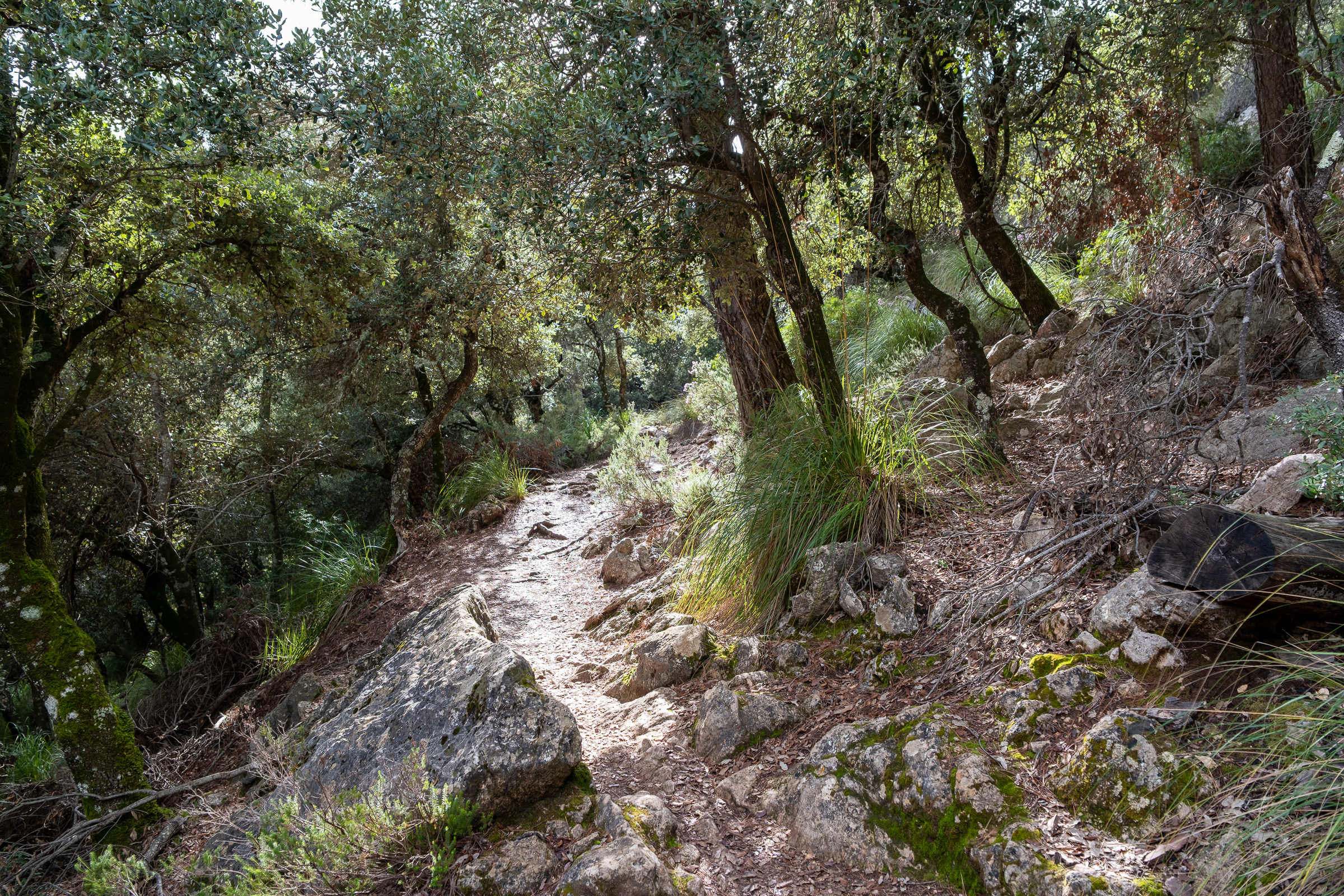
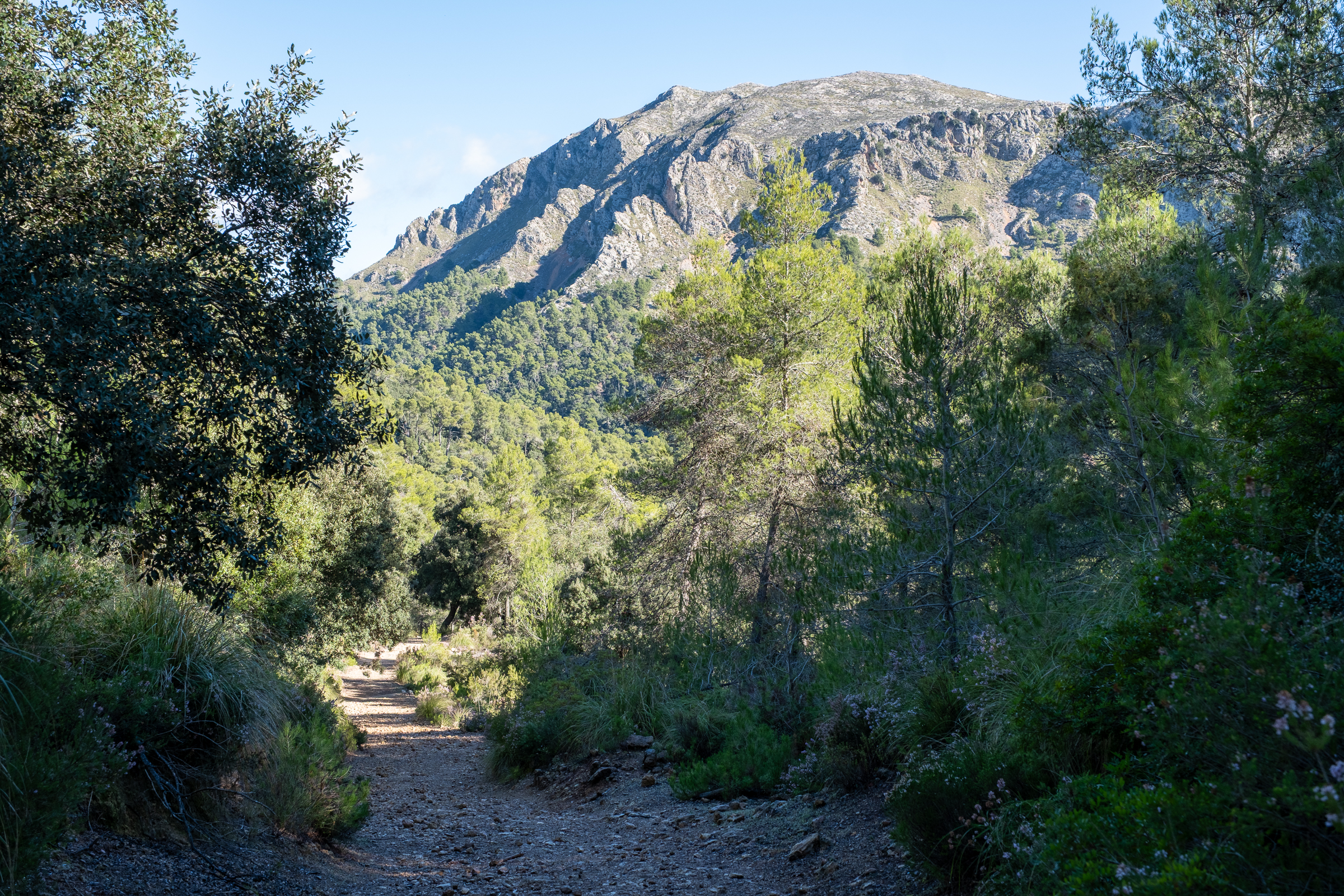
The classic starting point is the monastery of Lluc, or the nearby Refugi de Son Amer. A narrow trail meanders under pine trees before widening as you climb into bright holm oak woodland. The canopy filters sunlight into half-shade. Underfoot, the ground is soft. Along the way, circular, blackened clearings known as sitges de carboners (charcoal burners’ sites) appear between the trees, quiet reminders of an era when forests were not just landscapes but livelihoods.
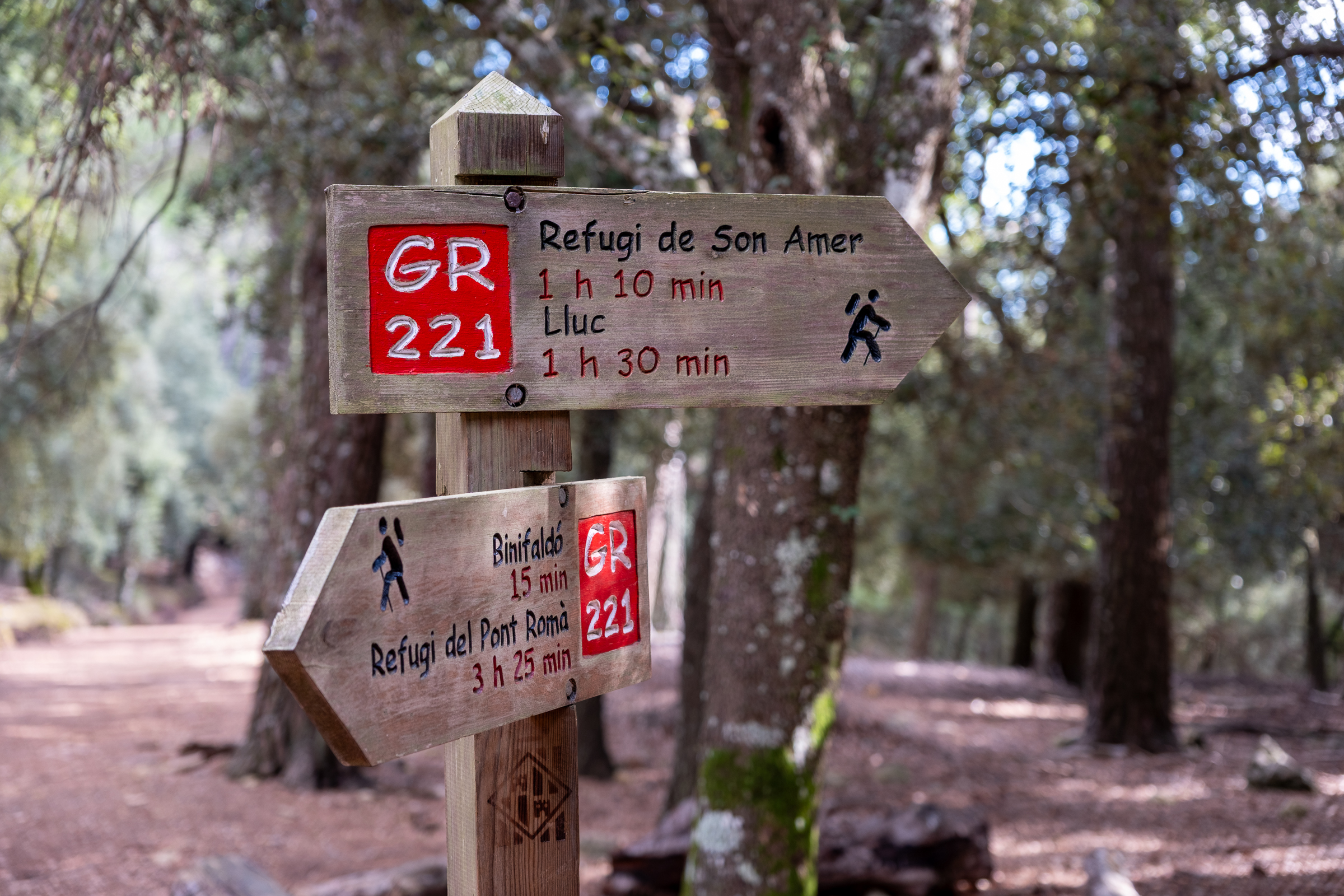
For the first stretch, the route follows the GR 221, the long-distance path crossing the entire Tramuntana. Signposting here is reliable, and the walking is comfortable. Then, roughly ninety minutes in, you reach the Coll des Pedregaret, where a long-abandoned mineral water plant marks a turning point.
Leave the GR 221
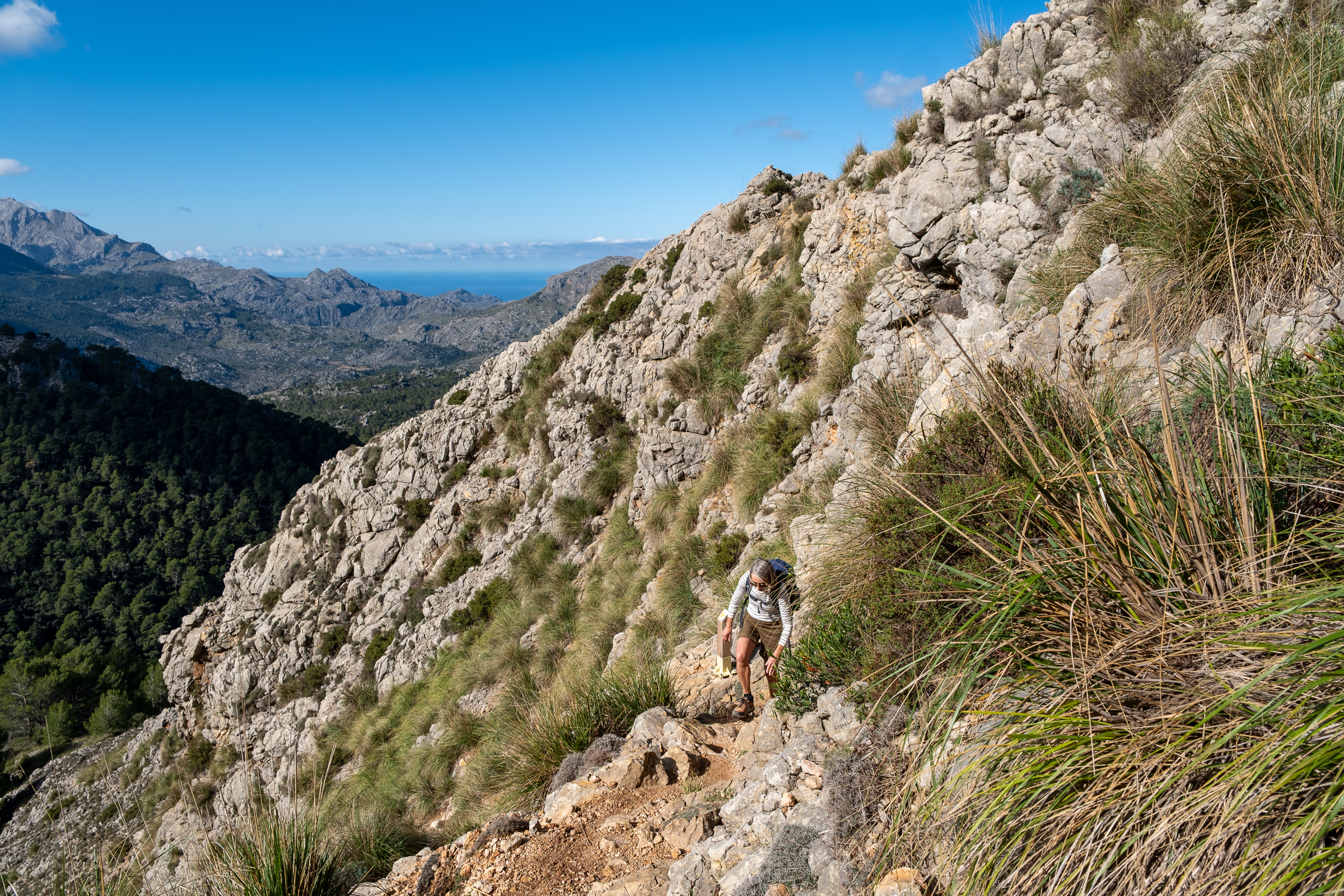
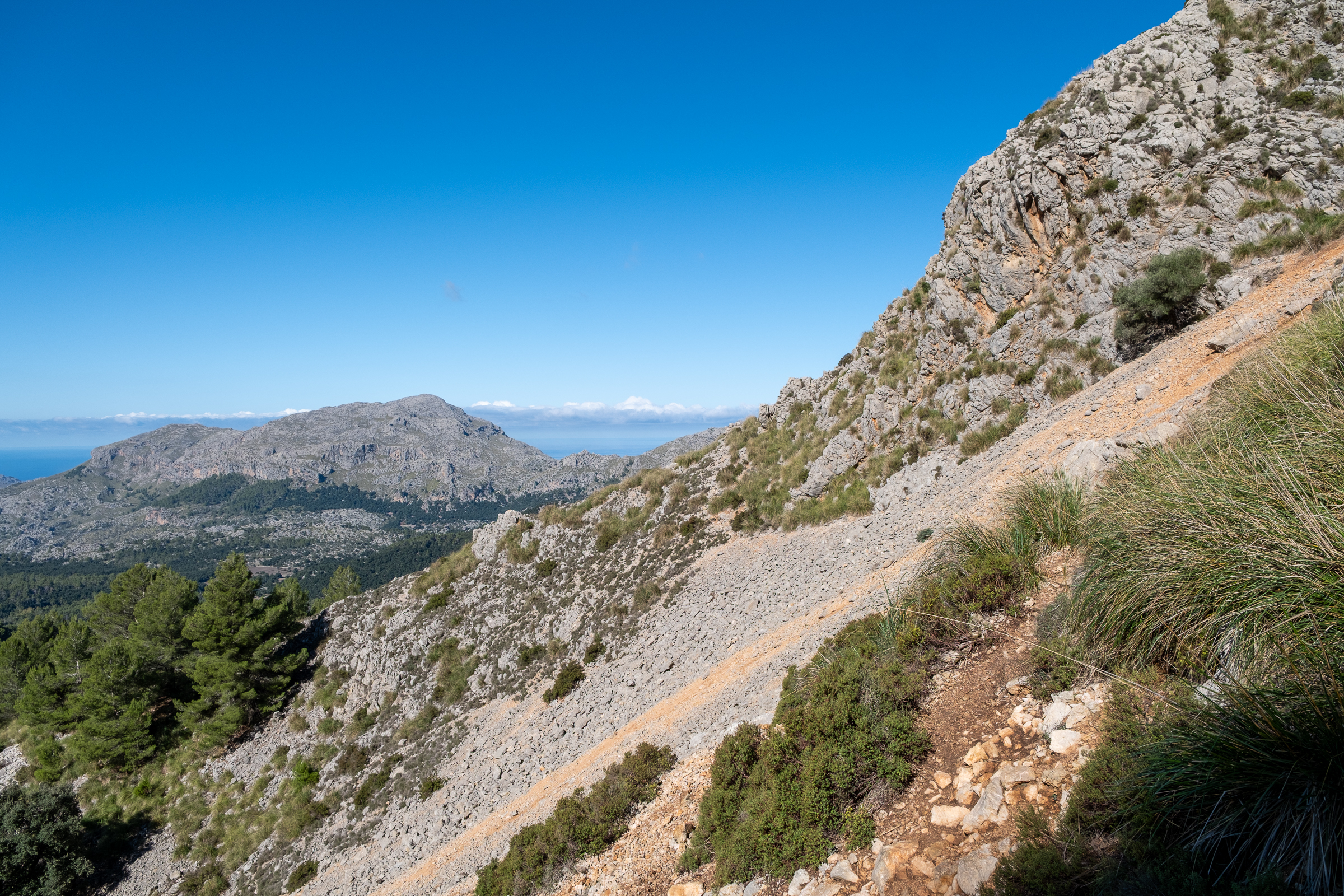
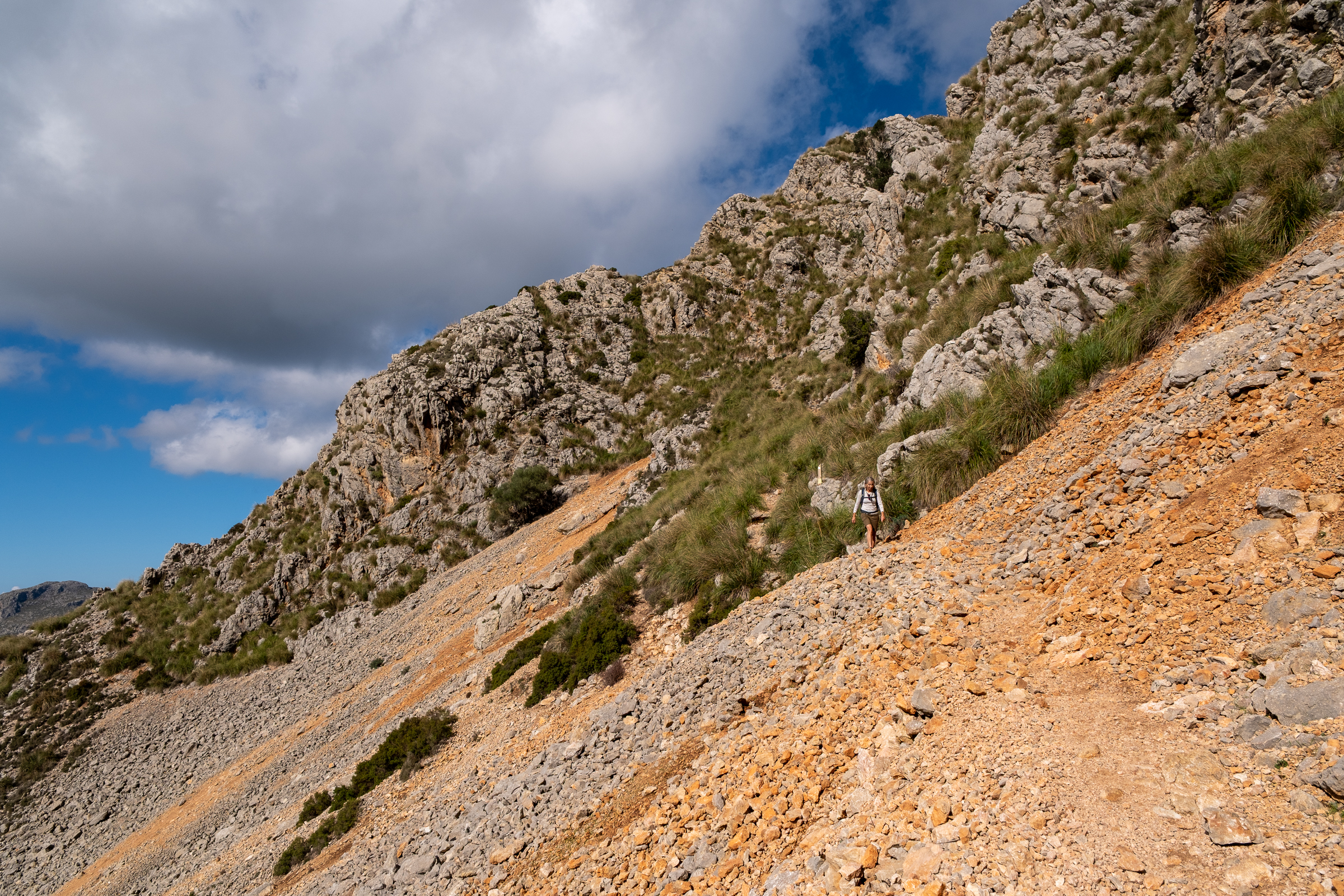
Unlike climbs that are uniformly steep or uniformly wooded, this one moves through distinct chapters. Open meadows give way to heather in bloom. Oak forest transitions into exposed ridge. Soft ground becomes sharp limestone. When you leave the GR 221 behind the path immediately grows narrower, steeper, and rockier.
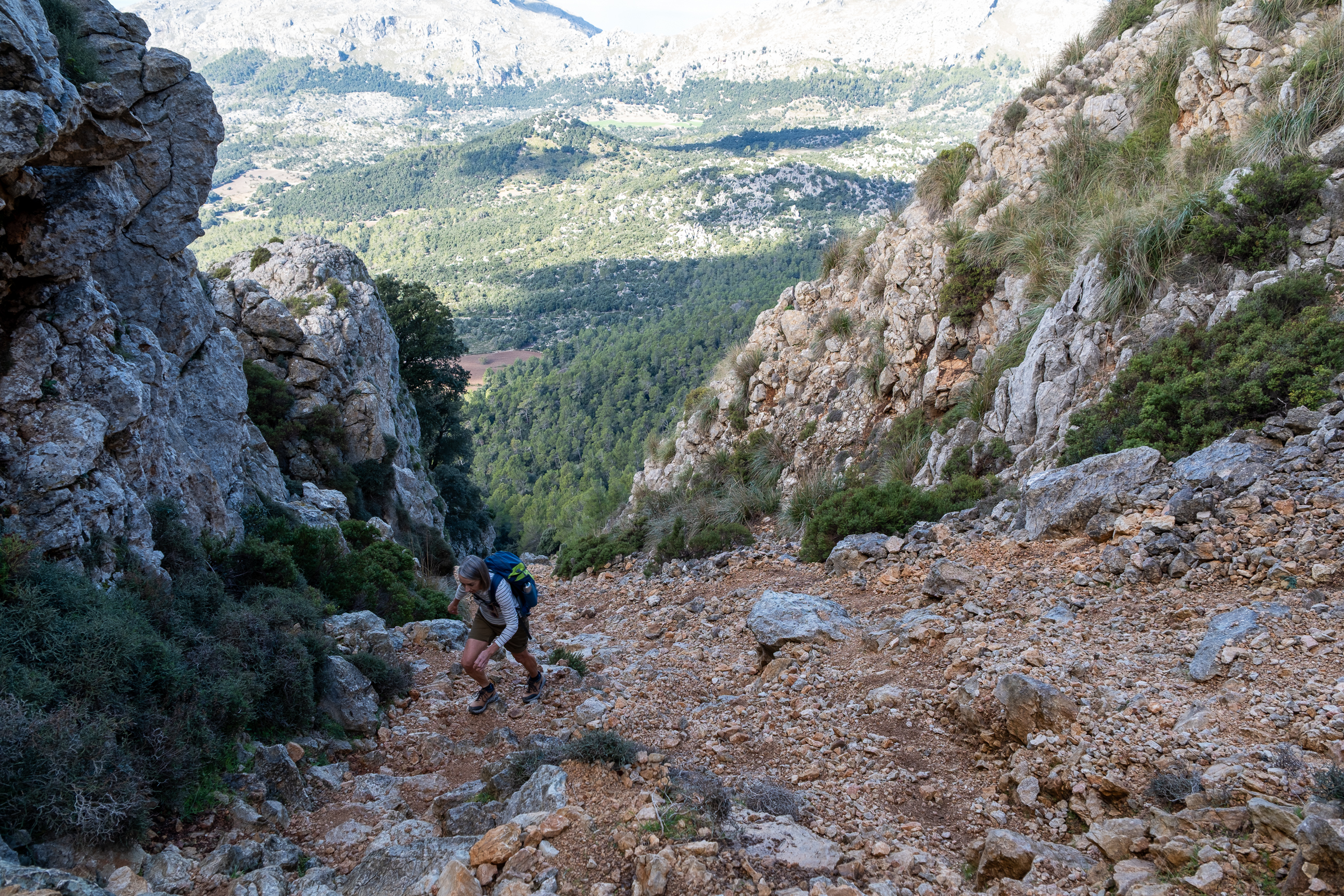
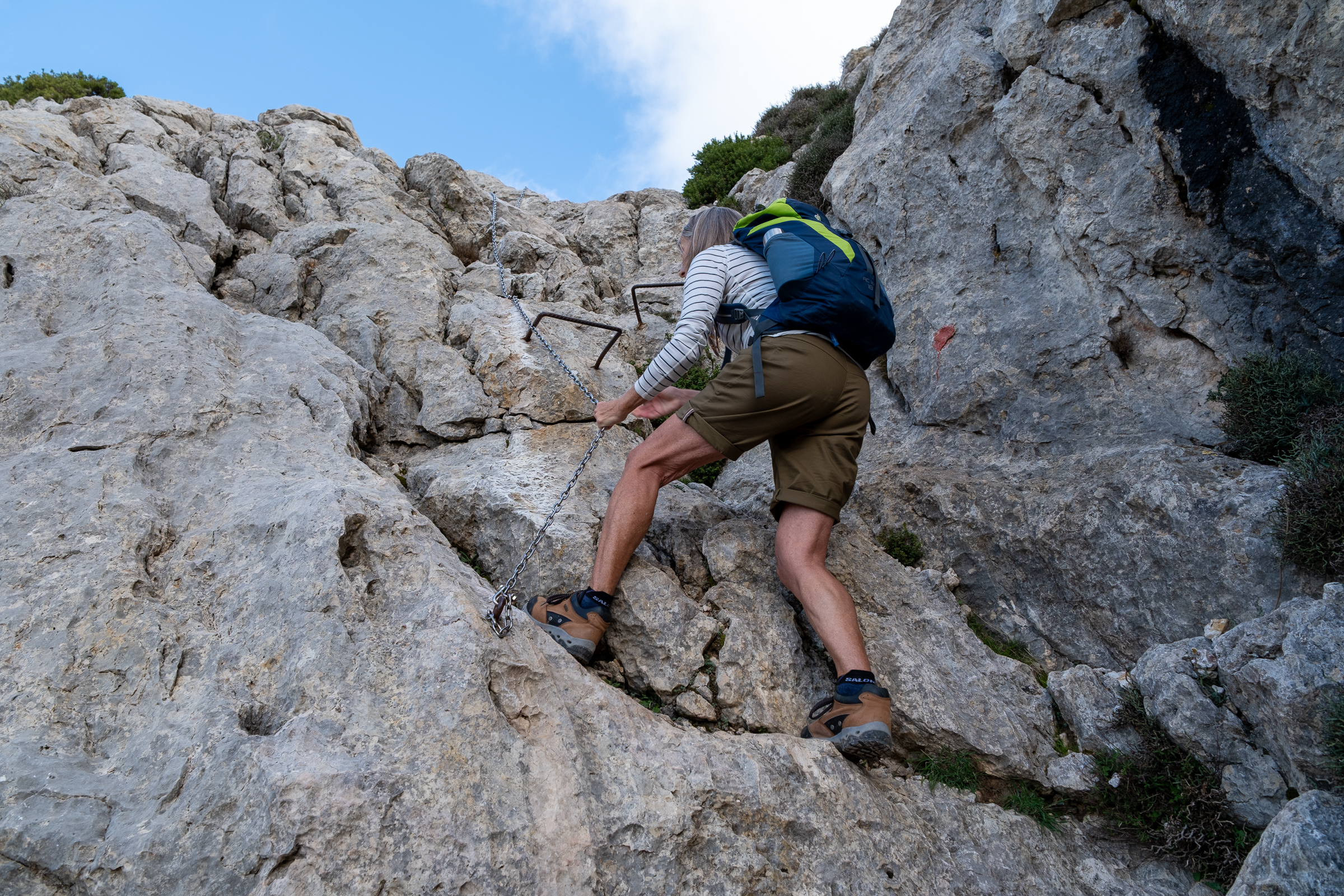
You traverse scree slopes, and climb up a rocky notch, aided by an iron chain. A narrow pass offers a brief respite and a beautiful view before the final stretch of the climb.
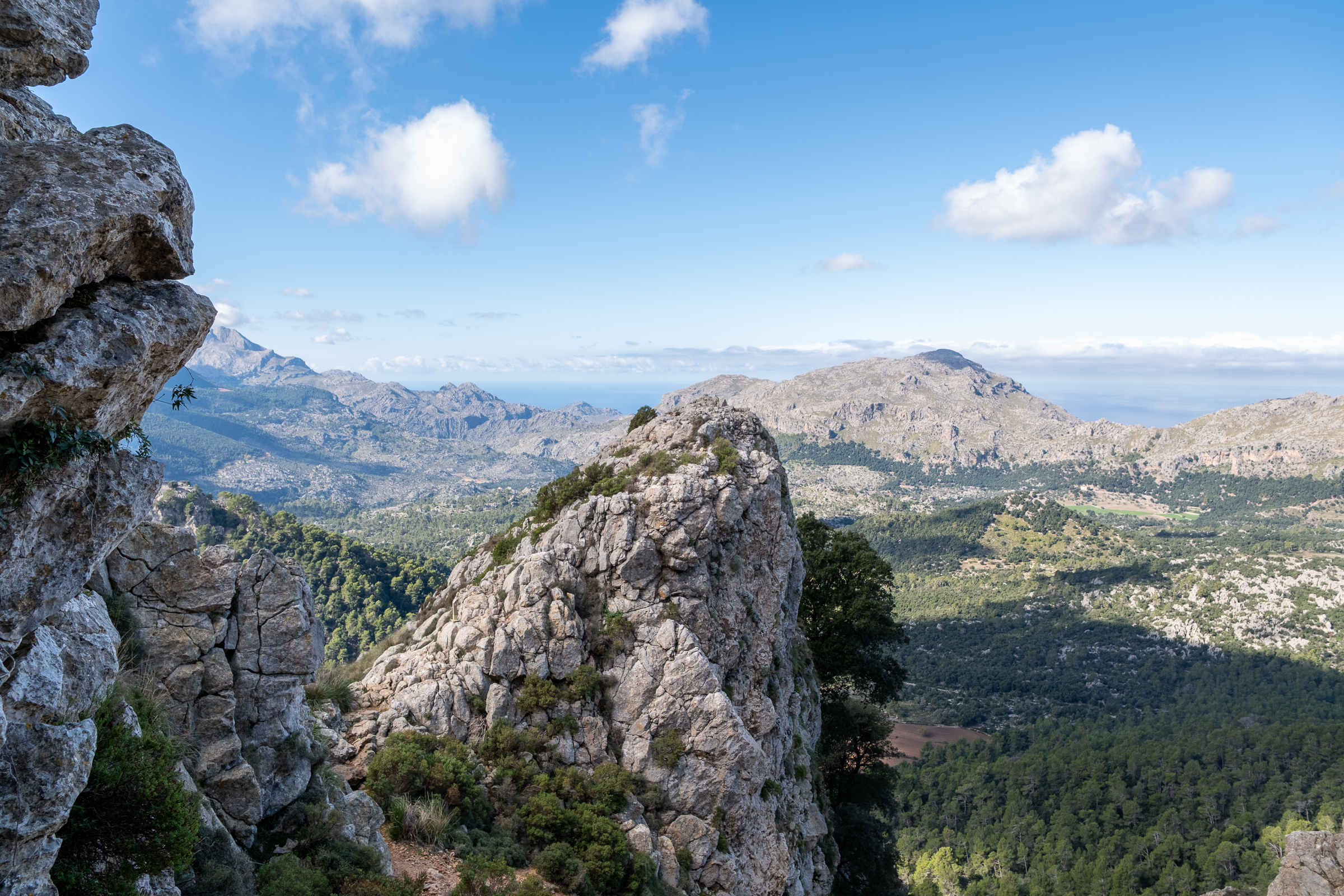
On the steepest sections, footrests drilled into the rock and fixed chains help you through. They are not technically complicated, but thrilling. This is the kind of terrain you might expect from a far taller peak. Mallorca surprises you here.
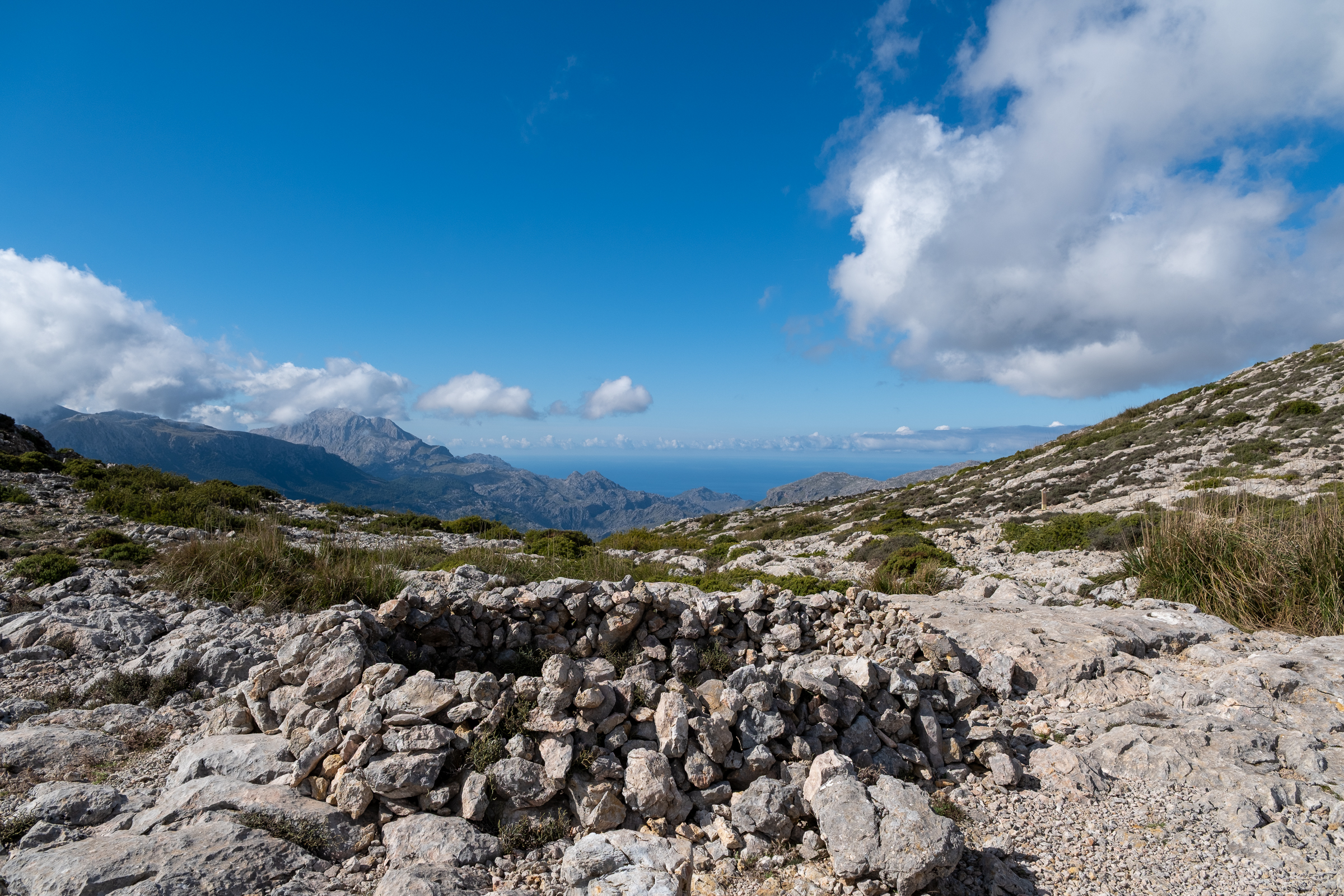
Signposting becomes less consistent once you approach a karst plateau that turns disorienting in cloud, so good orientation skills are not a luxury.
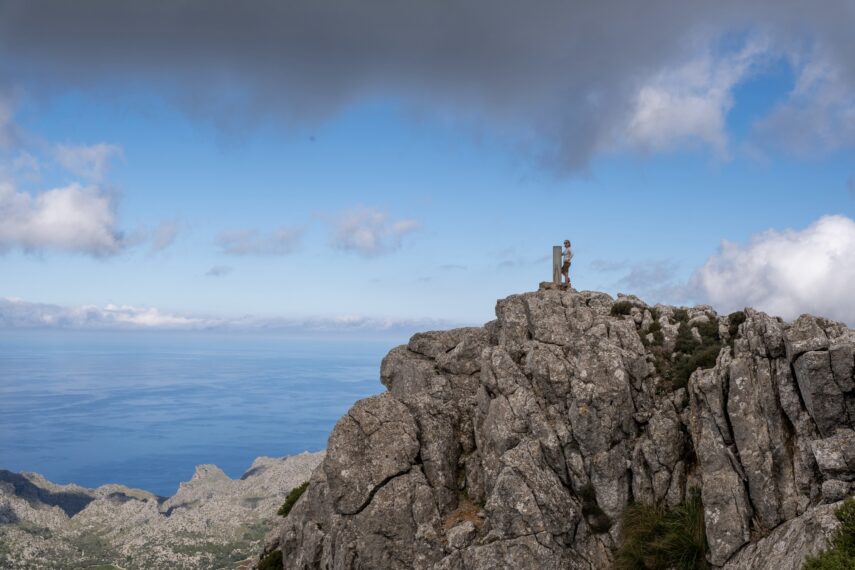
Eventually, after sustained effort, the angle eases. You think: finally. Not yet. What you have reached is the final mountain pass spreading out ahead. Take a breath, then walk ten more minutes until the summit trig point of Puig Tomir comes into view. And suddenly, you are there.
The Great Wide Open
The bays of Pollença and Alcúdia glitter in the north. The peninsulas of Formentor and Victoria reach into the sea like two outstretched arms. The fertile plain of Es Pla stretches south towards the Serra de Llevant. All around, the great Tramuntana summits, Puig Major, Ofre, and Es Cornadors rise in silent company. On a clear day, even Menorca floats on the horizon.
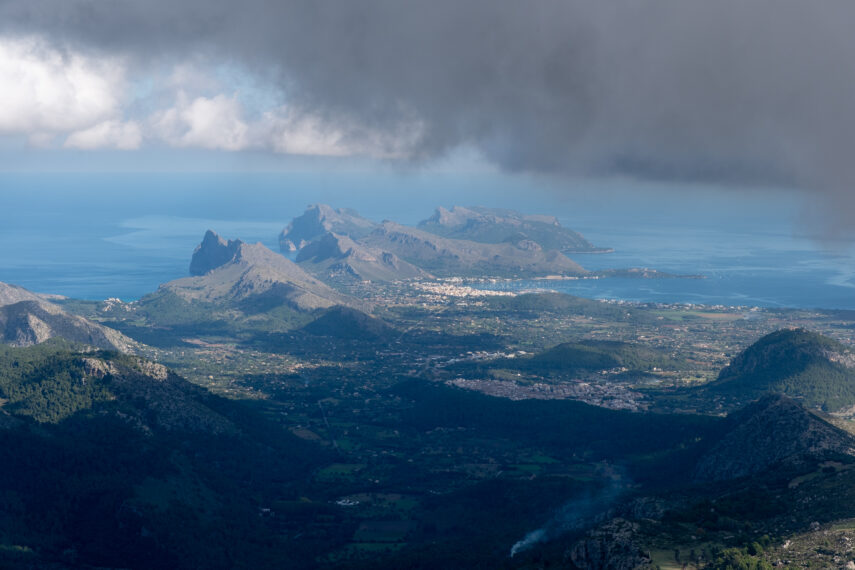
Then look down, just below the summit, at the low stone ruins at your feet.
The Snow Houses
Those structures are remnants of cases de neu. In the early 18th century, an entrepreneur named Joan Martorell recruited miners and dry-stone builders to spend winters in the Tramuntana collecting snow.
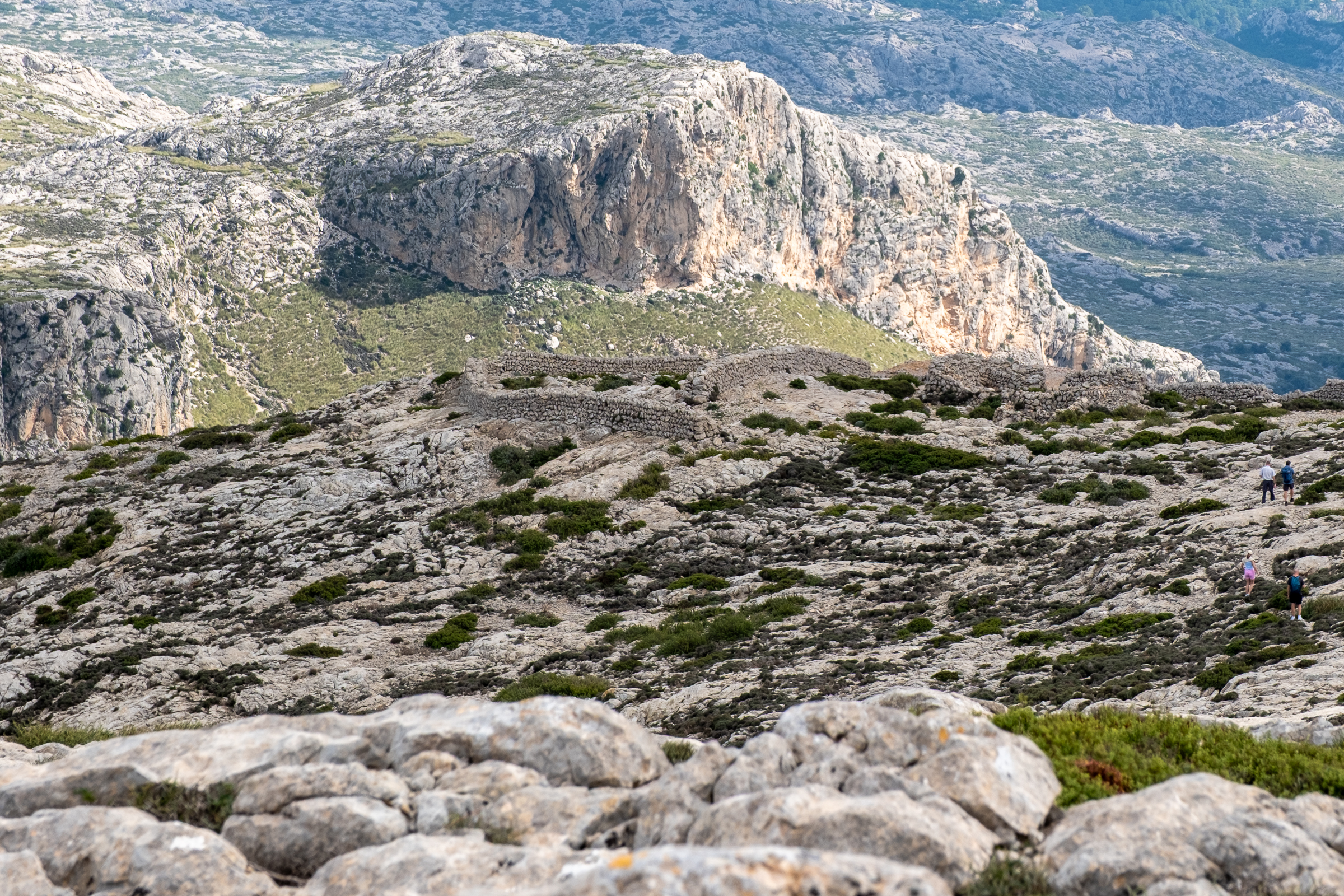
They packed it into deep mountain pits in layers, interspersed with salt, ash, and leaves, forming ice blocks that survived into spring and summer. And Joan served the first ice cream on Mallorca in his legendary café Can Joan de s’Aigo.
The Way Down: A Series of Beautiful Transitions
The descent follows the same route back and yet it is a different experience that reveals itself as a series of beautiful transitions. The karst plateau, the scree, the oak forest closing back around you, the scent of pine. The summit you climbed now towers behind you as you drop towards Lluc, and you will find yourself glancing back more than once.
What You Need to Know Before You Go
Weather in the northern Tramuntana can shift fast. A brilliant morning can cloud over by midday, and wet limestone is unforgiving. Starting early and checking the forecast are therefore non-negotiable. Especially in warmer months when the upper trail is fully exposed to the sun.
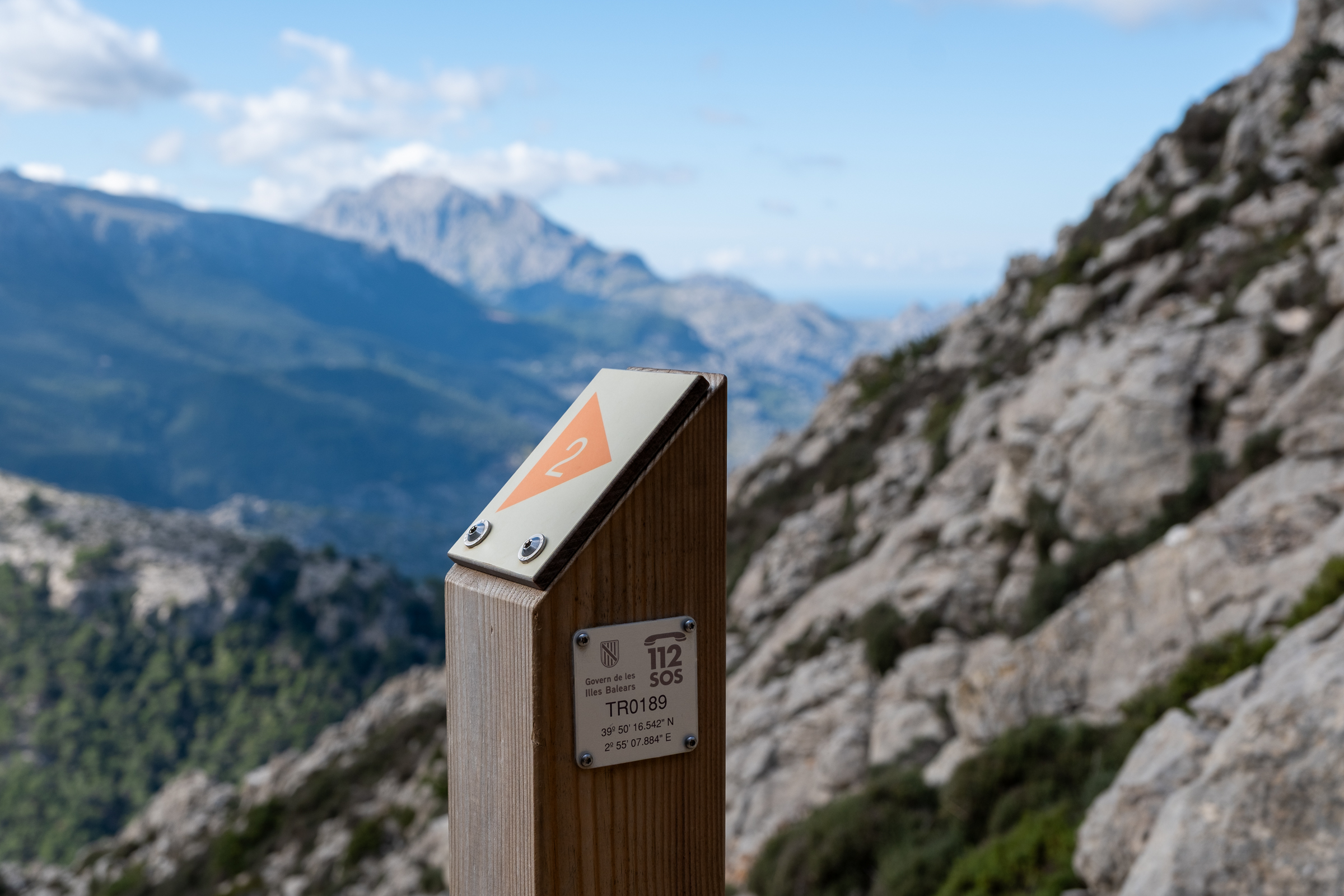
Puig Tomir is not a beginner hike. Solid fitness is a genuine requirement. Sturdy hiking boots are essential for the scree and rocky upper sections. Carry plenty of water, there are no refill points on the route, and pack layers, since summit temperatures can be significantly cooler than in the valley.
Duration & Elevation: ~3–4 h out and back, ~700 m elevation gain, ~12 km. 
Read more about hiking in the Serra de Tramuntana, here, and the most panoramic hikes on Mallorca, right here.