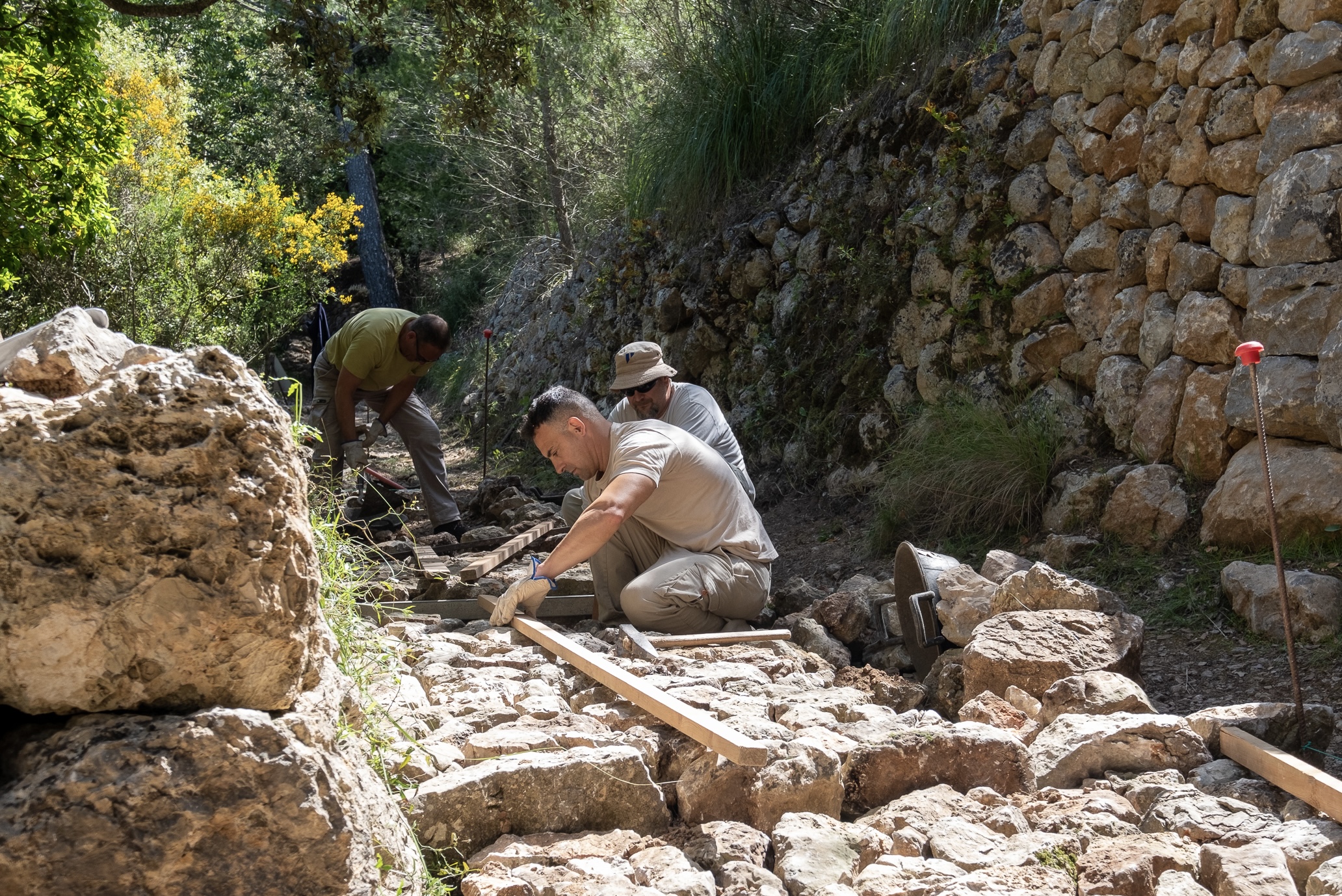
The Serra de Tramuntana has been a UNESCO World Heritage Site since 2011. Stretching for nearly 90 kilometers across Mallorca’s northwest coast, the mountain range earned this title not only for its dramatic scenery but also for a landscape shaped by human hands. For centuries, generations of craftsmen built terraces, paths, and walls entirely from stone. These skilled artisans are known as the Margers de Mallorca, the island’s traditional dry stone masons. Their work is physically demanding, yet deeply rewarding. After all, as one mason famously said, “We work in the most beautiful office in the world.”
A Legendary Route Through the Tramuntana
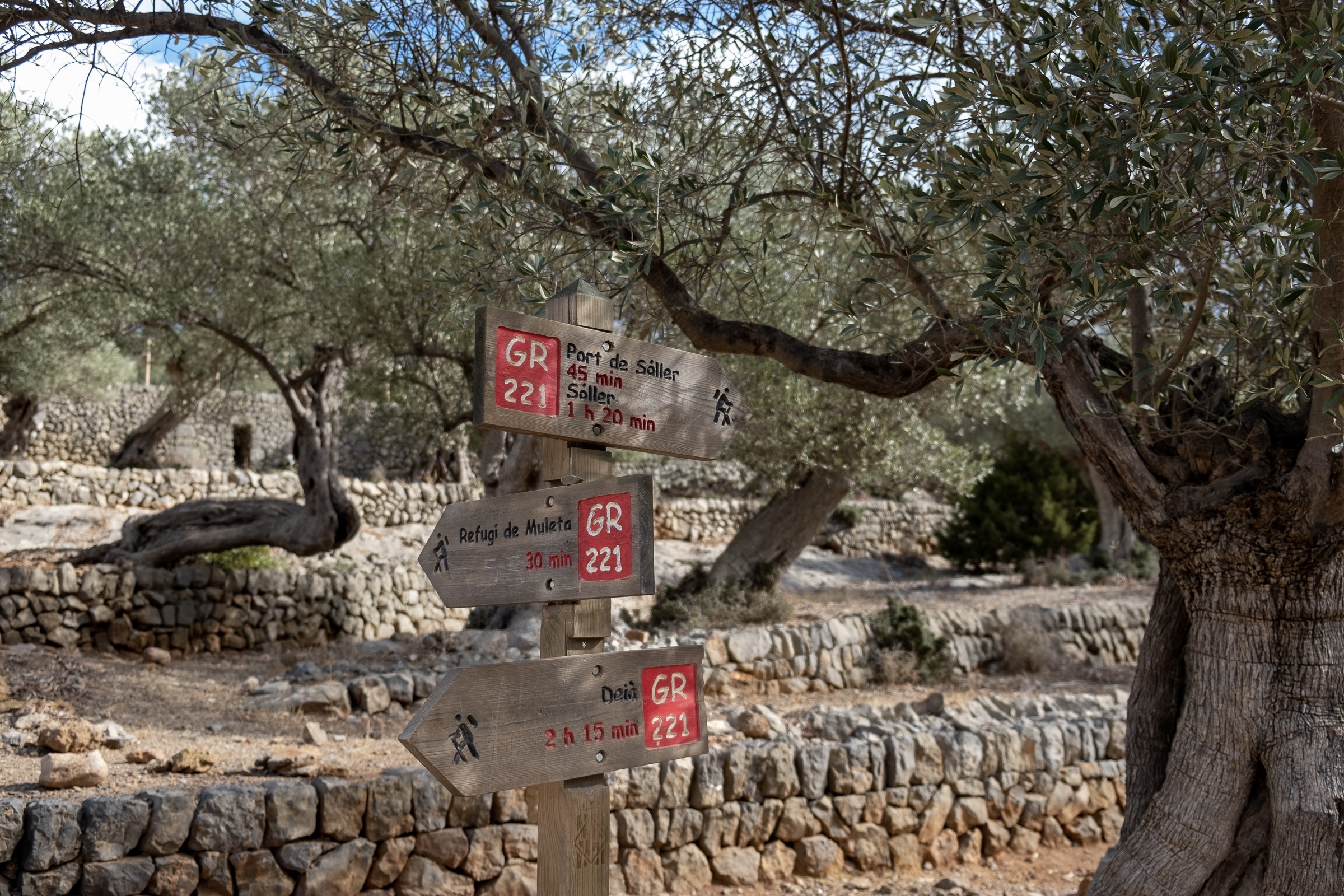
A long-distance hiking trail runs the entire length of the mountains, connecting the southwest with the north of the island. The famous GR 221 is even called Ruta de Pedra en Sec. The Dry Stone Route leads from Andratx to Pollença. Along the way, hikers follow centuries-old mule tracks, pilgrimage routes like the one to Lluc Monastery, and historic postal paths such as the Camí des Correu between Esporles and Banyalbufar.
Protecting the Hillsides from Erosion
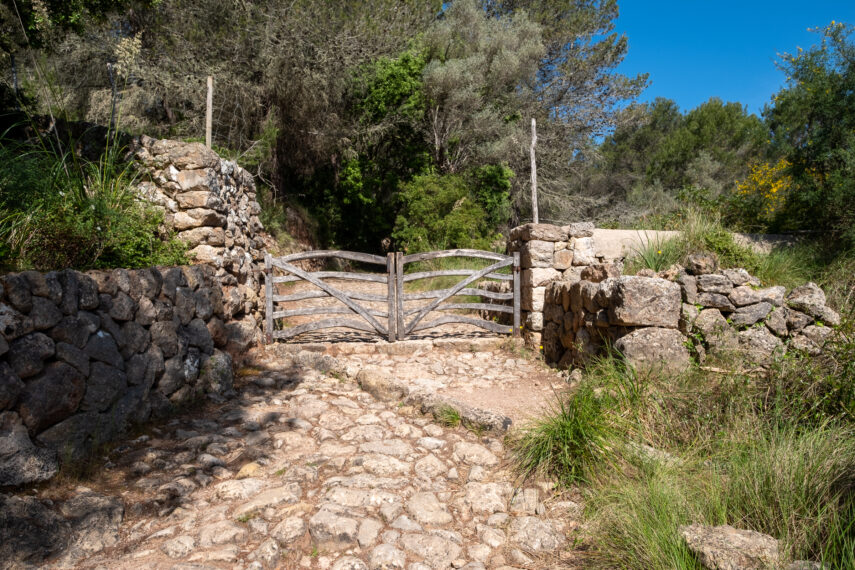
However, the true highlight lies in the surrounding landscape. Terraces, stairways, and retaining walls constructed without a single drop of mortar. These structures made steep mountain slopes usable for agriculture in the first place. Olive groves have been thriving here, meanwhile, their roots and the dry stone walls stabilize the soil and protect the hillsides from erosion.
An Understanding of Stone, Gravity and Terrain
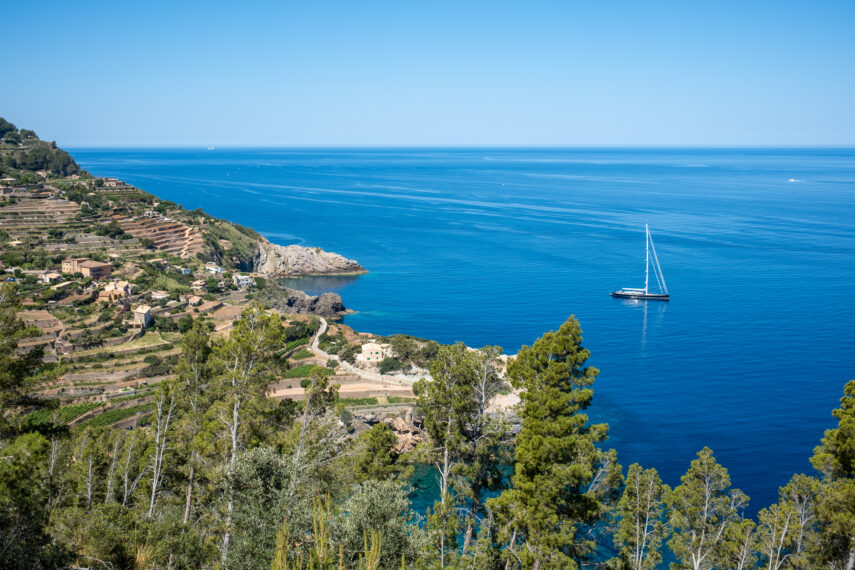
While hikers admire sweeping sea views and rugged peaks, the trail itself tells a story. Every cobbled path, staircase, and terrace wall reflects centuries of practical knowledge. Over time, the Margers de Mallorca developed an intuitive understanding of stone, gravity, and terrain. They passed this expertise from generation to generation, shaping the cultural landscape that defines the Tramuntana today.
The Subtle Art of Dry Stone Masonry
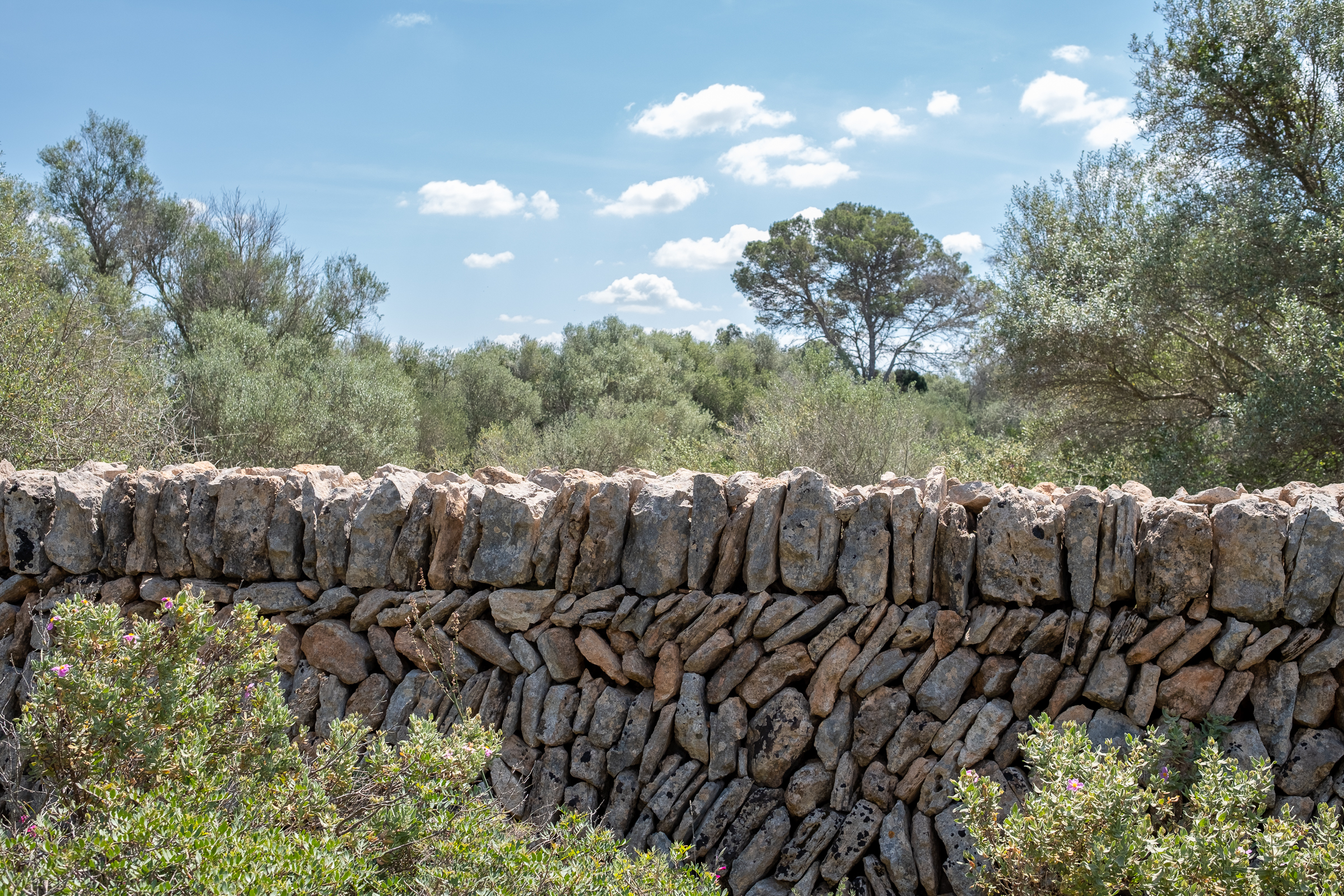
At first glance, dry stone construction looks deceptively simple. Yet the craft demands patience, precision, and experience. Each stone must be carefully selected and positioned so that weight and tension hold the wall together. Instead of mortar, balance and gravity provide stability. As a result, a well-built wall can last for decades, sometimes even centuries.
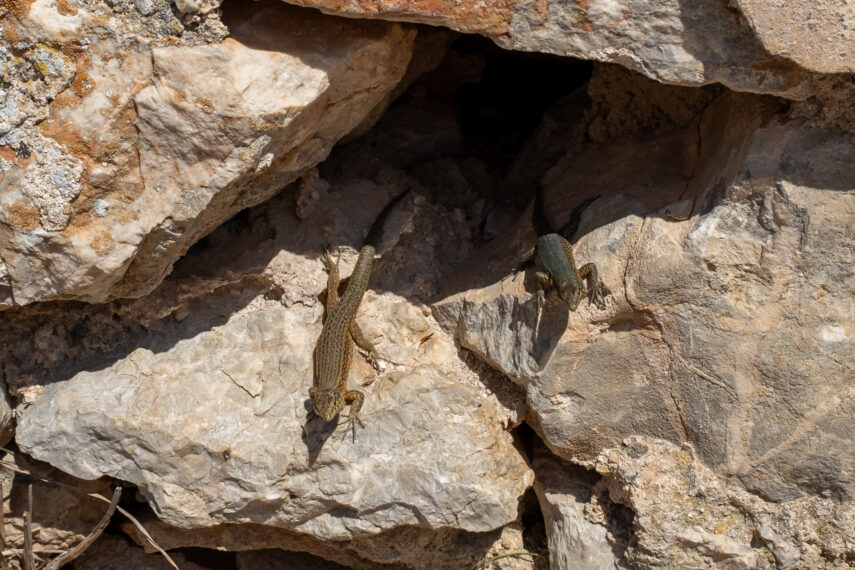
Stone Walls as Hidden Wildlife Habitats
Beyond their architectural beauty, these walls serve an ecological purpose. Tiny crevices create shelter for wildlife, from lizards and hedgehogs to wild bees and insects. Consequently, dry stone walls form miniature ecosystems across the island. In this way, the work of the dry stone masons on Mallorca also supports biodiversity throughout the Tramuntana landscape.

Reviving the Craft of the Margers
In recent years, this ancient craft has gained new recognition. Today, dry stone masonry is an officially recognized profession on the island. At the same time, the Gremi de Margers de Mallorca actively promotes training and preservation of this craft. Its mission is to pass on knowledge and skills, thereby contributing not only to the preservation of the profession but also to the preservation of the island.
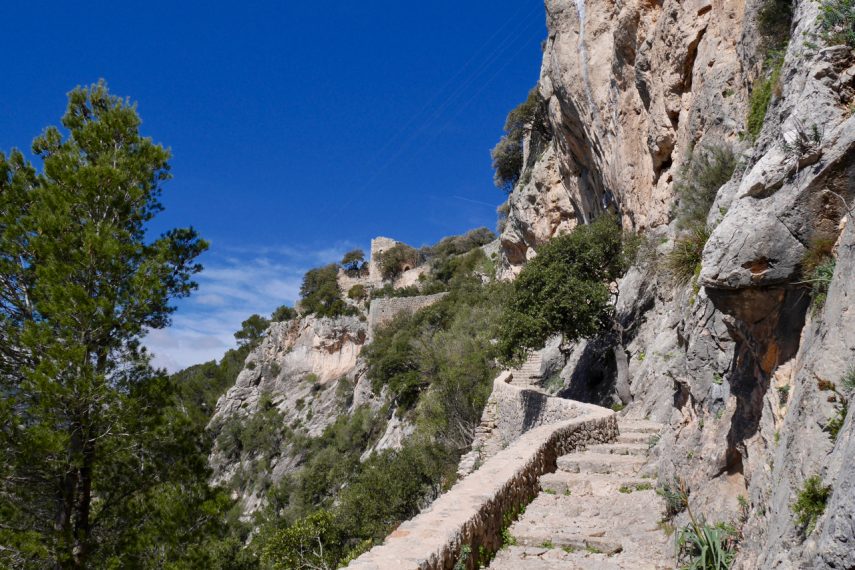
Preserving a Landscape, Stone by Stone
The scale of this heritage is remarkable. Thousands of kilometers of dry stone walls and historic cobbled paths still shape Mallorca’s mountains. Maintaining such a vast network requires dedication, skill, and patience. Nevertheless, the Margers de Mallorca continue their work, stone by stone. Thanks to them, the unique cultural landscape of the Tramuntana remains alive. Not as a relic of the past, but as a living tradition. 
Read more about Hiking the Tramuntana Mountains, here.